

Failed Coup in Benin Highlights Rising Internal Strains and Regional Intervention
Executive Summary
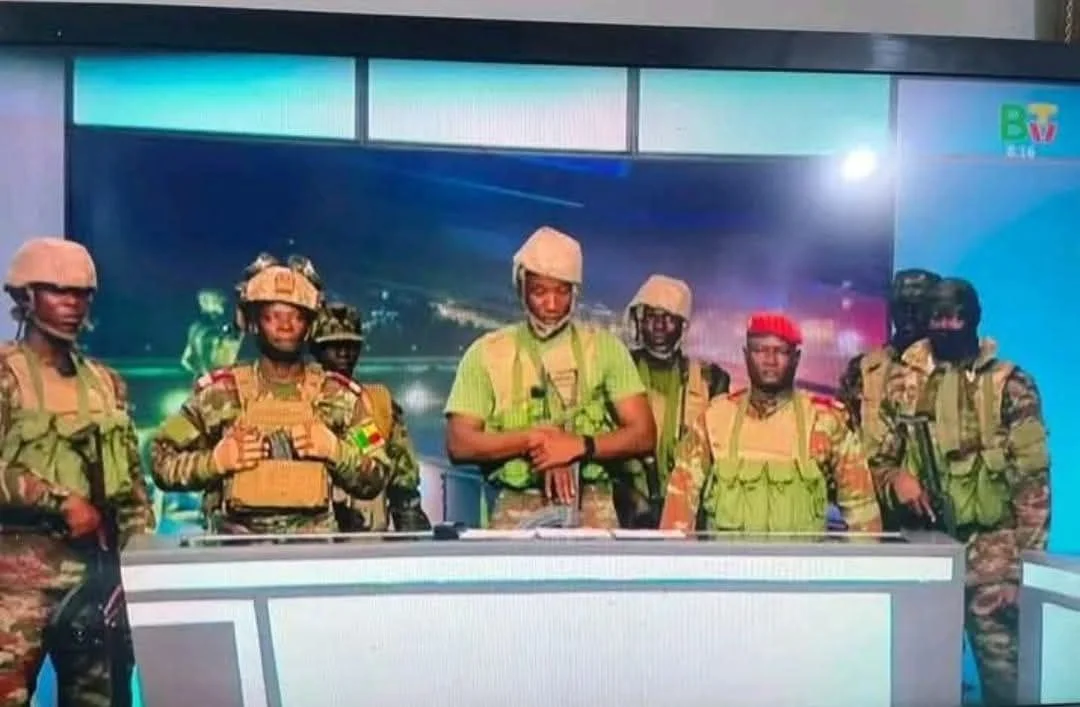
A small group of Beninese soldiers attempted a coup in Cotonou on 7 December 2025, briefly seizing state television and announcing the dissolution of state institutions before loyalist forces, backed by Nigerian military support and a Economic Community of West African States (ECOWAS) stand by force, moved to restore government control. President Patrice Talon later appeared on television to declare the situation “totally under control,” but the presence of fugitive mutineers, hostages, and unresolved political and security grievances suggest that underlying instability and civil military tensions in Benin are growing.
Analysis
The attempted coup was led by officers styling themselves the Military Committee for Refoundation, who appear to have misjudged both the loyalty of the wider armed forces and the appetite of the public for an overthrow of Talon. While the mutiny was quickly contained, the episode exposes fractures inside the military related to frontline losses against jihadist groups, perceived neglect of soldiers and their families, and opposition to Talon’s tightening political control ahead of elections scheduled for April 2026.
In the early hours of 7 December, mutinous soldiers in uniform appeared on state television and announced the suspension of the constitution and dissolution of government, naming Lt Col Pascal Tigri as head of a “Military Committee for Refoundation.”
Interior Minister Alassane Seidou later described the events as a “small group of soldiers” launching a mutiny to destabilize the state, praised the loyalty of the rest of the armed forces, and said the coup had been foiled.
Government spokesman Wilfried Léandre Houngbedji and local media reported that over a dozen soldiers were arrested, including most who stormed the national broadcaster, while Tigri remains at large.
President Talon, unseen for much of the day, eventually addressed the nation on television, denouncing the “treachery,” promising it would not go unpunished, and confirming that mutineers were fleeing with an unknown number of hostages.
Analysts quoted in international reporting argue that although Talon’s government is widely viewed as repressive and exclusionary, the population did not mobilize in support of the putsch, suggesting limited immediate public backing for a military takeover.
Regional reaction and rapid military assistance underscore how West African governments and ECOWAS are now prepared to respond forcefully to new coups after a string of successful takeovers in nearby states. Benin’s request for help and Nigeria’s visible role, including air operations over Cotonou, show Talon’s reliance on external security partners and may increase domestic criticism that the regime depends on foreign support to stay in power.
ECOWAS condemned the attempt as an unconstitutional “subversion of the will of the people” and announced the deployment of a regional standby force drawn from Nigeria, Sierra Leone, Ivory Coast, and Ghana to support Benin’s army and protect constitutional order.
Nigerian officials said Benin made two formal requests for air and ground support, and credited Nigerian fighter jets and forces with helping “dislodge the coup plotters” from national TV and a military camp.
Flight tracking data cited by media showed three aircraft entering Benin’s airspace from Nigeria and returning after reported explosions in Cotonou, believed to be air strikes against coup positions.
Foreign embassies including the United States, France, and Russia advised their citizens to stay indoors or avoid central Cotonou, highlighting the initial uncertainty and risk of escalation before loyal forces consolidated control.
The mutineers publicly framed their actions around security, economic, and governance grievances that have been building under Talon. These include heavy troop casualties in the north against jihadist groups, perceived abandonment of soldiers’ families, cuts to social services, tax rises, and narrowing political space through prosecutions of rivals, exclusion of opposition candidates, and constitutional amendments that could prolong Talon’s influence after leaving office. Even though this coup failed, these structural issues are likely to persist and could fuel future unrest or plots if not addressed.
The rebel soldiers accused Talon of mishandling the “deterioration of the security situation in northern Benin,” where the army has suffered major losses in recent attacks linked to Islamic State and al Qaeda affiliates spreading south from the Sahel.
Their statement criticized the “ignorance and neglect” of fallen soldiers and their families, complained about cuts such as ending state funded kidney dialysis, and denounced tax increases and restrictions on political activity.
Talon has been in power since 2016 and is due to step down after two terms, but parliament recently extended elected terms from five to seven years and created a new Senate that critics say could give him continued influence.
The main opposition presidential candidate, Renaud Agbodjo, was barred from running for lack of sponsors, and earlier in 2025 two associates of Talon were sentenced to twenty years in prison for an alleged 2024 coup plot, reinforcing perceptions of politicized justice.
Regional observers note that although Benin had been seen as relatively stable, the combination of rising jihadist attacks, economic strain, and shrinking political space is now converging with the broader West African pattern of coups and attempted takeovers.
