

ISIS-K “Al-Mursalāt” Pamphlet Pushes Unity Behind Abu Hafs and Condemns Internal Dissent
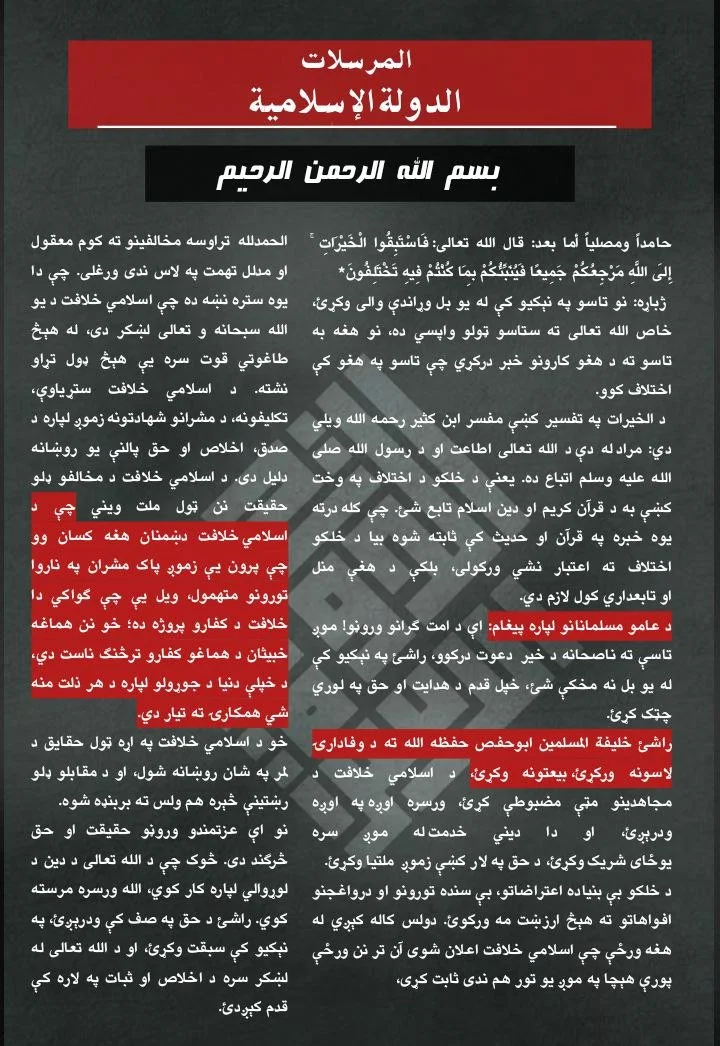
Source: Al-Mursalāt / Islamic State
Executive Summary
A Pashto-language “Al-Mursalāt” leaflet distributed via an Islamic State-linked Telegram channel calls on Islamic State supporters to end internal disputes and rally around the group’s current “Caliph of the Muslims,” Abu Hafs. The text uses religious arguments to portray disagreement with the caliphate’s leadership as sinful division that pleases its enemies, while praising the sacrifices made to establish the so-called Islamic State. The messaging strongly suggests ISIS-K leadership is worried about fractures within its own ranks and among online supporters, and is attempting to reassert centralized authority.
Analysis
The pamphlet is a doctrinal and loyalty text that blends Quranic citations with organizational messaging, emphasizing that unity around the caliphate is a religious obligation and that differences should not extend to questioning the legitimacy of the “Islamic State” project or its leader Abu Hafs.
The text opens with verses about not dividing and holding fast together to God’s rope, then applies them directly to Islamic State supporters, warning them against disputes and factionalism and urging them to “be one hand” in obedience.
Several highlighted sections stress that the “Islamic Caliphate” was built with the sacrifices and blood of many fighters, and that those who undermine it or question its leadership are harming the religion and helping the enemies of Islam.
The leaflet criticizes unnamed scholars and media figures who stir doubts about the caliphate or its current leadership, implying they are causing fitna and aligning with “taghut” (illegitimate rulers) and foreign powers.
A key red-highlighted passage directly calls on all Muslims to recognize and stand behind “the Caliph of the Muslims Abu Hafs, may Allah protect him,” and praises his qualities and leadership, framing obedience to him as part of obedience to God.
Taken together, the messaging indicates concern inside ISIS-K about loyalty to Abu Hafs and perhaps about rival claims to leadership or doctrinal disputes among supporters. By invoking unity verses, martyrdom language, and accusations that critics are serving the enemy, the group is trying to close ranks, contain internal criticism, and reaffirm the legitimacy of its leader and its “state” narrative. This kind of content typically appears when a clandestine organization is experiencing internal strain, facing criticism over strategic decisions, or dealing with succession and recognition issues among its global follower base.
Sources
Al-Mursalāt / Islamic State
