

Mass Shooting at Soccer Field in Salamanca Highlights Escalating Guanajuato Cartel Violence
Source: X
Executive Summary
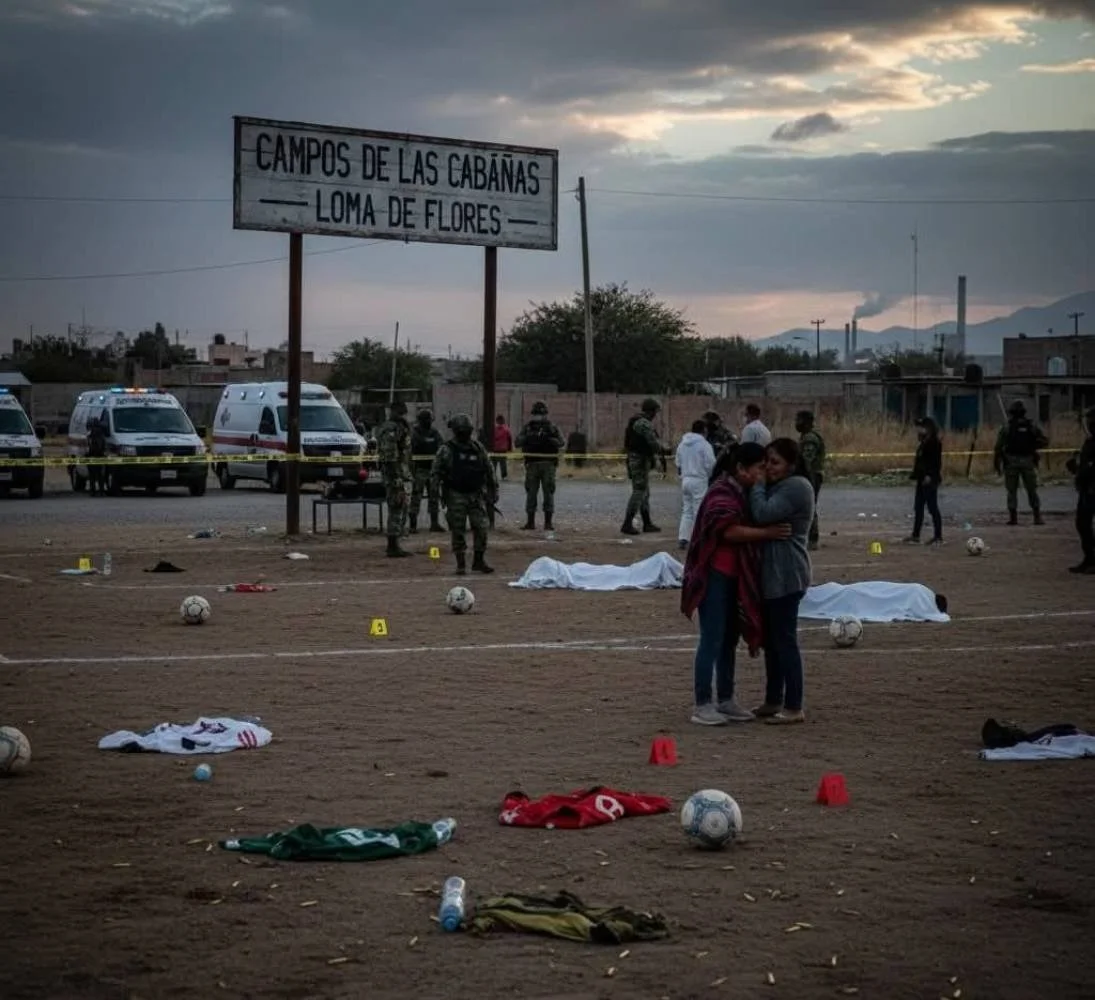
Gunmen opened fire at a soccer field in Salamanca, in the Mexican State of Guanajuato, on January 25, 2026, killing at least 11 people and wounding 12. Local and state officials framed the attack as part of a broader crime wave driven by organized criminal groups seeking to intimidate authorities, and they requested or announced additional federal and state security support.
Analysis
The Salamanca attack appears to be a deliberate mass casualty assault timed to maximize victims at a community gathering, consistent with intimidation tactics seen in cartel contested zones in Guanajuato. Reporting indicates authorities have not announced a motive or suspects, but officials publicly linked the violence to ongoing criminal efforts to subjugate local government, and they moved quickly to signal investigations and reinforcements.
Authorities reported gunmen arrived at the end of an amateur soccer match and opened fire, killing 10 people at the scene and one later at a hospital, with 12 wounded including a woman and a minor.
Salamanca Mayor Cesar Prieto described the attack as part of a broader crime wave and appealed to President Claudia Sheinbaum for assistance, while the Guanajuato prosecutor’s office said it was coordinating with federal authorities to reinforce security.
Reuters reported six injured remained in medical care and that the state attorney general’s office pledged a thorough investigation, while Guanajuato’s governor called the attack unacceptable and said security had been reinforced.
Open source context attributes Guanajuato’s violence in part to conflict between the Santa Rosa de Lima cartel and the Jalisco New Generation Cartel (CJNG), with Salamanca’s refinery and fuel theft economy frequently cited as key drivers of local criminal competition.
The attack received heightened attention because Mexico is preparing to host major international sporting events, and Guanajuato borders Jalisco, a key area linked to CJNG influence and a World Cup host region. The incident also illustrates the continued vulnerability of public recreational spaces to mass violence in cartel contested municipalities, where attacks on civilian gatherings can function as demonstrations of territorial control and a warning to communities perceived as aligned with rival groups or state backed initiatives.
