

Yemen Claims Discovery of Large Espionage Network Linked to US, Israel, and Saudi Arabia
Executive Summary
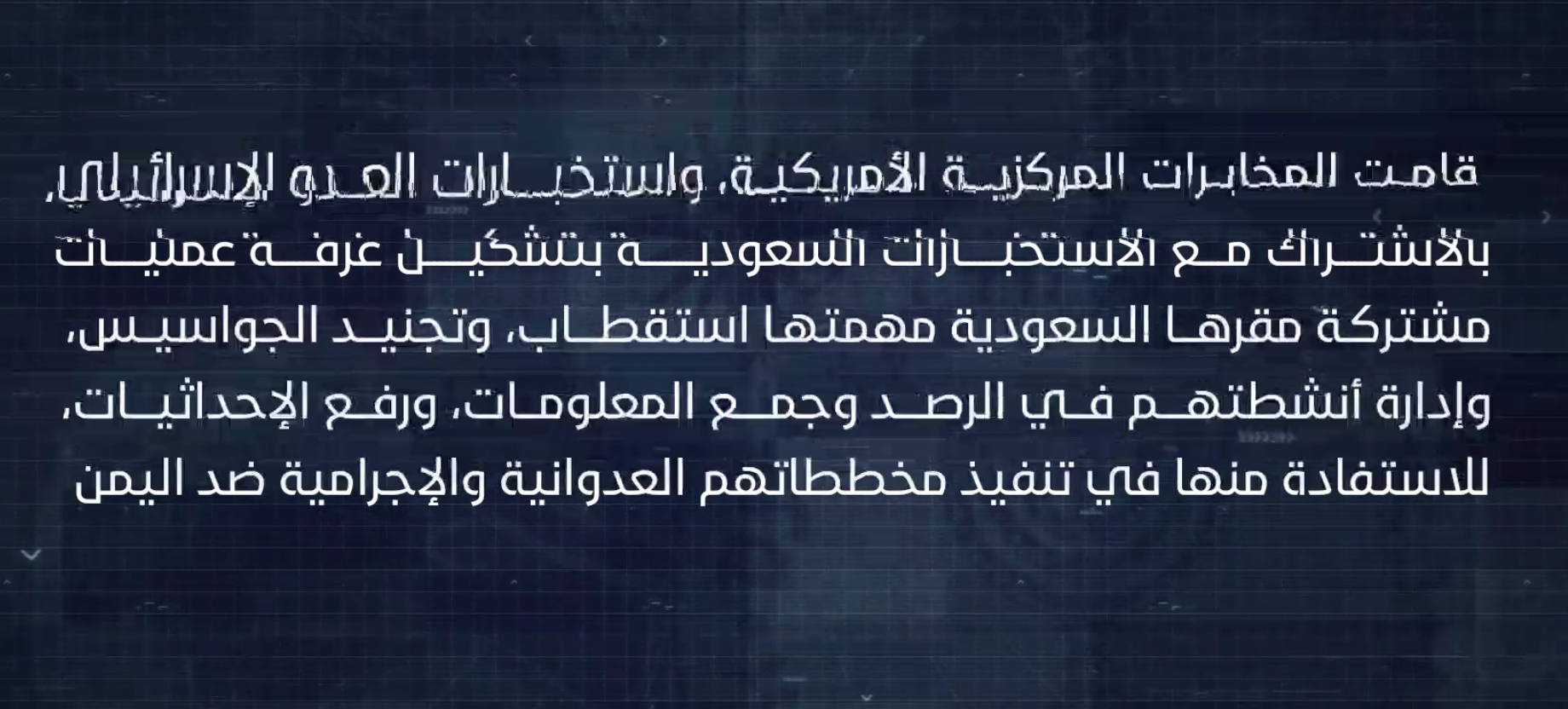
Yemen’s Ministry of Interior announced that it dismantled what it describes as a foreign-directed espionage network tied to a joint intelligence room involving the CIA, Mossad, and Saudi intelligence. Officials say the network provided coordinates and surveillance that enabled foreign strikes on military and civilian sites. The claims are based solely on Houthi government statements and allied Yemeni media, with no independent confirmation. The case has now reached the Houthi-run Specialized Criminal Court, which is preparing to issue judgments for 21 defendants.
Analysis
Yemeni authorities are using the arrests and court proceedings to reinforce a narrative that foreign governments are conducting coordinated intelligence and targeting operations inside Yemen. This fits long-standing themes in Houthi messaging that external actors aim to weaken Yemen’s military posture and undermine its political support for Gaza. The government’s presentation suggests the accused played roles in surveillance, recruitment, and the transmission of sensitive information during periods of heightened conflict.
The Ministry says the cells were coordinated from a joint intelligence room in Saudi Arabia and that American, Israeli, and Saudi officers trained recruits in surveillance, encrypted communication, and clandestine reporting.
Officials assert the network tracked missile and drone launch sites, military production areas, senior leadership movements, and infrastructure, and that this intelligence contributed to foreign attacks on homes, markets, and public facilities.
Court proceedings show prosecutors requesting the death penalty for all 21 defendants, accusing them of leaking military and leadership information, installing hidden cameras, using encrypted applications, and recruiting civilians for surveillance in exchange for payment.
These allegations align with the government’s broader effort to frame internal security measures as defensive responses to foreign aggression. They also serve to consolidate domestic cohesion, especially as Yemen continues to tie its military actions and public messaging to the conflict in Gaza. The court’s scheduled ruling on November 19 indicates the authorities intend to formalize the charges into severe penalties that reinforce the broader narrative of external hostility toward Yemen.
