

Doctor and two others arrested in Gujarat over alleged ricin plot with suspected ISKP links
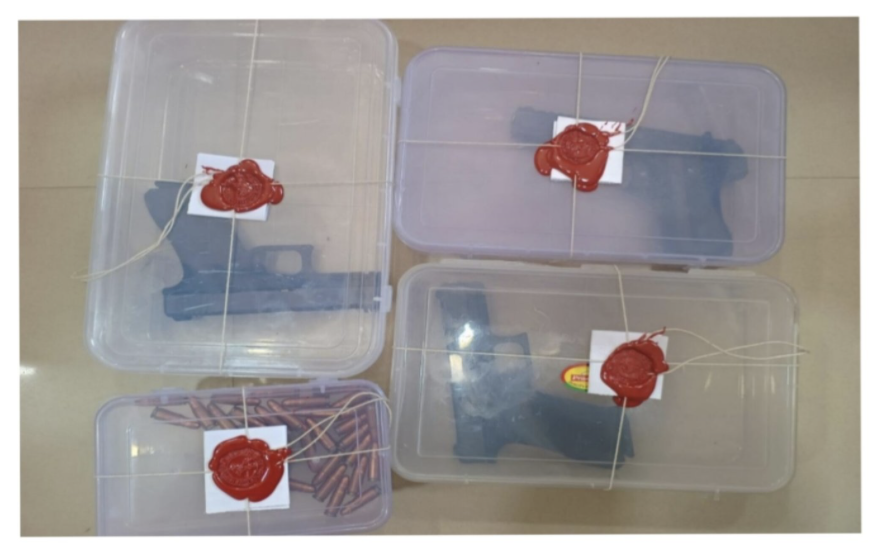
Source: Gujarat ATS
Executive Summary
Gujarat’s Anti Terrorist Squad arrested a Hyderabad-based doctor and two alleged accomplices after seizing pistols, ammunition, and several liters of castor oil amid an alleged plan to produce ricin for attacks following reconnaissance in Lucknow, Delhi, and Ahmedabad. Investigators say the doctor claimed a handler tied to Islamic State Khorasan Province directed activity and used cross-border drone drops for weapons. The case is charged under the Unlawful Activities Prevention Act (UAPA), India’s principal anti-terrorism law, and the Bharatiya Nyat Santiya (BNS), India’s new criminal code, with the main suspect remanded to ATS custody until November 17.
Analysis
This case points to a blended threat that mixes conventional firearms with pursuit of a high-toxicity agent to raise psychological impact, even if ricin is hard to weaponize for mass casualties. Alleged cross-border facilitation, reconnaissance of multiple cities, and claimed ties to an external handler are consistent with small-cell plotting aimed at soft targets.
Gujarat ATS says the main suspect, a doctor with a Chinese MBBS degree, began research and initial chemical processing for ricin and arrived in Gujarat to advance plans; officers seized two Glock pistols, one Beretta pistol, 30 live rounds, and about four liters of castor oil, which is associated with ricin production, near Adalaj.
Investigators report that the trio conducted reconnaissance of sensitive sites in Lucknow, Delhi, and Ahmedabad over roughly a year and used a dead drop near Kalol to pick up weapons.
The doctor allegedly named an Afghan resident known as Abu Khadija, linked to ISKP, as the handler, with weapons said to be sent via drones across the Pakistan border; two alleged suppliers from Uttar Pradesh were arrested in Banaskantha and are accused of sourcing arms from Hanumangarh, Rajasthan.
Digital devices were seized for forensic review, and the ATS says coordination is ongoing with central and state agencies to pursue additional suspects; no local sleeper cell has been identified so far.
Ricin has been used mainly in targeted poisonings and mail threats rather than large-scale attacks because it degrades with heat and dispersal is technically challenging. If confirmed, the pursuit of ricin here likely served to diversify threat options, add intimidation value, or enable small-scale attempts against individuals. The claimed use of drone drops, dead drops, and out-of-state sourcing underscores a pattern of compartmented logistics designed to frustrate detection. Expect follow-on arrests, a wider digital mapping of contacts, and scrutiny of cross-border facilitation and drone activity along known smuggling corridors.
