

ISIS Editorial 510 Frames U.S. and Syrian Rebel Leaders as “Taghut Manufacturers” and Calls Followers to Choose the “Path of Terror”
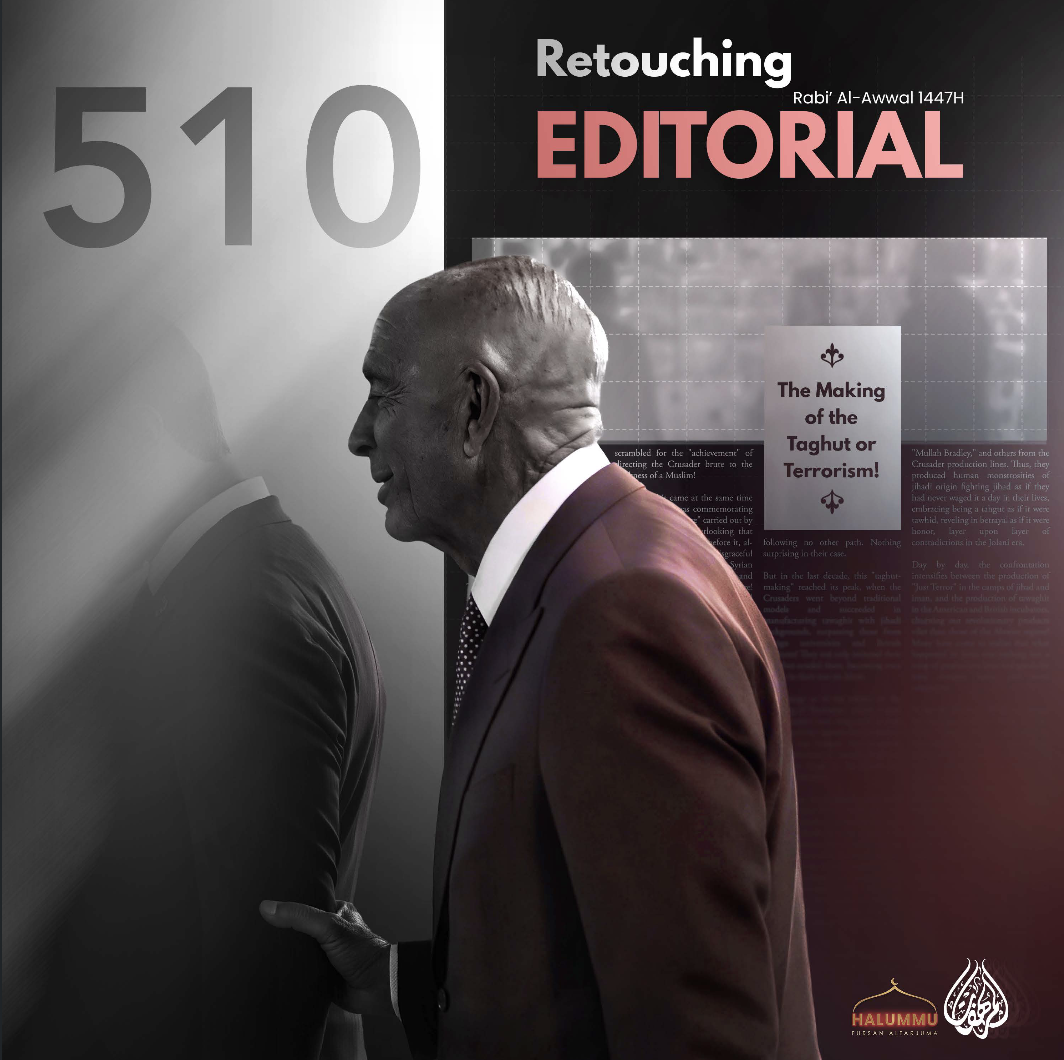
Source: Al Fustat – Al Naba Editorial 510
Executive Summary
Issue 510 of the Islamic State’s Al Naba editorial series presents a coordinated propaganda message accusing Western governments, Syrian rebel factions, and regional Arab leaders of jointly creating a “new industry” of manufactured jihadists to fight ISIS. The editorial uses staged imagery and manipulated narratives to portray figures like U.S. Central Command leadership and HTS leader Abu Muhammad al-Jolani as tools of a global “Crusader project.” The final section urges readers to embrace the “camp of Just Terror” and reject all other political or militant movements, revealing an effort to re-radicalize followers and counter ISIS losses in Syria.
Analysis
ISIS uses Editorial 510 to intensify ideological pressure on its supporters, arguing that all political and armed movements opposed to ISIS—from Western militaries to Syrian rebel factions—are part of a single coalition to manufacture compliant “jihadi fronts” and neutralize the Islamic State’s model of violence.
The editorial opens on page 2 by attacking political and security commentators in “the new Syrian regime,” accusing them of distorting Islamic principles to legitimize rule by “taghut” (unbelieving rulers), and claiming ISIS represents the only authentic rejection of state authority. The text selectively cites Islamic scholarship to portray cooperation with governments as apostasy.
Page 3 features a photo of CENTCOM Commander Brad Cooper and misuses his congressional testimony to suggest the United States openly admits to directing regional partners against ISIS; the surrounding imagery frames him as a central planner of a global anti-ISIS conspiracy.
Page 4 accuses HTS leader al-Jolani of “legitimized riddah” for escorting U.S. officials and accepting political support, highlighting images meant to portray him as a collaborator. ISIS uses the Atmeh incident—depicted as a U.S.-led aircraft strike—to argue that Jolani’s movement facilitated foreign intervention.
Page 5’s section “The Making of the Taghut” claims the Syrian regime and its rebel rivals are now indistinguishable in their alleged betrayal of mujahidin, asserting that both sides have accelerated the “path of taghut” by releasing prisoners, retaining oppressive structures, and cooperating with foreign states.
Page 6 introduces the idea of a “new industry” of manufactured jihadists, arguing that Western governments have shifted from military operations to producing tailored jihadist movements—specifically naming HTS and factions supported by Arab states. ISIS accuses these groups of following Western-written scripts.
Page 7 expands this into “Crusader Production Lines,” asserting that the U.S. and allied intelligence services now create entire generations of fake mujahidin to channel violence away from Western interests. This narrative is designed to delegitimize HTS and other Sunni jihadist rivals by framing them as “cheap products.”
The final page (page 8) directs supporters to “choose your path,” stating openly that a Muslim has “no choice but to align with the camp of Just Terror.” It glorifies terror attacks as the only legitimate resistance to “taghut” and condemns avoidance of violence as submission to false authority.
Together, the pages use visual manipulation, selective religious arguments, and conspiratorial framing to reinforce ISIS’s split from all other militant and political actors, including jihadist rivals. The editorial’s central purpose is to isolate supporters, revive the appeal of extreme violence, and delegitimize any group that has gained influence at ISIS’s expense in Syria and beyond.
Sources
Al Fustat – Al Naba Editorial 510
