

Pashto Jihadist Treatise Promotes Expansive Takfir and Rejects Elections, Courts, and Modern Muslim Rulers
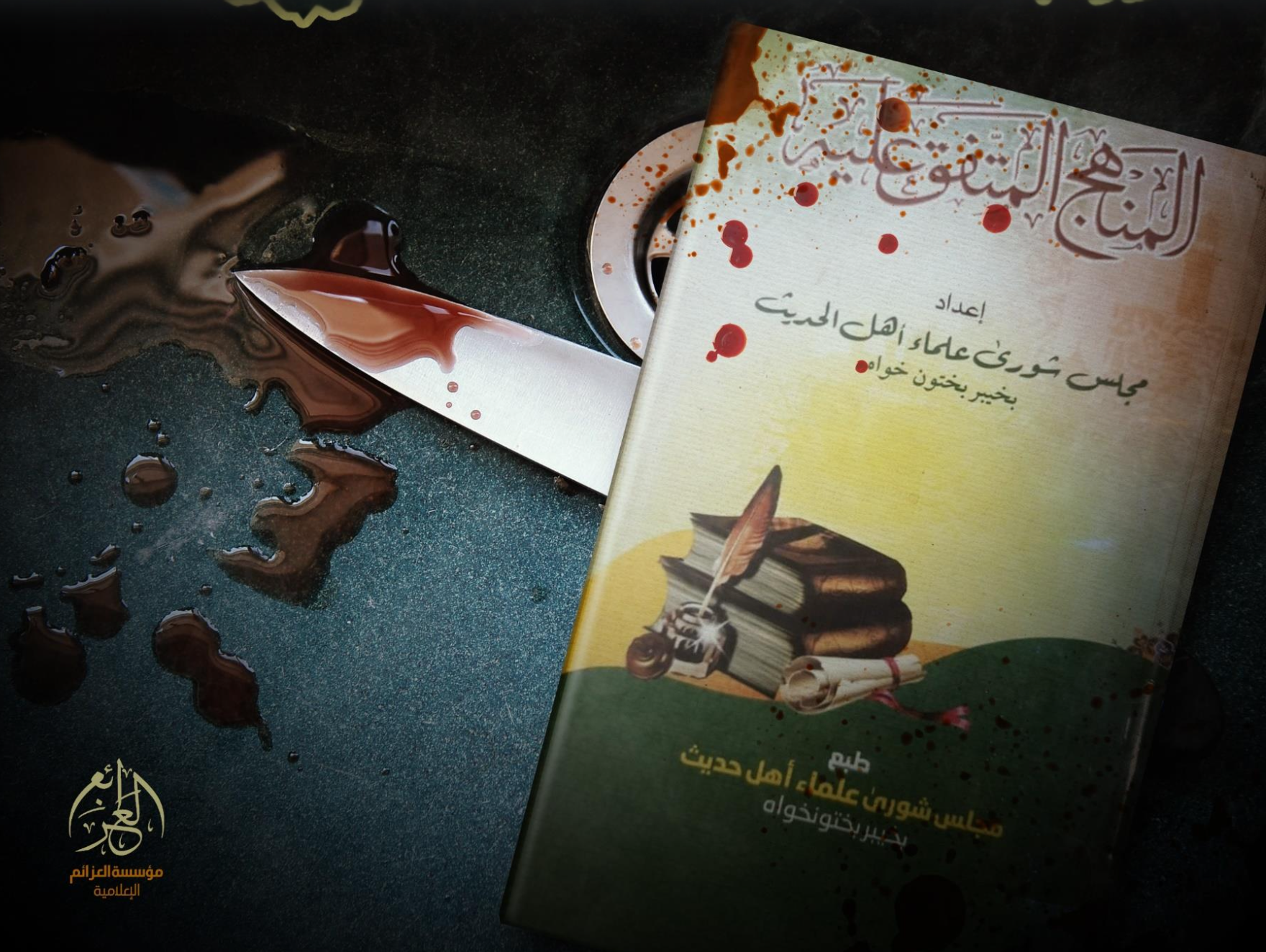
Source: Al-Azaim
Executive Summary
A newly circulated 580-page Pashto jihadist treatise published by the al-Azaim media apparatus advances a hard-line ideological program that labels modern Muslim rulers as apostates, denounces elections and state courts as forms of disbelief, and attacks contemporary Salafi scholars in Afghanistan and Pakistan. The authors elevate “tawhid al-hakimiyya,” the belief that only God has the right to legislate, as a test of true faith and encourage “takfir,” meaning the act of declaring another Muslim to be a disbeliever. The work rejects political participation and promotes an uncompromising worldview that encourages conflict with existing governments. Its size, tone, and doctrinal rigor suggest it is designed as a long-form ideological manual for Pashto-speaking extremists.
Analysis
The treatise positions itself as a refutation of mainstream Salafi scholarship and seeks to replace it with a framework aligned with jihadist doctrine. Early sections accuse Saudi- and Pakistani-aligned Salafi religious leaders—often called “Ahl al-Hadith,” a movement advocating strict adherence to early Islamic texts—of betraying authentic teachings. The book labels these scholars “Murji’a,” a historical school accused of excusing sinful rulers, to imply they protect modern governments from criticism.
The text elevates “tawhid al-hakimiyya,” or the belief that political and legal authority belongs solely to God, and argues that rejecting this principle is itself an act of disbelief.
Sayyid Qutb’s writings are used to frame man-made law as a rival religion.
A side-by-side table portrays mainstream Salafi scholars as corrupt, while portraying jihadist movements as the only legitimate heirs of early Islamic teaching.
A major goal of the text is to lower the barriers for “takfir”. In mainstream Sunni teaching, takfir is heavily restricted because it can justify violence against fellow Muslims. In this treatise, takfir is broadened and democratized.
The text rejects the distinction between broad doctrinal disbelief and declaring a specific individual an unbeliever, removing a core safeguard used by traditional scholars.
It states that ordinary followers—not just religious authorities—have the duty to declare a ruler, judge, or citizen a disbeliever if they believe evidence supports it.
Modern heads of state are accused of major unbelief for legislating outside Islamic law, cooperating with foreign governments, or participating in global institutions.
By portraying modern Muslim governments as worse than historical enemies of Islam, the treatise primes followers to see rebellion as mandatory and peaceful engagement as illegitimate.
The book also condemns elections, democracy, modern courts, and nationalism, branding each as incompatible with Islam. The term “taghut”—meaning an illegitimate authority or false ruler—is used repeatedly to describe governments, judges, and legal systems in Muslim-majority states today.
Democracy is labeled a “false religion” because it assigns legislative authority to people and parliaments.
Elections are described as active participation in unbelief, because voting is said to show approval of human-made law.
State courts are called “tawaghit” (plural of taghut), meaning courts ruled by false authorities; using them is considered a form of disbelief regardless of intention.
Nationalism and patriotism are portrayed as idols competing with the universal community of Muslims.
Toward the end, the treatise incorporates material tied directly to violent operations and insurgency. Terms such as “istishhadi,” meaning a suicide attacker portrayed as seeking martyrdom, and “inghimasi,” meaning a commando-style attacker who fights deep inside enemy positions until killed, appear in the context of legitimate tactics. This framing presents violence not as an extreme step but as a normalized extension of the ideology.
The work outlines positions on armed revolt, diplomatic relations, and the legitimacy of suicide and deep-penetration attacks.
It identifies cooperation with foreign states and reliance on international law as signs of disloyalty to God.
The combination of theology and operational guidance suggests the text is intended as a training and indoctrination manual for militant environments.
Overall, this Pashto treatise is a comprehensive extremist ideological work that encourages broad takfir, rejects any form of political participation, and legitimizes armed resistance. For Pashto-speaking audiences already exposed to hard-line preaching, its arguments may reinforce hostility to state institutions and create a low barrier for accepting violence against government officials, security forces, or community members seen as supporting the existing order.
Sources
Al-Azaim Pashto channel
