

Ayatollah Khamenei Uses Basij Week Address to Portray Iran as Victor of “12-Day War” and Accuse U.S. of Global Destabilization
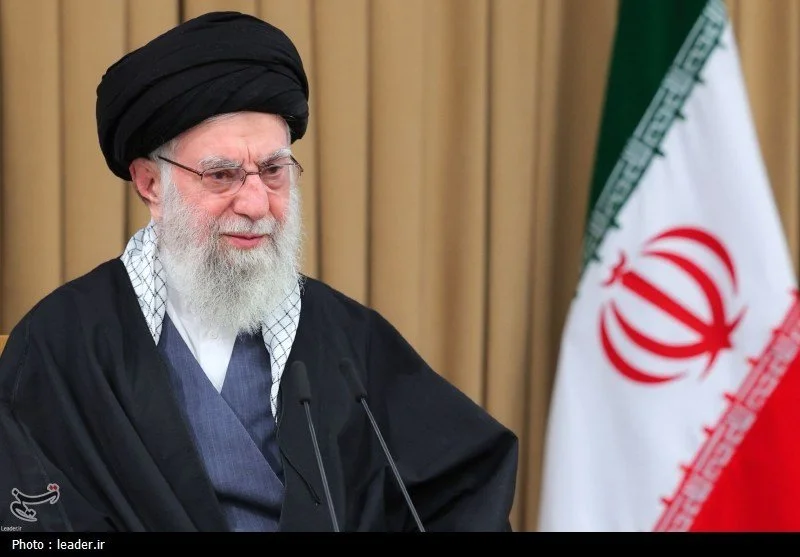
Source: Tasnim News
Executive Summary
Ayatollah Ali Khamenei’s November 27 televised Basij Week speech framed Iran as having decisively defeated both the United States and Israel in the recent “12-Day War” and expanded that narrative into a broader accusation that U.S. military and political interference worldwide has generated historic levels of global resentment. The speech positioned the Basij as the backbone of Iranian national unity and as a model for resistance movements abroad. Khamenei’s messaging sought to rally domestic cohesion after recent casualties, amplify Iran’s deterrence posture, and reinforce Tehran’s claim that rising global pro-Palestine sentiment reflects expanding support for Iran-led “resistance.”
Analysis
Khamenei used the Basij Week platform to shift public focus from Iran’s losses to a narrative of strategic triumph, emphasizing U.S. military failure, Israeli humiliation, and global isolation of Washington and Tel Aviv. The speech served as both wartime morale-building and ideological consolidation.
Khamenei declared that Iran “undeniably defeated both the U.S. and the Zionist regime” in the 12-Day War, asserting that Washington deployed its most advanced military assets but “was unable to achieve what it wanted.” He argued the conflict produced greater Iranian unity and thwarted U.S. aims to generate internal unrest.
He claimed Israel had prepared for 20 years to launch a war intended to turn the Iranian public against the government, but that the plan “failed” and even government critics supported the system.
The speech repeatedly described the U.S. as disgraced by its support for Israel in Gaza, portraying global outrage at Israeli actions as proof that “hatred toward the Zionist regime has spread to the U.S. as well.”
Khamenei portrayed U.S. involvement in Ukraine, Syria, Lebanon, and Latin America as evidence of Washington’s “war-mongering, genocide, destruction, and displacement,” framing the U.S. as an instigator of global conflict and an unreliable ally willing to “betray even its own partners.”
He denied circulating claims that Iran had sent messages to the U.S. through third countries, calling such rumors “a total lie,” signaling Tehran’s continued resistance to diplomatic openings that might appear conciliatory.
Khamenei also used the address to elevate the Basij as the template for national endurance and transnational resistance, linking Iran’s internal mobilization to global pro-Palestine activism to assert expanding ideological influence.
He described the Basij as a “firm and steadfast” face toward enemies and a network spanning economic, scientific, industrial, clerical, and business sectors, emphasizing that its true strength lies in its broad civilian base, not only its role within the IRGC.
He argued that the “rise of Resistance” movements worldwide shows that Iran’s model has taken root, citing large demonstrations supporting Gaza, including in Western states and inside the U.S.
Khamenei urged Iranian officials to work “like a Basiji,” invoking themes of sacrifice, unity, and ideological discipline for governance during continued regional tensions.
The message is consistent with Iran’s strategic communications following the 12-Day War: portray Iran as militarily victorious, frame the U.S. as globally isolated, and integrate recent regional conflict into a narrative of Iranian-led ideological ascendancy. Domestically, the speech aims to fortify cohesion after Iranian casualties and sustain public readiness for prolonged confrontation with Israel and the U.S.
