

ISIS Naba 523 Showcases Multi Theater Campaign in Nigeria, Somalia, Mozambique, DRC, Syria, and Pakistan
Source: Al Fustat Media
Executive Summary
Issue 523 of the Islamic State weekly newspaper Al Naba, posted on Al Fustat, frames recent attacks across Africa and South Asia as proof of an ongoing “war between two projects” and showcases a sustained tempo of operations by ISIS provinces, especially in West Africa. The issue reports multi casualty raids and ambushes in northern Nigeria and Puntland, targeted killings and arson against Christian civilians in Mozambique and eastern DRC, and smaller security operations against Pakistani intelligence and Syrian regime and PKK linked targets. The content is overt propaganda but it indicates that ISIS networks in West Africa, Somalia, and Mozambique remain capable of coordinated raids, complex infiltrations, and systematic targeting of local security partners and Christian communities.
Analysis
Al Naba 523 underscores that ISIS is prioritizing its African theaters, portraying Nigeria, Somalia’s Puntland region, Mozambique, and eastern DRC as active fronts where the group can inflict steady losses on local forces and Christian communities while surviving state campaigns.
The lead story credits ISIS West Africa with killing 14 pro government militia members, killing or wounding at least four army and police personnel, burning two sites and five vehicles, and seizing another vehicle in five attacks across Borno and Yobe in northern Nigeria, including a raid that burned a police station in Geidam and a roadside bomb on a Nigerian army patrol.
A full page report from Somalia claims an inghimasi raid on a key Puntland command post in the El Miskad mountains that allegedly killed 11 fighters, wounded around 10 more, destroyed or damaged several vehicles, and forced a rapid withdrawal of government troops after a night infiltration into the Marayil valley.
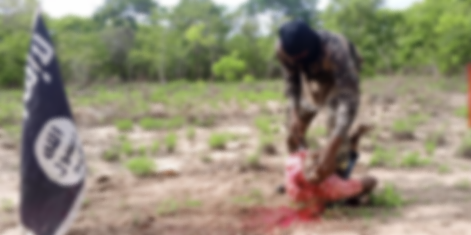
Coverage from Mozambique says ISIS fighters killed seven Christians, slit the throats of several victims, burned at least one church and three homes, and clashed with local militias in multiple villages in Cabo Delgado and Nampula, while a separate note from DRC’s Ituri and Lubero areas reports five Christians killed in a village raid following weeks of escalated attacks.
An infographic on the last three months of “jihad harvest in West Africa” claims 77 attacks that killed or wounded 234 people, including large numbers of military and militia personnel, and highlights dozens of destroyed vehicles and over one hundred burned homes, with heavy focus on Borno, Yobe, and adjoining zones.
These reports are almost certainly inflated and selective, but they show that ISIS media continues to treat West Africa and coastal East Africa as its main proof of global relevance, emphasizing mobility, arson, and intimidation of Christian communities and local auxiliaries. The pattern of repeated raids on remote villages, ambushes on patrols, and attacks on symbols like churches and local leaders matches prior ISIS behavior and points to persistent insecurity in northern Nigeria, Cabo Delgado, and parts of eastern DRC despite ongoing national and regional counterinsurgency campaigns.
The issue’s editorial theme, “war between two projects,” targets not only Western and local governments but also rival Islamist and jihadist actors, signaling that ISIS still sees ideological confrontation inside the wider militant ecosystem as central to its strategy.
The opening article describes a broad coalition of enemies whose only shared “project” is to fight the Islamic State, listing “original unbelievers,” “apostate governments and parties,” “hypocrites,” and “those who believed then recanted,” and mocks Islamist and jihadist rivals for allegedly siding with “crusaders” and local regimes.
It accuses former supporters and other jihadist factions of abandoning pure monotheism, seeking gray zones between truth and falsehood, and aligning with state backed coalitions in Syria, Khorasan, and Libya, portraying ISIS as the only actor that fully separates from “taghut” (unbelieving rulers).
Additional news items fit this narrative by highlighting the killing of alleged spies for Pakistan’s intelligence service in Bajaur after they reportedly killed an ISIS fighter in a mosque, and the assassination of a Syrian regime agent in Al Bukamal along with attacks on PKK linked oil and logistics assets in Deir ez Zor, reinforcing the image of a global counter espionage and economic warfare campaign.
This messaging aims to keep ISIS followers ideologically isolated and loyal, to discredit rival groups that might attract defectors, and to justify continued violence against a wide array of Muslim and non Muslim targets labeled as enemies. For external observers, the issue offers a reminder that ISIS propaganda still blends battlefield reporting and doctrinal polemic to sustain support networks, encourage attacks on Christians and security partners in fragile African states, and maintain a sense of momentum despite territorial losses in Iraq and Syria.
Sources
Al Fustat Media
