

ISIS Uses Al Naba Issue 525 to Showcase African Operations and Attack Syrian Rivals
Executive Summary
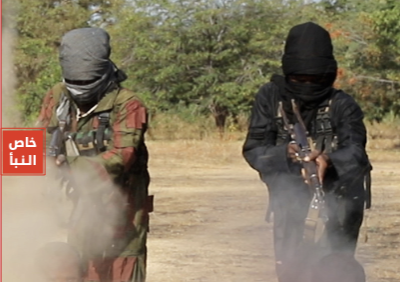
Issue 525 of ISIS’s weekly Al Naba newspaper projects an image of continued global activity, emphasizing a series of attacks in Nigeria, the Democratic Republic of Congo, Mozambique, Somalia, Iraq, and Syria while criticizing rival Syrian factions as agents of U.S. and Israeli interests. The issue blends battlefield claims, targeted assassinations, and a long editorial on Syria with religious guidance content, reinforcing ISIS’s narrative that it remains a transnational insurgent movement and a de facto “state” authority despite territorial losses.
Analysis
Operational reporting in Al Naba 525 is centered on Africa and the Levant, highlighting security operations, ambushes, and bombings against local armies, militias, and Christian communities. The West Africa and Central Africa sections stress anti “spy” campaigns and sustained pressure on state and militia forces, while the Mozambique and Somalia items frame repeated roadside bombs and ambushes as part of a deliberate attrition strategy against “crusader” troops and allied governments.
In Nigeria’s Borno and Yobe regions, ISIS West Africa claims nine operations killing ten militia members and informants, burning two army positions, damaging or destroying four vehicles, and capturing a fifth.
In eastern DRC, ISIS Central Africa reports killing at least ten people, including three Congolese security personnel and seven Christian civilians, burning two military posts and about twenty homes in Lubero and Ituri.
ISIS Mozambique says it wounded at least seven Mozambican and Rwandan soldiers, disabled one vehicle, and seized another in two ambushes on a key road in Cabo Delgado, also looting a Christian commercial truck.
Additional dispatches describe IED and small arms attacks on Iraqi tribal militia convoys in Anbar and Salah al-Din, targeted shootings and bombings against Syrian government personnel and PKK-aligned forces in Aleppo, Damascus countryside, Deir ez-Zor, and Idlib, and a roadside bomb on Puntland forces in northern Somalia.
An infographic on page 2, “Harvest of the Soldiers,” aggregates these claimed actions into 28 operations causing more than 53 killed and wounded across multiple “wilayat,” reinforcing the message of a geographically dispersed campaign. The map and bar charts visually emphasize West and Central Africa and “Wilayat al-Sham” as leading theaters, underscoring ISIS’s effort to portray itself as active on several fronts rather than confined to any single country.
The lead editorial, titled “Revolution Until the Palace,” uses the recent Syrian “liberation day” celebrations and the governance of HTS leader Abu Muhammad al-Jolani as a vehicle to attack Syrian opposition structures and international backers. It argues that Arab “independence” days are manufactured victories designed by foreign powers and portrays the new “Syrian government” in Idlib as an American project tasked with eradicating ISIS, accommodating foreign agendas, and protecting Israeli security.
The article mocks Arab independence and liberation holidays as false victories arranged by Western powers, claiming that current Syrian celebrations mark liberation “from the rule of Islam,” not from foreign control.
It cites reported U.S. congressional conditions for rolling back “Caesar Act” sanctions, highlighting clauses that require partnership with America to “eliminate the threat posed by the Islamic State” and protect neighboring states, which the piece frames as code for “Jewish security.”
The editorial accuses Jolani of surpassing even Assad in serving American and Israeli interests, describing him as “Trump’s boy” and depicting his government as a tool for dismantling Islamic governance in northern Syria.
This narrative aims to delegitimize any non-ISIS Islamist or opposition authority by painting it as a collaborator regime whose “revolution” ends at the presidential palace rather than in the implementation of ISIS’s version of sharia. It also attempts to recast past ISIS rule in Syria as the only “true liberation,” contrasting it with what the group calls a return to jahiliyyah under new rulers.
Beyond combat reporting and polemics, the issue includes a back-page infographic on ritual purity rules for wounds and amputations, framed as practical guidance on “purifying the wounded or severed limb.” By mixing technical religious rulings with war content, ISIS continues its long-running strategy of presenting itself as both a fighting force and a governing religious authority capable of regulating everyday life for its followers.
Sources
Al Fustat
