

Israeli Strike in Beirut Kills Hezbollah Chief of Staff Haytham Ali Tabatabai
Executive Summary
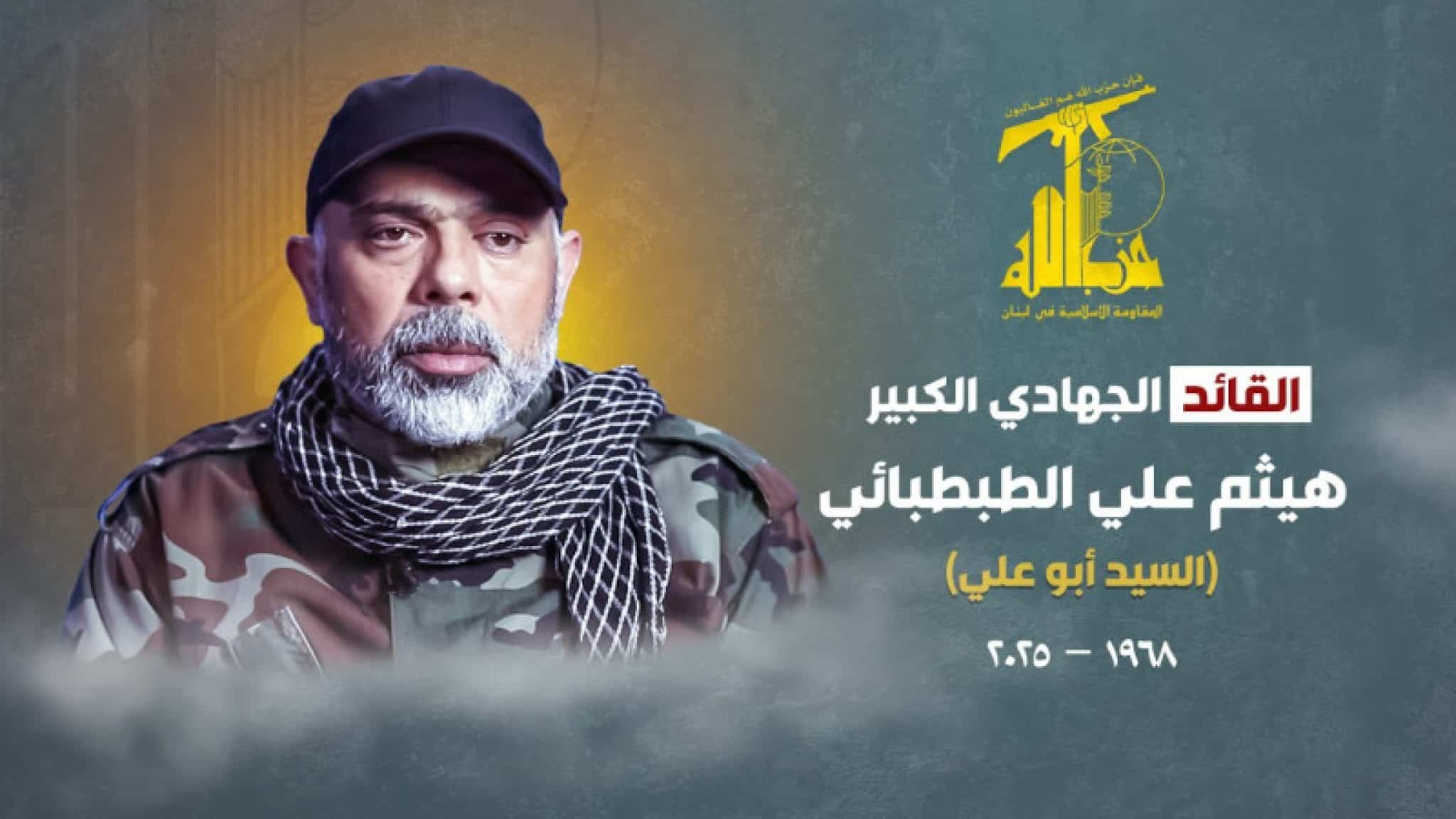
Israeli forces killed Hezbollah Chief of Staff Haytham Ali Tabatabai in an airstrike on an apartment in Beirut’s southern suburb of Dahieh on November 23, 2025. Tabatabai, one of Hezbollah’s last remaining legacy field commanders and a longtime special forces leader, had been central to rebuilding the group’s military structure after the 2023–24 war with Israel. His death removes a key architect of Hezbollah’s post-war reorganization but risks further destabilizing the already fragile ceasefire along the Israel–Lebanon border as Hezbollah, Iran, and allied Palestinian factions frame the strike as a major escalation and “red line” violation.
Analysis
Tabatabai’s killing is a major leadership loss for Hezbollah’s military wing, eliminating the official who was reportedly overseeing the reconstitution of its units and Radwan Force capabilities after heavy wartime attrition, and signaling Israel’s willingness to strike high-value targets deep in Beirut despite a formal ceasefire.
The IDF confirmed it killed Tabatabai and four other Hezbollah operatives in a precision strike on an apartment in Beirut’s Haret Hreik/Dahieh area, calling him a “mass murderer” with blood of Israelis and Americans on his hands and vowing not to allow Hezbollah to rebuild its military power.
Hezbollah publicly acknowledged Tabatabai’s death, identifying him as its chief of staff and honoring him as “Sayyid Abu Ali,” while naming four additional fighters killed in the strike and holding funerals in Beirut.
Reporting notes this was at least the third reported Israeli attempt on his life, after previous unconfirmed strikes in southern Lebanon and during the 2023–24 war, underscoring his long-standing status as a priority target.
Lebanese officials say the strike killed five and wounded at least 28 people and was the first unannounced attack on Beirut’s southern suburbs since the November 2024 US-brokered ceasefire, feeding Hezbollah and Lebanese claims that Israel is repeatedly violating the truce.
Tabatabai’s career profile shows he was more than a frontline commander; he was a regional force multiplier for Iran’s network of militias and a central node in Hezbollah’s special operations and border forces. His removal disrupts an experienced command figure with deep ties to Unit 3800 and the Radwan Force, but it does not eliminate the underlying infrastructure Iran and Hezbollah have built across multiple fronts.
The US Rewards for Justice program had a $5 million bounty on Tabatabai and designated him a Specially Designated Global Terrorist in 2016, citing his command of Hezbollah’s special forces and his operational roles in Syria and Yemen as part of a larger effort to train and support Shiite militias across the region.
Open-source profiles describe him as a veteran in Hezbollah’s Nabatieh and Khiam sectors in southern Lebanon, a commander during the 2006 war with Israel, and a key figure in establishing and later leading the Radwan Force, which is tasked with cross-border raids into northern Israel.
Israeli and Lebanese reporting indicate he led Hezbollah’s operations division during the 2023–24 war, was promoted rapidly as other senior leaders were killed, and was appointed chief of staff after the conflict, responsible for restoring readiness along the southern front.
Immediate reactions from Iran and allied Palestinian groups frame the killing as both a martyrdom event and a call to continue “resistance,” raising pressure on Hezbollah to respond while leaving room for calibrated timing. How Hezbollah chooses to answer—symbolic rocket fire, targeted attacks, or a larger escalation—will shape the durability of the ceasefire and the risk of a renewed wider war.
Hamas’s Al Qassam Brigades and Palestinian Islamic Jihad both issued statements praising Tabatabai’s support for Palestinian armed groups and pledging to continue jihad until “all of Palestine” is liberated, using his death to reinforce their own narratives of shared struggle.
Iran’s Supreme National Security Council secretary Ali Larijani condemned the strike as a “reckless adventure,” offered condolences, and cast the killing as a dangerous escalation, framing Netanyahu personally as responsible.
Hezbollah political figures and MPs labeled the attack another “red line” violation and ceasefire breach, warning that it “opens the door” to broader attacks across Lebanon, while the Lebanese president appealed to the international community to restrain Israel even as his government had just signaled interest in peace talks.
In the short term, Israel’s strike demonstrates continued high-quality intelligence and precision strike capability inside dense urban areas of Beirut, and serves as a warning to other senior Hezbollah and Iranian-linked figures. In the medium term, however, leadership decapitation has historically prompted Hezbollah and Iran to adapt by promoting hardened successors and leaning further into asymmetric and deniable responses. Tabatabai’s death will likely slow but not stop Hezbollah’s efforts to rebuild its force posture; it also increases the incentives on all sides to test the boundaries of the ceasefire, raising miscalculation risks along a front where both conventional forces and proxy actors are active.
