

Mass Protests Force Collapse of Bulgaria’s Ruling Coalition Amid Deep Public Anger Over Corruption and Governance
Source: X
Executive Summary
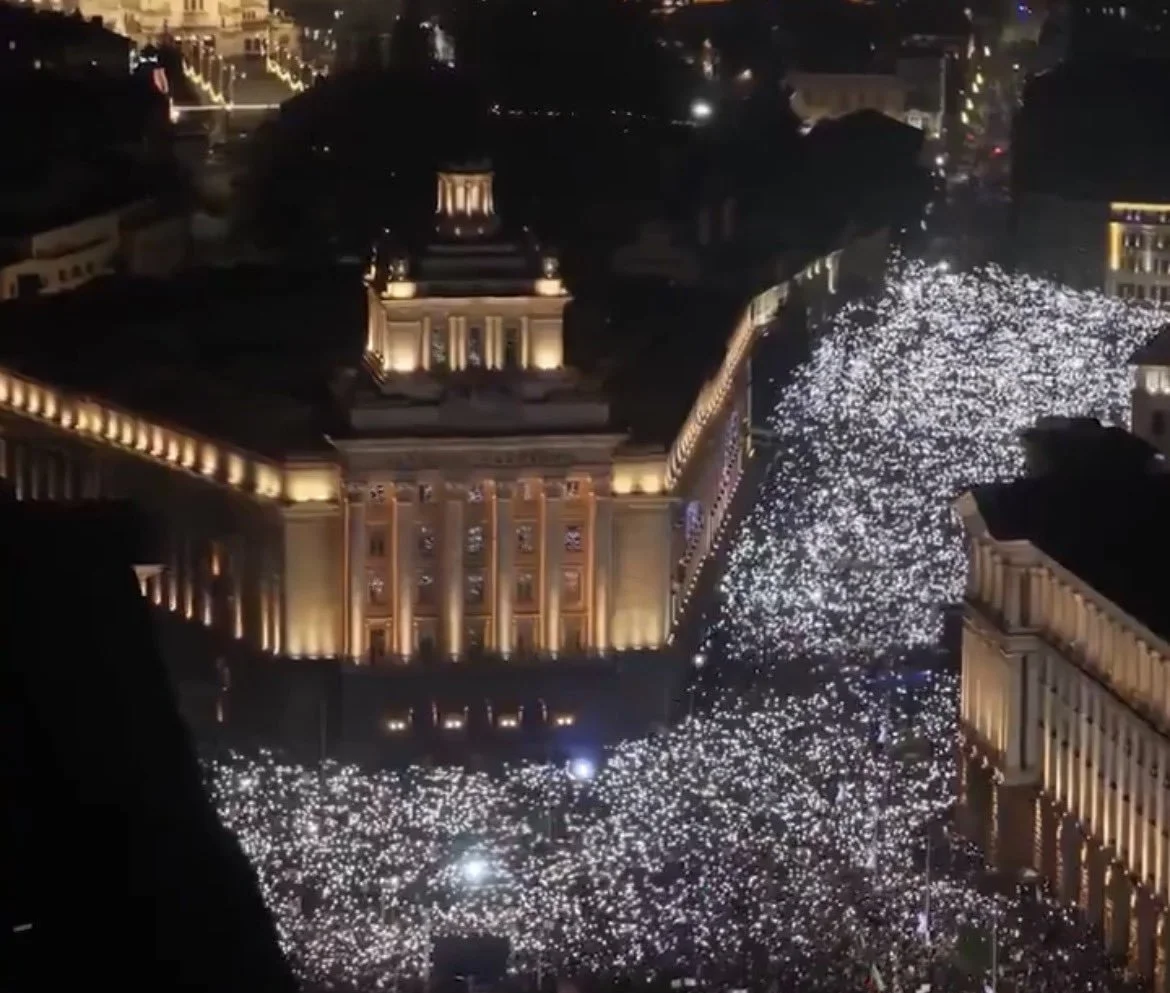
Bulgaria’s coalition government unexpectedly resigned on December 11 after some of the largest protests in the country’s post communist history, driven by public fury over corruption, proposed tax increases, and the influence of sanctioned political figures. Despite holding a parliamentary majority and facing a no confidence vote it was almost certain to survive, the coalition stepped down under intense civic pressure, setting the stage for snap elections in early 2026 and placing governance in the hands of a caretaker cabinet appointed by President Rumen Radev.
Analysis
The fall of Prime Minister Rossen Zhelyazkov’s coalition highlights the depth of public frustration with Bulgaria’s political establishment, especially long standing grievances tied to corruption, oligarchic influence, and economic management. The protests, which drew over one hundred thousand people in Sofia alone, were triggered by a 2026 budget proposal that raised taxes on the private sector to fund public sector wage increases. Critics argued this was a backdoor attempt to expand government control and entrench patronage networks, igniting anger that quickly merged with long simmering demands for systemic reform.
Tens of thousands rallied in Sofia and other major cities between late November and mid December, surpassing earlier protest waves from 2013 to 2014 and 2020 to 2021, many of which also targeted oligarch Delyan Peevski and former Prime Minister Boyko Borissov.
The coalition comprised GERB, the pro Kremlin Bulgarian Socialist Party, and the nationalist There’s Such a People party, with parliamentary support from Peevski’s New Beginning faction, a major source of public resentment due to his corruption sanctions under the U.S. Magnitsky Act.
Protest organizers from the pro EU opposition, We Continue the Change and Democratic Bulgaria, framed the proposed budget as a corruption enabling mechanism and a threat to economic transparency, mobilizing younger Bulgarians in unprecedented numbers.
Polling showed seventy one percent public support for the demonstrations and nearly half the public demanding the government’s resignation, a rare level of consensus in Bulgaria’s polarized political landscape.
Even after the government withdrew the controversial budget, unrest continued because the demonstrations evolved into a broader anti corruption movement demanding the removal of entrenched political figures and structural reform. Public anger reflects deeper anxieties as Bulgaria prepares to adopt the euro on January 1, including fears of rising prices and distrust in state financial institutions. Student movements, recalling their influential role during major protests in 2013, added momentum and broadened the demographic reach of the mobilization.
AFP reporting described protesters wearing symbolic imagery such as pig snouts to depict political corruption and chanting calls for the entire ruling structure to resign.
Student groups from major universities marched on December 10, reviving slogans like “Shishi out,” referencing Peevski, and calling for depoliticization of state institutions.
President Rumen Radev openly supported the protests and declared the government’s resignation “inevitable,” warning against the counter rallies orchestrated by pro government factions.
The resignation now plunges Bulgaria back into political instability, continuing a cycle of short lived governments and frequent elections that has persisted since 2021. While the opposition stands to benefit in upcoming snap elections, governance will temporarily fall to an interim cabinet selected by Radev, who is often viewed as sympathetic to Russian interests. This dynamic could shape Bulgaria’s posture as it joins the Eurozone and navigates rising regional unrest across Eastern Europe and the Balkans.
