

Molotov cocktails hit Albanian prime minister’s office during Tirana protest over corruption allegations
Source: Telegram
Executive Summary
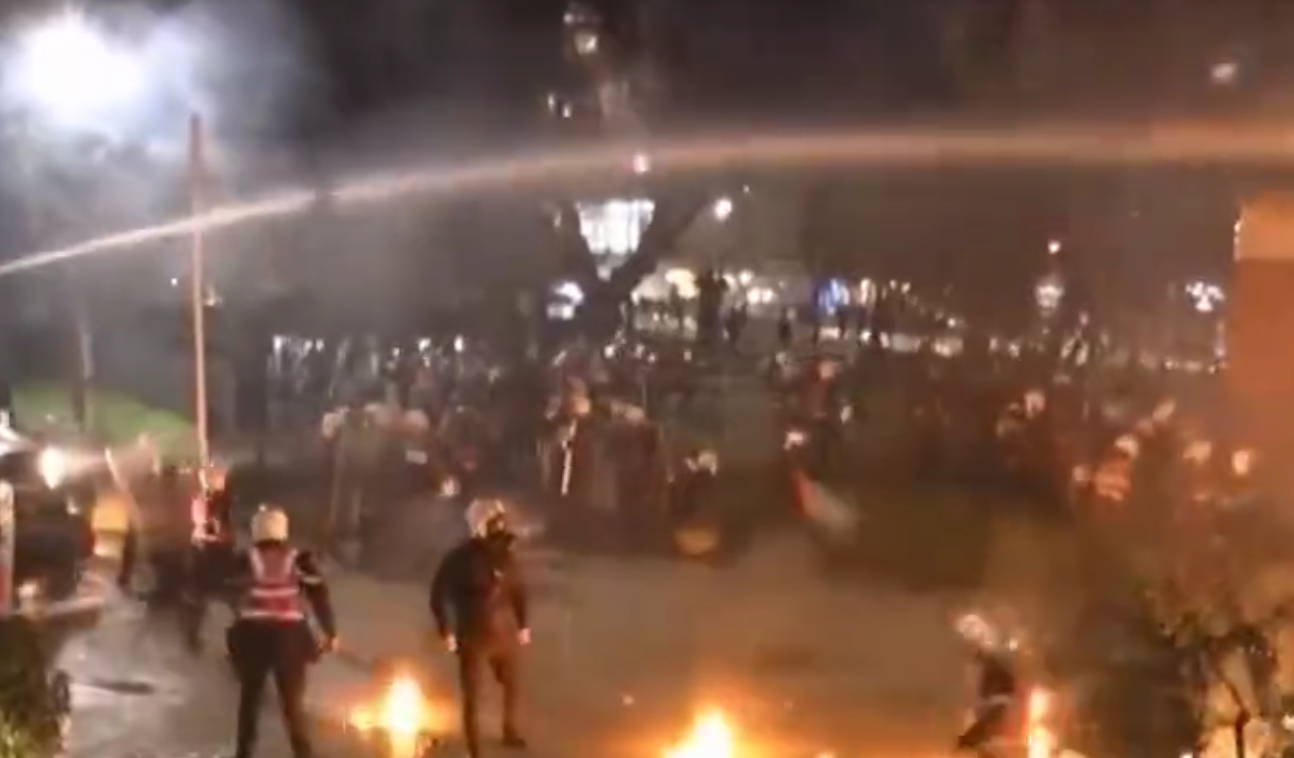
Anti government protests in Tirana on February 10, 2026 turned violent when demonstrators threw Molotov cocktails and other objects at Albania’s prime minister’s office and clashed with police near parliament. Reporting says police used tear gas and water cannons and that multiple people were injured, with arrests reported by police. The unrest is tied to opposition demands for Prime Minister Edi Rama’s resignation and anger over corruption allegations involving Deputy Prime Minister Belinda Balluku.
Analysis
The protest violence reflects a sustained political pressure campaign by the opposition Democratic Party that is increasingly pairing mass mobilization with confrontational tactics around high visibility government sites. The use of incendiary devices and repeated clashes with riot police raises the risk of escalation and creates an ongoing public order challenge in the capital, while corruption allegations continue to serve as the central mobilizing narrative.
Protesters hurled Molotov cocktails, fireworks, smoke bombs, and other objects at the prime minister’s office, prompting police to use tear gas and water cannons as clashes spread near parliament.
Police deployed more than 1,300 officers; 16 protesters were treated for burns and other injuries, and 13 people were arrested.
The demonstration was called by the opposition Democratic Party and centered on demands for Prime Minister Edi Rama to resign amid corruption allegations tied to Deputy Prime Minister Belinda Balluku, including pressure to lift her immunity.
It was the latest in a series of major protests in recent months, with prior rallies also turning violent and producing similar crowd control measures.
The protests take place as Albania seeks European Union accession and remains under close scrutiny on rule of law and corruption issues, which raises the stakes for both the government and opposition messaging. If demonstrations continue on a recurring schedule, the most likely near term risk is more episodic violence centered on government buildings and police lines, even if no immediate political change results.
