

Monkey in the Middle Zine Promotes Anti Surveillance Tradecraft and Normalizes Property Sabotage
Source: Saguaros and Sabotage
Executive Summary
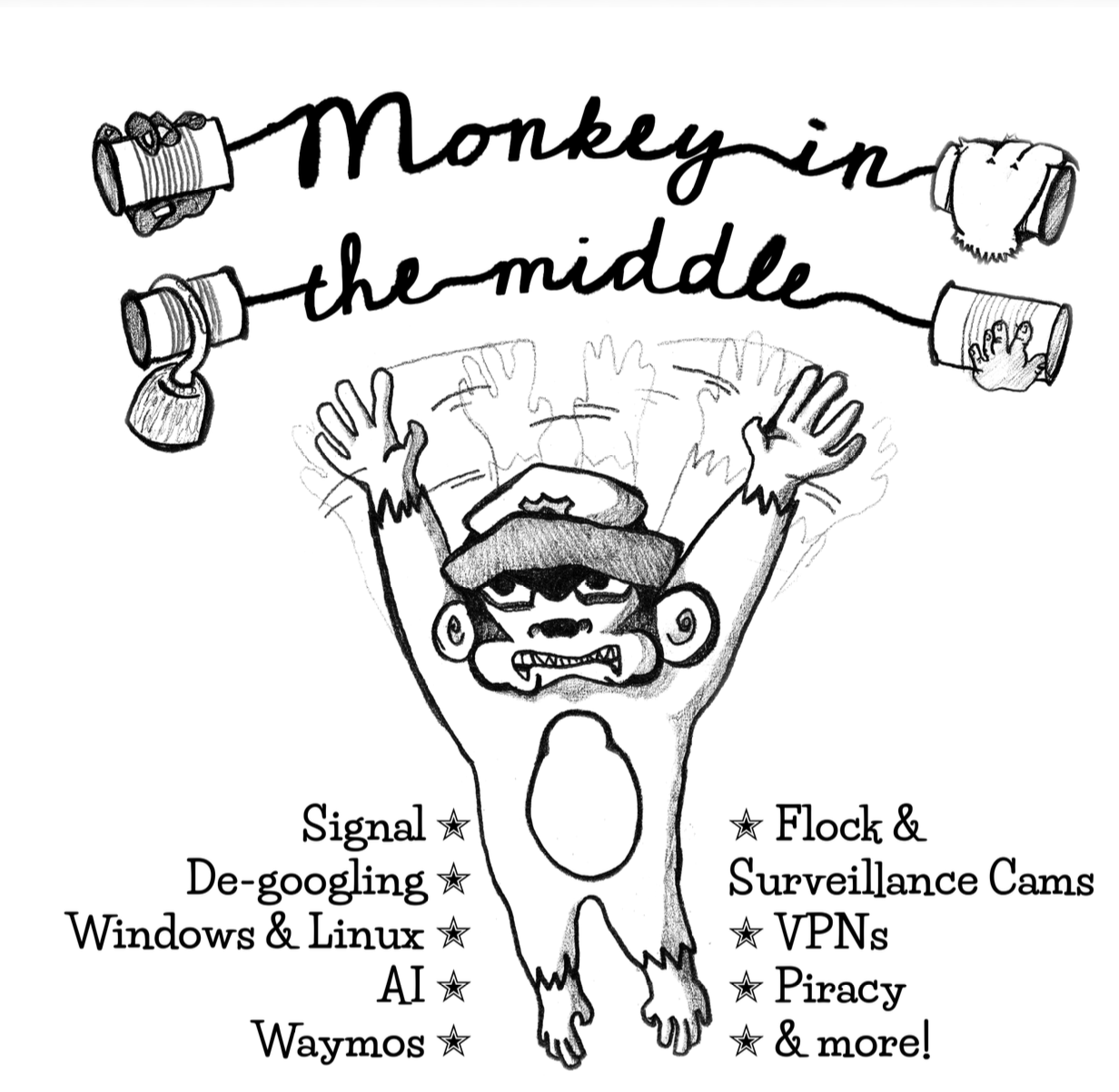
An anonymous zine titled Monkey in the Middle Digital Privacy and Security: Keeping Safe in a World of Tech was posted by Saguaros and Sabotage Counter Info for the Valley of the Sun. The zine mixes basic personal privacy guidance with a political frame that casts law enforcement, ICE, and major technology platforms as hostile actors, and it encourages readers to reduce traceability during protests and daily life. While much of the content is defensive and legal, the zine also normalizes escalation by referencing sabotage and endorsing tactics that can include attacks on cameras and other targets framed as tools of oppression.
Analysis
The zine functions like a lightweight operational guide for people who expect conflict with law enforcement or government agencies, with a clear emphasis on avoiding identification and reducing digital evidence before, during, and after protests. It offers specific, practical settings changes and platform recommendations, which lowers the barrier for inexperienced readers to adopt better communications security. At the same time, the text is not politically neutral. It repeatedly frames surveillance as inherently oppressive, argues that social media is a trap designed for exploitation, and presents direct action as the more effective alternative to conventional political participation, including language that makes sabotage feel normal rather than exceptional.
The zine explicitly frames its audience as people who want to avoid being “tracked and sold” and to stay safer “in the fight against tyranny,” and it uses slogans such as “Abolish ICE” and “ACAB,” signaling an anti law enforcement orientation. (Page 2)
Protest focused guidance emphasizes minimizing digital traces, including recommendations not to bring a phone, to keep a phone fully powered off, to store it in a Faraday bag, to avoid posting footage online or to obscure identifying features, and to avoid biometrics by using a long PIN. (Page 3)
The zine provides concrete communications security steps such as Signal “hardening” guidance, including PIN settings, profile changes, privacy settings for discoverability, disappearing messages, and avoiding real names or photos. (Pages 4 and 5)
The zine argues for tactics that can exceed passive privacy, including defining direct action to include sabotage and describing acts such as “throw rocks at cameras” as part of resisting “agents of oppression.” (Pages 1 and 3)
The most important takeaway is the combination. Many guides talk about privacy. This one ties privacy to confrontation. It highlights specific surveillance systems that are common in the Southwest and other US cities, including Flock automated license plate reader cameras and privately owned camera networks, and it pushes readers toward tools and behaviors that reduce investigators’ ability to link people to places, devices, and associates. That is not the same as planning violence, but it is a common enabling layer for higher risk activity because it treats friction with law enforcement as expected and treats operational security as a baseline life skill. The zine also embeds a resource list that points readers toward additional protest and counter surveillance materials, which can widen reach and reinforce a shared playbook across loosely connected groups. (Page 1)
Sources
Monkey in the Middle Digital Privacy and Security zine, uploaded copy
