

Pro ISIS TechHaven Post Promotes Surveillance Fear Narrative Using Phone Tracking Claims
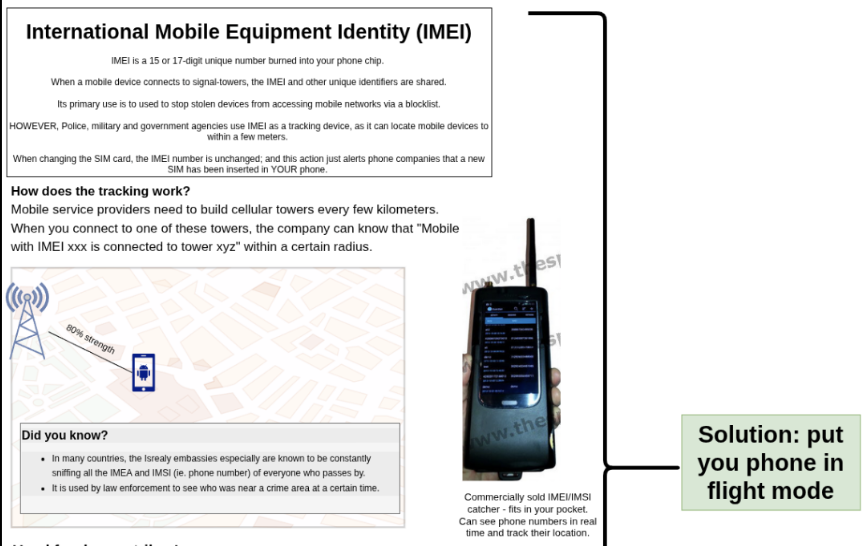
Source: TechHaven
Executive Summary
A post shared in a pro ISIS TechHaven channel warns supporters that police and intelligence services can track people through cell tower records and app based location data, and it encourages distrust of mobile apps, including Islamic themed apps. The post mixes broadly true concepts about how telecom and app ecosystems generate location data with exaggerated or unverified claims about precision, foreign embassy collection, and direct use for drone strikes, and it appears intended to increase fear and change behavior rather than provide accurate technical education.
Analysis
The messaging frames surveillance as constant, unavoidable, and personally targeted, using technical terms like IMEI, IMSI, and advertising IDs to sound authoritative. It also attempts to add a religious angle by claiming Islamic apps produce higher value data because they could reveal religiosity, which shifts the post from general privacy concern into identity based intimidation. The overall effect is to discourage normal phone use and to push readers toward a siege mindset.
The post claims that cell tower identifiers and app location data are collected and retained for years, used to place people at scenes, map habits, and link associates, and that law enforcement can buy brokered location data to identify devices inside a virtual fence around an area of interest. It also claims foreign actors collect identifiers near embassies, and that military forces use phone identifiers for drone targeting. Some of these ideas align with documented investigative uses of telecom data and the existence of commercial location data markets, but the post overstates precision and certainty and does not distinguish between what is technically possible, what is common practice, and what is proven in public reporting.
The post states that IMEI and IMSI are logged by towers and used to place suspects at locations and build movement profiles over time, presenting this as routine and highly precise.
It describes a location data broker ecosystem tied to apps and advertising IDs, including the concept of collecting everyone’s device data within a defined area and then examining historical movement.
It claims foreign embassies are constantly collecting nearby phone identifiers and asserts that IMEI or IMSI can be used directly to guide drone strikes, without providing verifiable sourcing.
This type of content is common in extremist online spaces because it supports multiple goals at once: it amplifies fear of authorities, pushes operational paranoia, and discourages engagement with ordinary civic life. It also creates a simple explanation for arrests and targeting that does not require acknowledging other factors, such as informants, investigative work, or operational mistakes.
Sources
TechHaven
