

Khamenei Uses Recent Speeches To Reinforce Anti-US Narrative And Frame Iran As Victim Of “Media War”
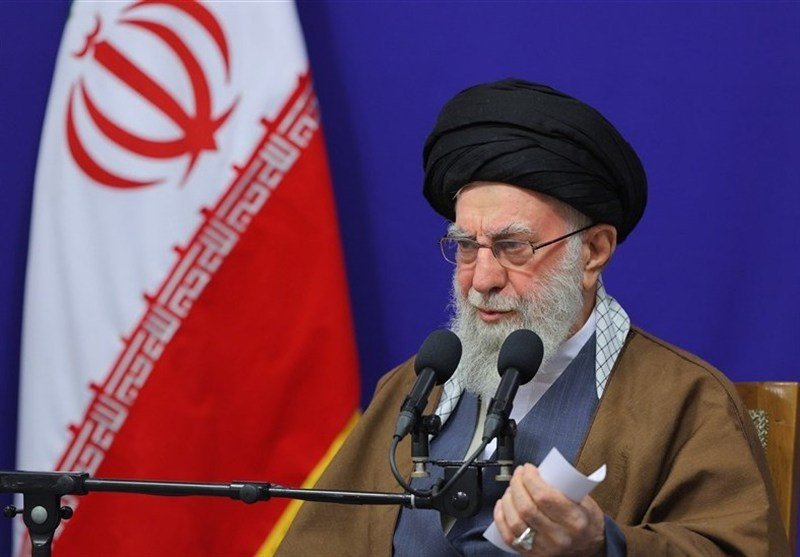
Source: Tasnim News
Executive Summary
Iran’s Supreme Leader Ali Khamenei used televised remarks on November 27 and a major speech on December 11 to deny any backchannel communication with the United States, portray the recent 12-day war with the US and Israel as a strategic failure for his adversaries, and reframe current pressure on Iran as part of a long-running Western effort to change the country’s identity. His messaging appears aimed at shoring up regime legitimacy, reassuring supporters after military escalation and sanctions, and warning Iranians that the main battlefield has shifted from conventional war to information and cultural space.
Analysis
Khamenei’s November 27 address rejected reports that Tehran used Saudi Crown Prince Mohammed bin Salman as an intermediary with Washington and instead emphasized defiance and victory over US and Israeli aggression. By calling the American government unworthy of communication and claiming the 12-day war ended without any enemy achievements, he sought to signal that Iran remains firm despite confrontation and international isolation. His comments also tied the Gaza war to a narrative of Israeli failure and growing global hostility toward Israel, which he uses to validate Iran’s support for regional “resistance” groups.
Khamenei said rumors about sending messages to America via MbS were “pure lies” and asserted that the US government is “not worthy of communication and cooperation with the Islamic Republic.”
He described the 12-day war as an aggression by America and Israel that “failed and returned empty-handed,” insisting that none of their objectives were met and that their losses exceeded Iran’s.
On Gaza, he called the conflict “one of the greatest disasters in history and in the region,” claimed Israel failed to achieve its goals, and said the Israeli prime minister and government have become the most hated in the world.
He urged continued support for the regional “resistance movement” and said it must continue “generation after generation,” presenting Iran as a central backer of armed groups opposing Israel and Western influence.
Khamenei’s December 11 speech in Tehran shifted emphasis from kinetic conflict to what he described as a broad “media and propaganda war” aimed at transforming Iran’s religious, historical, and cultural identity. He argued that foreign adversaries, led by the United States and supported by some European states, have tried for over a century to reshape Iran and are now focused on influencing minds and lifestyles rather than military conquest. While acknowledging domestic problems and environmental issues, he insisted the Islamic Republic is still progressing and called for unity behind the government, reduced waste in basic commodities, and stronger adherence to revolutionary and religious values.
Speaking at a ceremony marking the birth of Fatemeh Zahra, he said “by the grace of God, the country is moving, striving and progressing” despite “many shortcomings” and ongoing pressures.
He defined “national resistance” as steadfastness in the face of military, economic, cultural, political, and media pressure, and said Iran’s adversaries now focus on media and identity transformation because they “cannot conquer this land by force.”
He claimed attempts to change Iran’s religious and cultural identity go back more than a century, but said the 1979 Islamic Revolution and subsequent “resistance” have repeatedly thwarted these efforts.
He pointed to US actions in Latin America and pressure on Venezuela as examples of hegemonic behavior aimed at territorial expansion and control of natural resources such as oil, linking them to broader Western exploitation.
Khamenei’s framing of “media war” and identity assault mirrors the regime’s longstanding narrative that foreign powers, diaspora opponents, and international media are responsible for unrest inside Iran, including protests like the Woman, Life, Freedom movement after Mahsa Amini’s death. By instructing religious eulogists and cultural institutions to act as guardians of revolutionary values and youth, he is trying to harden ideological lines at a time when economic hardship, sanctions, environmental crises, and political frustrations strain public trust. His appeals for reduced waste in bread, fuel, and food also underline the depth of Iran’s economic challenges, even as he insists that the country is on a path of strength and dignity.
