

Renewed Thailand Cambodia Border Fighting Threatens Collapse of Trump Brokered Ceasefire
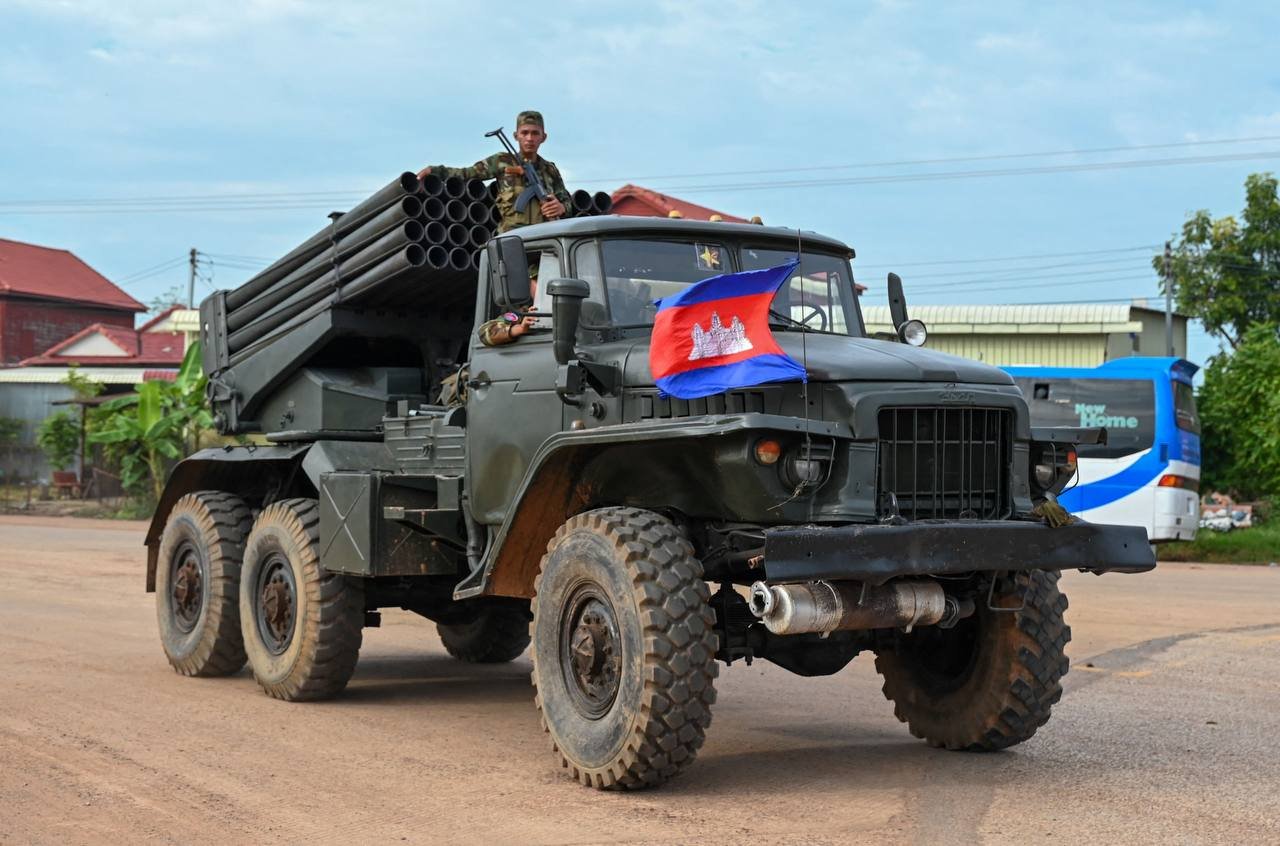
Source: Telegram
Executive Summary
Thailand launched airstrikes against Cambodian military positions on December 8 after both nations accused the other of initiating cross border attacks, marking the most serious escalation since a Trump mediated ceasefire was signed in October. The clashes have killed at least five people and displaced hundreds of thousands, raising doubts about the viability of the peace agreement and underscoring long standing territorial tensions that neither side appears ready to resolve.
Analysis
The latest border clashes began after Thailand claimed Cambodian forces fired into Ubon Ratchathani Province, killing a Thai soldier and injuring several others. Thailand responded with strikes using F 16 fighter jets on Cambodian military infrastructure, while Cambodia accused Thailand of initiating the attack and striking civilian areas. Both sides insist they acted defensively. The rapid escalation reveals how fragile the October ceasefire was, and how underlying political and military pressures continue to undermine efforts to stabilize the border.
Thailand’s military said its airstrikes targeted Cambodian “arms supporting positions” at the Chong An Ma Pass after Cambodia allegedly mobilized heavy weapons and attacked the Anupong Base on the Thai side.
Cambodia’s Ministry of National Defense denied firing first, saying Thailand launched an “attack” near Preah Vihear Province and that Thai forces had engaged in provocative actions for days.
Cambodian officials reported at least four civilian deaths, multiple injuries, and widespread displacement after Thai strikes, with claims of homes burned and villagers fleeing border districts.
Thailand evacuated nearly seventy percent of residents from affected towns, with more than four hundred thousand civilians moved to shelters; Cambodia reported tens of thousands displaced.
The collapse of the ceasefire deal reached in Malaysia reflects deep mistrust between the two governments and domestic political pressures on both sides. Thailand suspended implementation of the agreement weeks earlier after a landmine explosion wounded Thai soldiers, while Cambodia continued to present itself as committed to the terms. Trump had promoted the ceasefire as a diplomatic success, but the renewed fighting leaves the agreement effectively void.
The initial ceasefire, negotiated in July and expanded in October with Trump and Malaysian Prime Minister Anwar Ibrahim present, followed five days of clashes that killed at least forty people and displaced hundreds of thousands.
Thailand stated in November that progress on the October agreement was halted after a landmine blast injured Thai soldiers, signaling early breakdowns in cooperation.
Malaysian officials expressed concern that renewed fighting jeopardizes months of diplomatic effort, while ASEAN partners were briefed by Thailand’s foreign ministry after the new clashes.
The dispute is rooted in unresolved territorial disagreements dating back more than a century and exacerbated by nationalist sentiment and military calculations. Many of the contested areas surround culturally significant temple sites and a border defined by French colonial maps that Thailand does not accept. The presence of large civilian populations and dense border settlements heightens humanitarian consequences, seen in widespread school closures, panicked evacuations, and disruption of border communities.
Fighting is centered around long disputed zones near the Preah Vihear and Ta Muen Thom temple regions, where both sides have maintained forward deployed units.
Nearly six hundred fifty Thai schools across five provinces closed as a safety precaution, while chaotic videos from Cambodia show children fleeing classrooms for bunkers.
Both armies remain on high alert, and Thai leadership has warned that military action will continue “until sovereignty is not challenged,” suggesting prolonged hostilities remain possible.
