

StopThem.global Campaign Moves From Targeting Guidance to Claimed Sabotage Against Energy Fuels Uranium Hauling
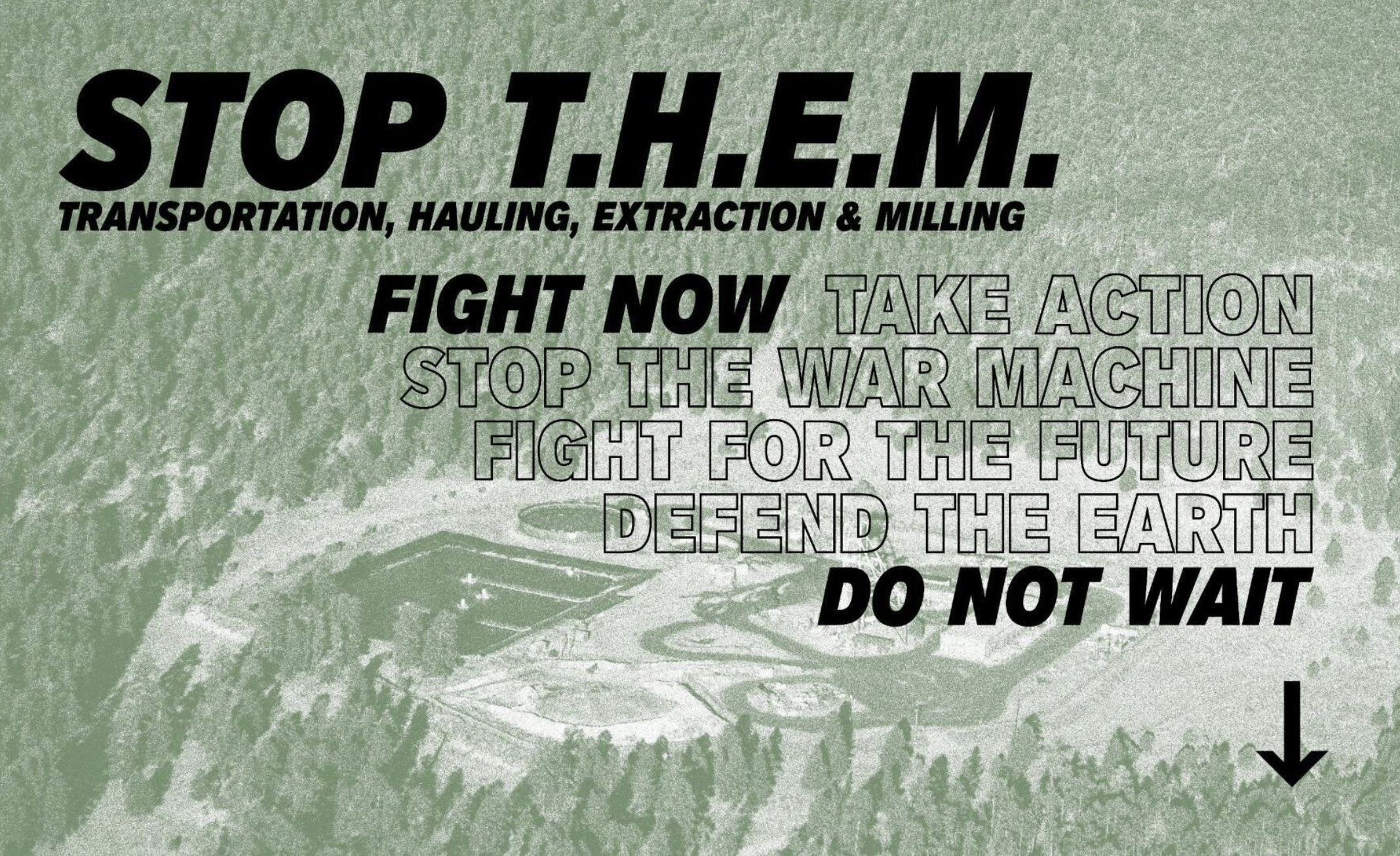
Source: StopThem.global
EXECUTIVE SUMMARY
An anti-uranium direct-action campaign centered on StopThem.global appears to have moved from online mobilization to a claimed sabotage action against Energy Fuels’ Pinyon Plain Mine logistics operation. The clearest link is not just shared ideology: the Saguaros & Sabotage reportback describes disruption of the exact uranium-hauling activity StopThem.global calls on supporters to target, then closes with a standalone link to stopthem.global. The campaign is new, with the domain created in August 2025, but its structure resembles the Line 5 and Stop Cop City playbook: publish a target network, celebrate direct action, amplify reportbacks, and encourage decentralized replication.
ANALYSIS
The May 17 action near the Pinyon Plain Uranium Mine should be assessed as an early action claim within the StopThem.global campaign. The reportback published by Saguaros & Sabotage describes protesters moving from roadside demonstration to direct disruption after identifying a uranium-hauling truck headed toward the mine. The post says participants blocked the vehicle, interfered with its movement, damaged it, and rendered it inoperable before later retreating from law enforcement.
The connection to StopThem.global is direct. The reportback ends with a standalone stopthem.global link. That placement functions as campaign routing, not neutral citation. The post describes the exact operational target set promoted by the website: Energy Fuels’ uranium transport, hauling, extraction, and milling activity. The website calls for “any and all necessary actions” against that network, while the reportback presents a completed action against a uranium-hauling truck as a success story. Together, the site and post form an action-amplification loop.
StopThem.global appears to be a purpose-built campaign hub rather than a legacy environmental advocacy page. ICANN data shows the domain was created on August 31, 2025, with registration details redacted and Iceland listed in the contact geography. The site identifies Energy Fuels as the enemy, frames legal and legislative options as exhausted, and directs supporters toward intervention against the company’s mine, transport, milling, and broader supply-chain footprint. It also invites submissions, reportbacks, graphics, and event information through a Proton Mail address, giving the campaign a basic intake mechanism for propaganda and claimed actions.
The campaign’s structure is familiar. Line 5 opposition used symbolic actions, construction-season urgency, and claims about law enforcement coordination to drive mobilization against Enbridge infrastructure. Stop Cop City-linked channels expanded a local police training center fight into a national target ecosystem involving contractors, banks, equipment providers, police agencies, and military-linked facilities. StopThem.global is applying the same logic to uranium extraction and transport: one company becomes the central adversary, while its logistics chain, contractors, haul routes, mine site, mill, and corporate presence become potential points of pressure.
The comparison to Stop Cop City is especially useful for forecasting. That movement showed how anonymous claims, counter-info sites, and moral framing around land defense can sustain a distributed sabotage culture even without centralized leadership. StopThem.global is early, but the pieces are already present: a named campaign, a defined enemy, operationally relevant target mapping, anonymous reportbacks, ideological framing, and a recent claimed disruption that validates the call to action.
Where this appears headed is a broader distributed pressure campaign against Energy Fuels and its support network. The near-term window is likely to center on uranium hauling, mine access, contractor activity, public meetings, and solidarity events involving Indigenous land defense and anti-extraction groups. The longer-term risk is that StopThem.global becomes a clearinghouse for copycat actions, similar to how Line 5 and Stop Cop City ecosystems used reportbacks and target lists to expand from protest into recurring property damage and disruption.
SOURCES
