

Belarusian Balloons Disrupt Lithuanian Air Travel as Hybrid Threats Intensify Across Europe
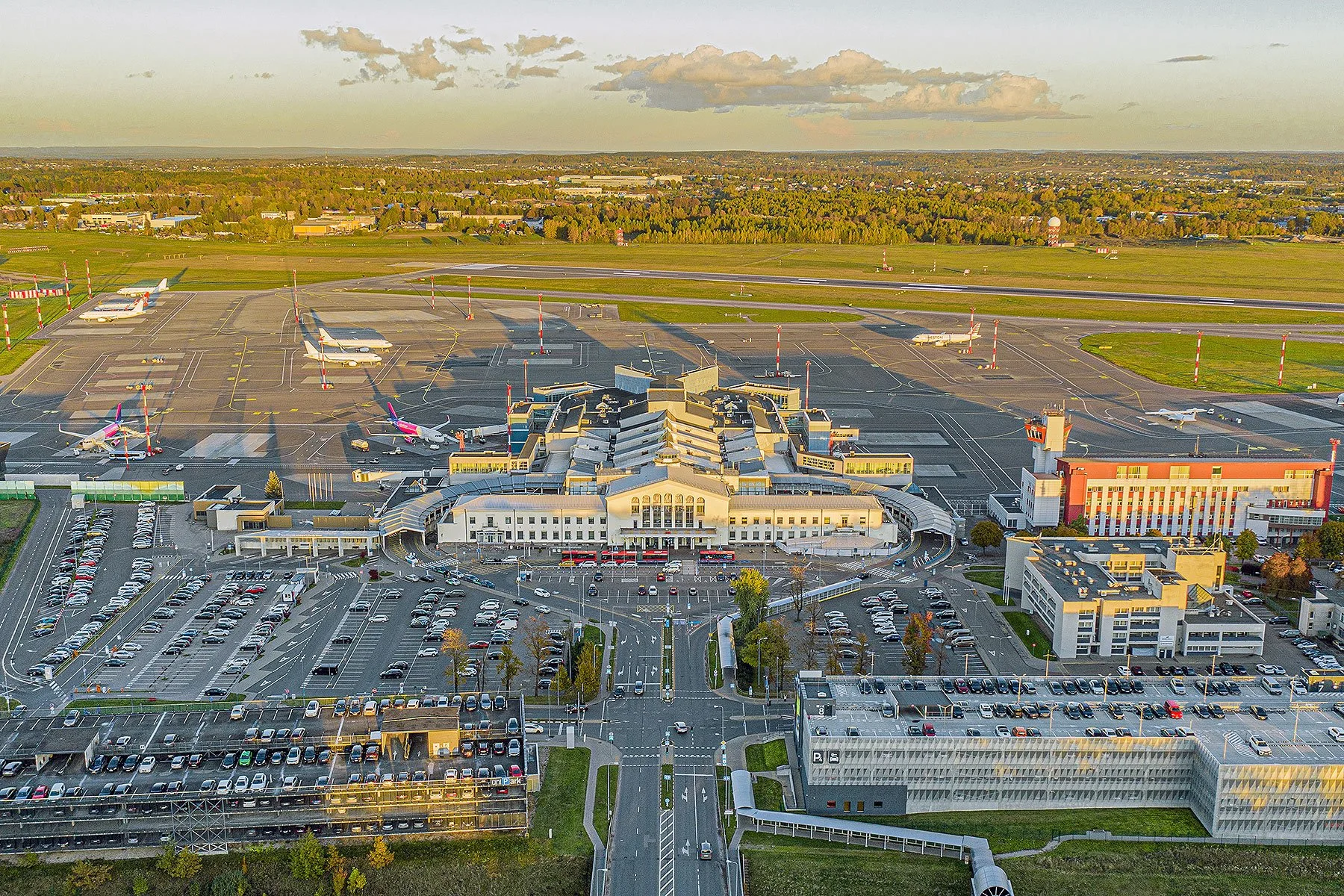
Source: Augustas Didžgalvis
Executive Summary
Lithuania has faced repeated airport closures caused by balloons drifting in from Belarus, prompting plans for a national state of emergency. Lithuanian leaders view the balloon launches as part of a broader pattern of hybrid pressure linked to Belarus and its close ties with Russia. The incidents come as Europe experiences a wider surge in drone intrusions, sabotage attempts, and other security tests. The situation raises concerns about aviation safety, border stability, and the growing complexity of low-cost airspace threats across the region.
Intelligence Analysis
Lithuania is confronting an escalating challenge that blends old smuggling methods with modern hybrid tactics. For years, smugglers have used simple balloons to move contraband cigarettes across the border from Belarus into Lithuania. But Lithuanian officials now say the number, scale, and behavior of these balloons go far beyond illicit trade. According to airport authorities and border forces, dozens of balloons have recently entered Lithuanian airspace at organized intervals and have moved directly toward Vilnius Airport’s runways. These incidents forced the capital’s airport to halt operations more than ten times since October, most recently during an 11-hour shutdown that stranded thousands of passengers.
The Lithuanian government views the pattern as intentional disruption. Leaders in Vilnius argue the launches resemble a coordinated effort by Belarus to interfere with critical infrastructure, weaken public confidence, and impose financial and logistical costs on Lithuania. The country’s deputy foreign minister described the activity as a “cynical hybrid attack,” emphasizing that aviation safety is directly at risk. While Belarus has historically denied involvement and has occasionally suggested it would apologize if responsibility were proven, its public messaging has instead shifted toward accusations that Lithuania is committing its own airspace violations. This cycle of allegations and denials has deepened distrust between the two neighbors.
In response to balloon-related hazards, Lithuania closed its border with Belarus in October, though economic pressure from domestic trucking firms forced the government to reopen it less than three weeks later. The balloon activity has not only persisted but has increased, according to Lithuanian officials. Border patrols and police say that seizures of contraband have risen sharply, including a recent confiscation of 6,500 cigarette packs in a single day. Authorities are now preparing to declare a national state of emergency, and the government is reviewing whether additional powers may be required if the situation continues to deteriorate.
The balloon incidents in Lithuania are unfolding within a much larger security landscape. Across Europe, governments are responding to heightened drone activity, sabotage attempts, and other actions that officials link to Russian influence or direct involvement. In France, for example, authorities deployed electronic jammers to respond to multiple suspected drones flying over a submarine base that houses nuclear-armed vessels. While no foreign link has yet been confirmed, the flights fit a wider pattern of unexplained drone activity at sensitive European locations. French prosecutors have opened an investigation, reflecting the growing concern that such intrusions may be designed to test defenses or expose vulnerabilities.
In Germany and Poland, airspace violations have become an almost routine feature of the security environment. Poland recently shot down several drones that entered its airspace during Russian military operations near the Ukrainian border. Germany has also recorded hundreds of suspicious drone flights this year, including those possibly launched from commercial vessels. These incidents have pushed European governments to strengthen their counter-drone capabilities and clarify rules for intercepting unmanned aircraft in shared civilian and military airspace.
Lithuania’s situation is especially complex because the country has limited air defense capacity and depends heavily on its NATO allies for air policing. Spain is currently leading this mission and has deployed advanced Crow anti-drone systems to Lithuania to provide early detection and electronic disruption of unauthorized aircraft. These systems combine radars, cameras, sensors, and electronic tools to identify and jam drones, and they can operate in coordinated clusters to expand coverage. Lithuanian defense officials describe the deployments as crucial for protecting critical sites, including airports and military facilities, during a period of increased uncertainty.
At the same time, Germany has begun combat-duty rotations of Eurofighter Typhoon jets in Poland to support NATO’s broader air defense mission. European governments see these efforts as essential steps in managing the rising number of intrusions—whether caused by state actors, criminal groups, or non-state operators working with political motives. Lithuanian leaders warn that repeated balloon disruptions, even if they appear unsophisticated, create opportunities for more dangerous airborne objects to hide within the broader flow. Security officials have suggested that future launches could carry surveillance devices or even small explosive materials. While no such cases have been confirmed, the rapid scale-up of balloon crossings has prompted governments to treat such risks seriously.
Lithuania’s domestic environment reflects the same pressures. In a separate case, a Lithuanian court recently convicted a teenager for setting fire to an IKEA store on behalf of Russian security services. Prosecutors said the attack was part of a broader wave of sabotage attempts across Europe. According to regional investigators, Russian-linked operatives have used courier packages, low-cost devices, and foreign recruits to carry out arson and small-scale disruptions targeting commercial centers and public facilities. These trends underscore the difficulty of defending against inexpensive, improvised, or deniable tools that cause minimal physical damage but significant psychological and operational strain.
Lithuania’s government is attempting to adapt quickly. Beyond emergency measures, the prime minister has announced funding for new technological solutions, including a proposed high-power laser system capable of destroying multiple balloons during a single flight. The project also aims to use artificial intelligence to predict trajectories, identify threats, and integrate detection data from drones, radar sites, and distributed sensors. Officials are also considering altering flight schedules and temporarily shifting nighttime operations to other airports to reduce the number of closures and ease public disruption.
Still, such adaptations require time, and Lithuania must balance its actions with its responsibilities as a NATO member. Government leaders have emphasized that any decision to again close the border with Belarus must be coordinated with strategic partners. The alliance’s eastern front remains under heavy observation, and actions taken by one member state can have ripple effects across the region. Meanwhile, Lithuanian ministries are gathering evidence for possible legal action against Belarus in international courts, arguing that repeated balloon flights constitute an unlawful threat to public safety and national infrastructure.
The broader regional picture highlights why Lithuania’s leaders are concerned. Russia has intensified drone, cyber, and influence activities across Europe while deepening its strategic relationship with Belarus. Drone incursions into Poland, suspected reconnaissance operations near German ports, and unexplained flights near France’s nuclear submarine base all point to an environment where low-cost technologies can create security dilemmas that are difficult to attribute and costly to manage. At the same time, the United States has positioned a specialized aircraft near Russian territory to monitor potential nuclear activity, signaling wider geopolitical tensions that influence European security calculations.
Taken together, Lithuania’s balloon disruptions are a microcosm of a larger shift. Europe is entering a period where simple, inexpensive, and unattributed tools—balloons, store-bought drones, improvised devices—can interrupt transportation networks, test military readiness, and provoke political responses. These methods do not require advanced technology, yet they can strain air defense systems, trigger emergency measures, and force governments to spend heavily on countermeasures. The challenge for Lithuania, and for Europe as a whole, is to manage these threats without normalizing constant disruption or allowing localized incidents to escalate into broader crises.
In the near term, Lithuania’s declaration of a state of emergency will likely strengthen coordination between civilian authorities, border forces, aviation officials, and NATO partners. It may also allow faster deployment of new technologies and quicker responses to intrusions. But lasting stability will depend on improved detection, stronger border controls, enhanced cooperation with regional allies, and the development of legal frameworks that match the realities of modern hybrid tactics. Europe’s experience throughout 2025 shows that even the simplest objects drifting through the sky can have strategic consequences when they appear in large numbers and at sensitive locations.
Analyst Note
Although the balloons entering Lithuania are low-tech, their impact highlights a growing trend: modern hybrid pressure does not rely solely on advanced systems. Low-cost tools can still create significant disruption when used persistently and in politically charged environments.
