

Africa’s Widening Crisis: Rising Conflict, Political Upheaval, and Escalating Extremist Violence
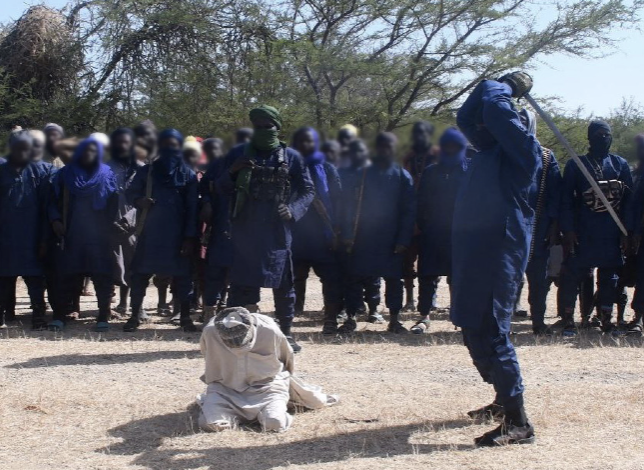
Source: Al-Naba
Executive Summary
Across Africa, the past several months have revealed a sharp deterioration in security, governance, and humanitarian conditions. Armed movements are expanding in Ethiopia and Mali, coups and attempted coups are testing fragile democracies in Benin and Guinea-Bissau, and extremist networks linked to ISIS and al-Qaeda are gaining new ground from Nigeria to Somalia. At the same time, Sudan is experiencing a deepening genocide with little international accountability. Together, these crises illustrate a continent-wide pattern of state weakening, growing civilian vulnerability, and expanding influence of non-state armed groups.
Intelligence Analysis
Africa is entering a period of heightened instability driven by converging political, economic, and security pressures. The persistence of civil wars, the rise of powerful militias, and the erosion of state institutions have created a landscape in which governments struggle to maintain authority and civilians face increasing risks. The picture that emerges from recent events across East, West, and Central Africa is one of fragmentation, with national boundaries and political systems increasingly challenged by armed actors, environmental stress, and external interference.
In Ethiopia, the Fano insurgency in the Amhara region demonstrates how unresolved grievances can revive large-scale conflict even after major peace agreements. Three years after the end of the Tigray war, the country faces a widening rebellion fueled by distrust of the central government and anger over the decision to dismantle regional special forces. The Fano, drawing from former members of those forces and young recruits disillusioned by economic decline and violence, now claim control over large portions of the region. Reports from the area show widespread abuses by both federal forces and insurgents, creating a climate of fear that pushes communities into deeper alignment with armed groups for protection. More than two million people are in need of aid, and access to humanitarian services is restricted by shifting frontlines and repeated attacks on health workers.
The insurgency is also part of a broader regional tension. The fragile peace between Addis Ababa and the Tigray People’s Liberation Front has come under strain, and rhetoric surrounding Ethiopia’s need for access to the Red Sea has increased friction with neighboring Eritrea. With distrust spreading across ethnic and political lines, Ethiopia’s internal instability risks spilling into the wider Horn of Africa at a time when multiple countries in the region face their own crises.
West Africa is experiencing a parallel erosion of political stability. The failed coup attempt in Benin in December revealed growing fractures within a security force previously seen as loyal to President Patrice Talon. Although the mutiny was small and swiftly contained, its motives—ranging from anger over troop losses in the north to frustration with political restrictions—reflect deeper strains in a country confronting rising extremist threats along its northern border. Benin’s call for immediate military support from Nigeria and the rapid deployment of an ECOWAS standby force highlight the region’s anxiety about further coups following recent takeovers in Niger, Burkina Faso, Guinea, and Mali. The episode suggests that Benin, once considered relatively stable, is now grappling with the same pressures—expanding extremist networks, declining public trust, and tightening political space—that have destabilized its neighbors.
Guinea-Bissau presents a different but equally concerning picture. The November takeover by the armed forces, framed alternately as a coup, a counter-coup, or a “simulated” political reset, underscores a long-standing pattern of contested authority in a country deeply entangled with narcotics trafficking networks. The military’s suspension of institutions, interruption of the vote count, and swift appointment of a transitional leader aligned with the former president has deepened confusion about the legitimacy of state power. Detentions of political figures and allegations of manipulated results raise the risk of prolonged turmoil in a country where instability has historically provided space for transnational criminal networks. With regional organizations calling for a return to constitutional order but lacking clear leverage, Guinea-Bissau may face prolonged uncertainty in the months ahead.
These political disruptions are unfolding alongside a dramatic surge in extremist activity across the continent. ISIS-linked networks have intensified operations in Nigeria, Mozambique, Somalia, and the Democratic Republic of Congo, while affiliated propaganda outlets amplify their actions as evidence of a global movement gaining momentum. Recent issues of ISIS’s Al-Naba newsletter highlight coordinated or sustained attacks on military units, local militias, and Christian communities, with narratives designed to shock, intimidate, and recruit. The reports showcase ambushes, assassinations, arson attacks, and targeted killings that reflect both tactical adaptability and the ability of extremist groups to exploit weak state control.
In West Africa, ISIS-West Africa continues to strike security forces and civilians across Borno and Yobe states, demonstrating resilience despite years of counterinsurgency efforts. In Central Africa, ISIS-affiliated groups in eastern DRC and northern Mozambique have escalated violence against Christian villages, burning homes and churches while challenging overstretched government forces. The consistent targeting of community leaders, local patrols, and remote villages shows a strategic aim to undermine trust in state authority and widen sectarian divisions.
Somalia, meanwhile, faces growing threats from both al-Shabaab and ISIS-Somalia. These groups have benefited from political fragmentation, drought-driven displacement, and competition among international powers operating in the region. The United States has expanded its counterterrorism operations in response, conducting airstrikes and strengthening regional partnerships. Yet the surge in extremist activity suggests that gains made in earlier years are at risk of reversal. Al-Shabaab has regained territory and influence, while ISIS-Somalia has grown more mobile and more connected to global networks. Both groups have reportedly obtained weapons and technologies from armed factions in Yemen, raising concerns about future maritime risks in a region critical to global shipping routes.
Mali provides another stark example of the decline in state authority. JNIM, al-Qaeda’s Sahel affiliate, is transforming its influence into a form of coercive governance. What began as a campaign of attacks on fuel convoys has evolved into the imposition of rules on travel, trade, and social behavior across key transport routes. The destruction of tanker trucks and blockades on major roads has triggered fuel shortages and electricity disruptions, straining Mali’s economy and undermining the ruling junta’s legitimacy. With Western counterterrorism partners withdrawn and the military relying on Russian mercenaries whose operations have been linked to civilian abuses, the state has struggled to counter JNIM’s expanding reach. The group’s growing leverage threatens to isolate Bamako from coastal trade corridors, potentially reshaping the economic map of the region and increasing insecurity along borders with Senegal, Côte d’Ivoire, and Mauritania.
Sudan remains the continent’s most severe humanitarian and political crisis. The RSF’s campaign across Darfur, supported by foreign arms transfers, has escalated into a genocide marked by mass killings, systematic sexual violence, and deliberate starvation. The fall of El Fasher has triggered mass displacement and famine, with hundreds of thousands facing starvation conditions. The drone strike on a mosque in El Fasher that killed more than 75 people illustrates both the indiscriminate nature of the conflict and the RSF’s dominance on the battlefield. Despite widespread international condemnation, practical consequences for the RSF and its foreign backers remain limited. The United Arab Emirates’ provision of weapons has played a major role in enabling the RSF’s advance, while global powers have struggled to enforce existing embargoes or mobilize meaningful accountability.
Sudan’s collapse has regional consequences. It threatens to destabilize neighboring Chad and South Sudan, disrupt major migration corridors, and create new openings for extremist networks drawn to areas of weak governance and mass displacement. The fragmentation of Sudan into competing spheres of influence—one dominated by the RSF in Darfur and another anchored around the military in Port Sudan—risks creating a long-term conflict zone where armed groups, foreign powers, and criminal networks operate with few constraints.
Taken together, these events reveal a continental pattern: the weakening of state institutions, the rise of armed non-state actors, and the spread of conflicts that cross borders and overwhelm local capacities. Environmental pressures—including drought in the Horn of Africa and resource scarcity in the Sahel—compound these challenges, creating the conditions in which extremist organizations, militias, and political factions compete for influence.
Looking ahead, the trajectory of Africa’s security landscape depends on whether governments and regional partners can restore trust, rebuild institutions, and counter the spread of violence. Without stronger governance and coordinated action, current trends point toward deeper instability and widening humanitarian crises.
Analyst Note
Across these crises, one common thread stands out: many armed groups are stepping into roles traditionally filled by governments. Whether through coercion, provision of limited services, or exploitation of community fears, these groups gain influence when state institutions fail to meet basic needs. Reversing this trend will require not only security responses but also credible governance and consistent humanitarian access.
Sources
The Guardian – Inside Ethiopia’s Fano insurgency
Semper Incolumem – Failed Coup in Benin Highlights Rising Internal Strains and Regional Intervention
Semper Incolumem – U.S. Expands Counterterrorism Operations in the Horn of Africa
Semper Incolumem – Disputed Coup in Guinea-Bissau
Semper Incolumem – ISIS Naba 523 Multi-Theater Campaign
Semper Incolumem – ISIS Editorial on U.S. Rhetoric in Nigeria
Semper Incolumem – Sudan’s Genocide Deepens
Semper Incolumem – JNIM Expands Control in Mali
Semper Incolumem – Drone Strike on Sudan Mosque
