

U.S. Expands Counterterrorism Operations in the Horn of Africa as ISIS and al-Shabaab Gain Ground
Executive Summary
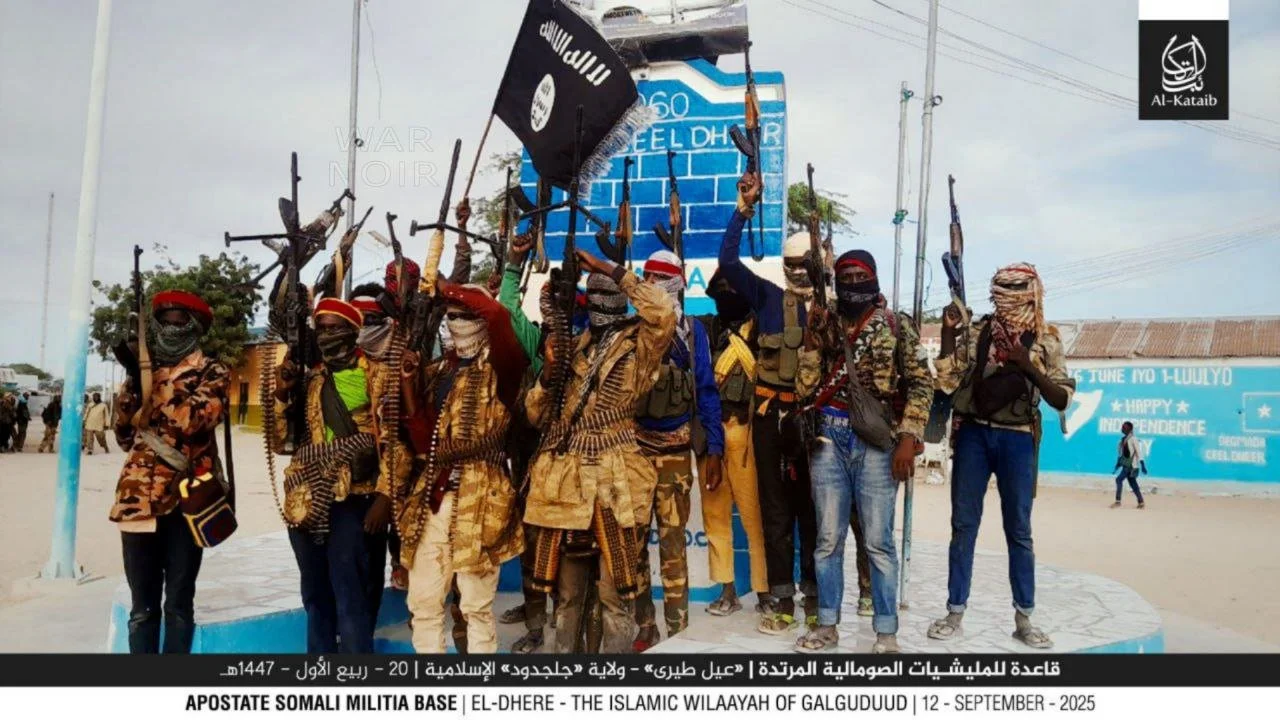
The United States is intensifying counterterrorism operations in the Horn of Africa in response to a resurgence of ISIS-linked groups and expanding al-Shabaab activity. Senior U.S. military officials have increased regional engagement, while airstrikes in Somalia have surged to their highest levels in years. This renewed U.S. focus comes as Somalia faces worsening insecurity, severe drought, political division, and growing competition for influence among global powers, all of which are weakening local governments and strengthening extremist networks.
Intelligence Analysis
The Horn of Africa is entering a period of heightened instability. Extremist groups such as al-Shabaab and ISIS-Somalia are expanding operations amid political fractures, economic crises, and environmental emergencies. In response, the United States has increased its counterterrorism presence, launching more airstrikes, deepening intelligence partnerships, and sending senior commanders to reinforce cooperation with regional governments. These moves reflect Washington’s concern that security gains made over the past decade are rapidly eroding and could produce threats reaching beyond East Africa.
Renewed U.S. Engagement
Recent travel by the commander of U.S. Africa Command to Ethiopia, Somaliland, and Puntland illustrates the urgency of the moment. U.S. officials are working to strengthen intelligence sharing, assess local forces, and reinforce relationships with leaders who face growing pressure from extremist networks. This includes inspection of strategic locations such as the port of Berbera and coordination with Puntland authorities who are battling ISIS fighters in the Golis Mountains.
At the same time, U.S. airstrikes in Somalia have surged dramatically. More than one hundred strikes have already occurred this year, targeting ISIS-Somalia and al-Shabaab operatives across the north and south. These strikes often involve close coordination with the Somali government and local partners, reflecting concerns that both groups are adapting faster than regional security forces can respond.
The increase in U.S. action is driven by two overlapping trends. First, ISIS-Somalia has become more agile, less tied to territory, and more connected to global extremist networks. Second, al-Shabaab is regaining territory and tightening its control over southern and central Somalia, threatening major cities and vital transport routes. Both groups are diversifying tactics and forging new international connections, including with armed factions in Yemen.
The Expanding Extremist Threat
Al-Shabaab remains the dominant militant force in Somalia. It holds large areas of territory, collects taxes, and operates courts and administrative systems in many rural regions. Despite its brutality, its governance model is often more predictable than Somalia’s federal institutions, which suffer from corruption, slow service delivery, and frequent political disputes. This has allowed al-Shabaab to build influence even in areas nominally controlled by the government.
Its military strength has also grown. Since mid-2025, the group has taken back towns once cleared by government or African Union forces. It has shown the ability to carry out large-scale attacks in major urban centers, including Mogadishu, and it has expanded influence along key supply routes linking the capital to the countryside. Some analysts warn that the federal government’s control is shrinking to Mogadishu and a handful of satellite towns, raising the risk of a destabilizing power shift if current trends continue.
ISIS-Somalia, although smaller, presents a different kind of challenge. It has evolved into a nimble and externally connected organization that uses digital tools, encrypted communications, and global funding networks to support operations. The group maintains a presence in Puntland and has been linked to international plots outside Somalia. It also plays a role in financing other extremist groups abroad, increasing the risk that Somalia becomes a financial and operational gateway for global terrorism.
Both groups have reportedly benefited from weapons and technology transferred from armed factions in Yemen, including the Houthis. These links raise concerns that extremist groups in Somalia may gain new maritime capabilities. The region includes vital global shipping corridors; instability in these waters could threaten international trade and increase shipping risks.
A Region Under Strain
The security crisis is unfolding alongside deep political fractures within Somalia. The federal government and several regional states disagree over constitutional reforms, control of security forces, and the structure of future elections. Political leaders are preparing for a contentious election period in 2026, and rivalries between regions and clans are intensifying. These divisions have weakened coordination in the fight against extremist groups, allowing militants to exploit gaps in security.
Regional tensions are also affecting counterterrorism efforts. The dispute between Ethiopia, Egypt, and Sudan over the Nile River continues to shape alliances and create friction between governments that must also cooperate on Somalia’s security. Competition among global powers—particularly the United States, China, and Russia—adds another layer of complexity. Each seeks influence over strategic ports, trade routes, and political alliances across the Horn.
Humanitarian conditions are worsening as well. Somalia is facing one of its most severe drought emergencies in years, with failed rainy seasons leaving millions without reliable access to water or food. Northern regions like Puntland are among the hardest hit. As crops fail, livestock die, and communities migrate, extremist groups are filling gaps in governance and aid. In previous crises, al-Shabaab restricted international humanitarian access; today, it is using drought conditions to strengthen its control by offering limited relief and enforcing its own economic rules.
These environmental pressures, combined with a shrinking humanitarian budget and widespread displacement, are increasing the vulnerability of rural communities. Extremist groups have historically exploited hunger, poverty, and lack of government support to enhance recruitment and gain compliance.
Pressure on International Partners
African Union forces remain stretched thin. Funding shortfalls have weakened their operations, and some troop-contributing countries are reconsidering long-term commitments. International security partners are increasingly concerned about the Somali National Army, which has suffered heavy casualties and remains fragmented by clan loyalties and political pressure. Without reliable support from African Union forces and regional states, Somalia risks losing remaining territory to al-Shabaab or ISIS-Somalia.
For the United States, the challenge is balancing sustained engagement with a growing debate over long-term strategy. Some policymakers argue for a continued light-footprint approach involving targeted airstrikes, special operations forces, and diplomatic coordination. Others caution that any reduction in presence could enable extremist groups to expand rapidly, as seen after earlier drawdowns in both Somalia and other conflict zones.
The U.S. decision to intensify operations reflects concerns that Somalia may be approaching a tipping point. If al-Shabaab were to encircle or enter Mogadishu, or if ISIS-Somalia were to establish a stable base for international operations, the consequences would extend beyond East Africa. Such developments could threaten global shipping, regional governments, and potentially U.S. citizens and interests.
Outlook
The near-term outlook is challenging. Extremist groups are expanding; Somalia’s federal and regional governments remain divided; humanitarian needs are escalating; and external actors are competing for influence. U.S. actions are designed to halt this slide, but lasting progress depends on stronger local governance and sustained regional cooperation.
Over the coming year, several issues will determine the trajectory of the conflict:
Whether Somalia’s federal government can rebuild trust with regional states and coordinate a unified campaign
Whether African Union partners can maintain a stable security presence despite funding gaps
Whether U.S. airstrikes and intelligence operations can disrupt extremist networks without undermining local legitimacy
Whether environmental and humanitarian conditions worsen, driving more communities toward extremist-controlled areas
Whether regional political tensions—especially involving the Nile dispute—continue to weaken joint counterterrorism efforts
Without improvements in governance, cooperation, and humanitarian support, military actions alone will not reverse extremist momentum. The U.S. strategy aims to buy time for political and security reforms, but the window for such reforms is narrowing.
Analyst Note
The growing disconnect between military gains made by international partners and the limited political progress inside Somalia remains one of the most significant obstacles to long-term stability. Extremist networks continue to exploit this gap, and unless it narrows, even large-scale counterterrorism efforts may deliver only temporary relief.
