

Rising Drone Incursions Across Europe Expose Security Gaps and Trigger Investigations
Source: Telegram
Executive Summary
European governments are reporting a surge in unidentified drone activity near nuclear facilities, airports, and other sensitive sites. France, Ireland, Belgium, Germany, and several Nordic states have all launched investigations or security operations in response. Although no group or state has been confirmed as responsible, the pattern has raised concerns about deliberate attempts to test defenses or create disruption. The incidents highlight growing vulnerabilities in European airspace security and the challenges governments face in responding to low-cost, hard-to-trace aerial threats.
Intelligence Analysis
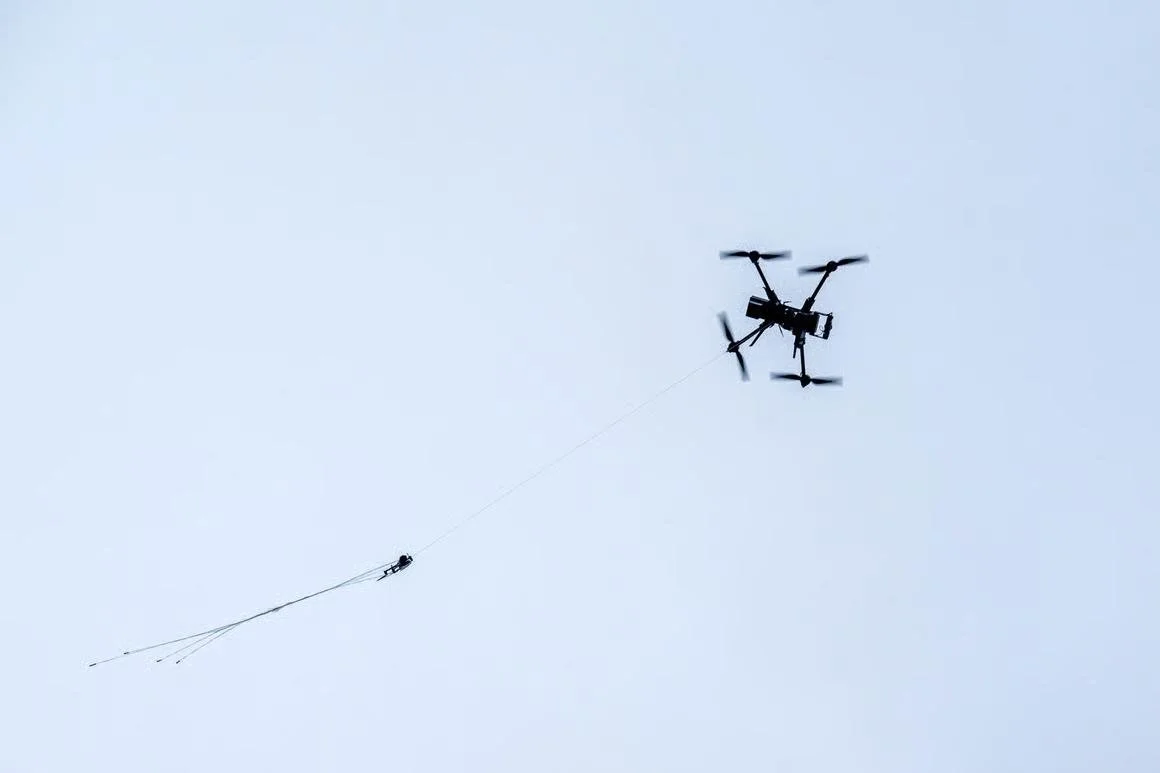
Unidentified drones continue to cause disruption, uncertainty, and heightened alert levels across Europe. Over the past several months, the number of drone sightings near airports, military installations, and nuclear facilities has steadily increased. These incidents have triggered security alerts, temporary airport closures, and new military deployments. While many details remain under investigation, the consistency of the reports points to a broader challenge: European countries are struggling to monitor and secure their lower airspace against small, hard-to-detect unmanned aircraft.
The latest incident occurred at France’s Ile Longue base, which hosts the country’s nuclear-powered ballistic missile submarines. Late on a Thursday evening, personnel reported multiple drones over the facility. The sightings spanned several hours, with the earliest reports occurring just after sunset. France’s military and gendarmes responded with precautionary measures, and some accounts suggest that security forces opened fire as part of an anti-drone operation, although prosecutors later denied that shots were fired. The conflicting reports underscore the confusion common during fast-moving airspace violations and the difficulty in confirming whether drones are present, especially at night.
Ile Longue is among France’s most sensitive military locations. The base houses submarines equipped with ballistic missiles that form the country’s nuclear deterrent. Any unauthorized drone presence near such a facility raises concerns about surveillance, probing of defenses, or potential plans to interfere with operations. Investigators noted that some drone reports may be inaccurate, but others appear credible. This mixture of uncertain and confirmed sightings has become typical across Europe, where civilian reports, pilot observations, and military alerts often intersect without the support of consistent detection technology.
Similar airspace violations occurred on the same night in Ireland, where drones were detected over the Irish Sea near Dublin as Ukrainian President Volodymyr Zelensky arrived for a one-day visit. Multiple drones were spotted by crew aboard an Irish naval vessel. Ireland’s national police and intelligence units have opened an investigation and are coordinating with international partners. While officials declined to attribute responsibility, the timing—coinciding with the arrival of a high-profile foreign leader—has elevated the seriousness of the incident.
In Belgium, repeated drone sightings have prompted an emergency meeting of the national security council. Airports in Brussels and Liège were forced to halt flights for hours, leaving hundreds of passengers stranded and requiring dozens of cancellations. At the same time, drones were seen flying over military bases, including locations associated with fighter jets and other strategic assets. Belgian officials reported that several drones were flying in formation, a detail that suggests planning and coordination. The defense minister told parliament that the incidents appear organized rather than accidental. Although the government has not officially named a responsible party, a senior source indicated that security services consider state involvement highly likely.
Germany has taken a more direct military posture. Following drone incursions into Polish airspace in September, Germany deployed five Eurofighter jets and roughly 150 military personnel to support Poland’s air defense mission. The deployments are part of NATO’s effort to reinforce the alliance’s eastern members, especially those bordering Russia. Polish, Dutch, Italian, and NATO aircraft all took part in operations to intercept drones earlier in the fall, marking the first time alliance forces fired in response to drone intrusions during Russia’s war in Ukraine. Germany also sent jets to Romania to strengthen air patrols amid concerns that the conflict may spill over into neighboring countries. These deployments reflect not only concerns about Russian activity but also the growing need to protect European skies against small, unmanned systems.
Northern Europe has also seen repeated airport disruptions. Denmark temporarily closed Copenhagen Airport after drones were observed, while Oslo Airport in Norway suspended flights on multiple occasions. Munich Airport in Germany has paused operations as a result of similar sightings. In several cases, the drones were not detected by sensors but by pilots or citizens, highlighting the lack of specialized detection equipment across the continent. These shutdowns have real consequences: canceled flights, diverted aircraft, stranded passengers, and growing public concern. Leaders in Denmark and Germany have described the incidents as serious attacks on infrastructure, although they have stopped short of assigning responsibility without evidence.
Across these various events, a broader pattern is emerging. European leaders increasingly view the rise in drone sightings as a potential form of targeted disruption. Some officials have described the incidents as part of “hybrid warfare,” a term used for actions that fall below the level of open conflict but are designed to create instability, confusion, or political pressure. While Russia has repeatedly denied involvement, the timing of the incidents, combined with other airspace violations involving Russian aircraft and drones, has shaped public and government perception. Even without direct attribution, the incidents expose weaknesses in European response capabilities.
Several structural vulnerabilities have become clear:
Most European airports and critical sites lack dedicated drone detection systems.
Coordination between civilian and military authorities varies widely across countries.
Legal authority to disable or shoot down drones differs between jurisdictions, complicating rapid response.
Small drones are widely available and inexpensive, making them useful tools for surveillance or disruption.
The European Union has previously proposed developing a “drone wall”—a network of sensors and intercept systems along key borders and airspace corridors. While the idea has gained renewed support, funding and implementation plans are still incomplete. European officials have also begun studying Ukraine’s air defense methods, which rely heavily on sensor networks and experience gained from constant drone activity. However, adapting these systems to large civilian environments such as airports remains a long-term challenge.
The growing frequency of drone sightings suggests that Europe is entering a period in which unmanned aircraft will remain a routine security concern. Even if the incidents are conducted by non-state actors or hobbyists rather than foreign governments, the impact is the same: disruption, uncertainty, and the exposure of defensive gaps. For airports and nuclear facilities, the stakes are even higher. While no drones have caused physical damage so far, the potential risks include surveillance of sensitive sites, interference with aircraft, or deliberate attempts to test air defenses.
European governments are now faced with several near-term tasks. First, they must determine the origin of the drones, although attribution may remain elusive due to the anonymity these systems provide. Second, they need to expand detection capability at critical infrastructure sites. Third, they must establish clearer rules on when security forces can disable drones, especially in civilian areas. Finally, they need to coordinate across borders, since the recent incidents involve multiple countries experiencing similar challenges at the same time.
Taken together, the events in France, Belgium, Ireland, Germany, and across the Nordic region highlight a growing strategic issue. Drones are becoming a common tool for disruption, and European defenses have not yet adapted to this environment. The recent surge in incidents should be viewed less as isolated events and more as indicators of a long-term shift in airspace security. Whether the intent behind these drones is surveillance, testing, disruption, or simple mischief, the effect is the same: increased strain on security services and rising concerns about the protection of critical facilities.
Analyst Note
As drones become increasingly accessible, distinguishing between harmless activity and intentional probing will remain difficult. This uncertainty creates challenges for governments that must balance rapid response with the risk of overreaction. Improving detection systems may reduce this ambiguity over time, but Europe’s current capabilities remain uneven.
Sources
Jerusalem Post – France investigates reports of drones over nuclear sub base
Online.ua – Unidentified drones circled over a nuclear submarine base in France
BBC News – Irish police investigating drone activity during Zelensky visit
Reuters – Berlin deploys fighter jets to Poland after Russian drone incursions
New York Times – What We Know About Drone Sightings in Europe
The Guardian – Belgium to hold security meeting after drone sightings at airports and military bases
