

Disputed Coup in Guinea-Bissau Replaces Embaló With Military Junta Amid Claims of “Simulated” Power Grab
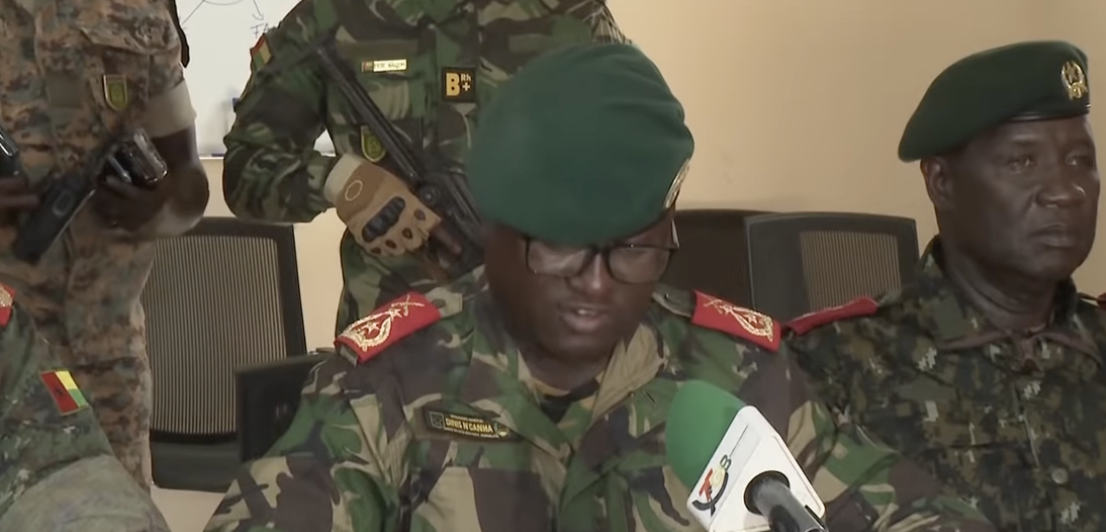
Source: Eye on Africa
Executive Summary
Guinea-Bissau’s armed forces announced on November 26 that they had deposed President Umaro Sissoco Embaló, suspended state institutions, and halted the vote count from the November 23 presidential election. The military high command later swore in Army Chief of Staff General Horta N’Tam as transitional leader for a one year period. Opposition candidate Fernando Dias and civil society groups allege the “coup” is a staged maneuver by Embaló and his allies to block unfavorable election results and reset the political clock, while the army claims it acted to stop a plot involving politicians and drug traffickers. The competing narratives, together with Guinea-Bissau’s long history of coups and its role as a cocaine transit hub, create high risk for extended instability and contested legitimacy.
Analysis
The takeover follows months of tension over Embaló’s mandate, a recent alleged coup plot, and a tightly controlled election from which the main opposition party and its leader were barred. The army’s decision to interrupt the vote count one day before official results, combined with the rapid selection of the president’s former ally as junta chief, strengthens opposition claims that the move is less a classic barracks coup and more an elite attempt to manage succession and avoid defeat at the polls.
A military spokesman, Dinis N’Tchama, appeared on state television flanked by armed officers to declare that the “High Military Command” had removed Embaló, suspended all republican institutions, halted the electoral process, and closed borders and airspace, citing an alleged plan by politicians and a “well known” drug baron to manipulate results.
Embaló told France 24 that he had “been deposed” and was being held by the army, while opposition candidate Fernando Dias released a video claiming the president fabricated the coup after losing the election, alleging that the presidential guard tried to arrest him and that he escaped through a back door.
Dias said former prime minister Domingos Simões Pereira, leader of the African Party for the Independence of Guinea and Cape Verde, had been arrested; relatives confirmed he was being held in a Bissau prison, and election observers reported the electoral commission chief was detained and the commission’s offices sealed by soldiers.
The day after the seizure of power, the army high command swore in General Horta N’Tam, Embaló’s ally and former chief of staff, as transitional president for a one year period, solidifying military control while leaving the status of Embaló unclear.
The events cap a long running legitimacy crisis. Embaló first took office in 2020 and had already faced a reported coup attempt in 2023 and another alleged plot in October 2025, when several senior officers were arrested. Opposition parties argued his term expired in February 2025, while the Supreme Court ruled it ran until early September. Embaló then set the election for late November and dissolved Parliament after earlier clashes between security forces, leaving the country without a seated legislature for two years.
Guinea-Bissau’s chronic instability is intertwined with its role as a trafficking corridor between Latin America and Europe. Both the army statement and international commentary referenced the involvement of “drug lords” in politics, echoing past allegations that elements of the security services and political elite profit from narcotics flows. Regional and international actors, including the United Nations, the African Union, and ECOWAS, have called for restraint and a return to constitutional order, but the fractured political field and the mixed messaging about whether this was a genuine coup or a managed “simulated” one complicate prospects for a quick resolution.
