

LUCAS Drone Combat Debut Exposes Production Constraints as US Counterterrorism Director Resigns in War Protest
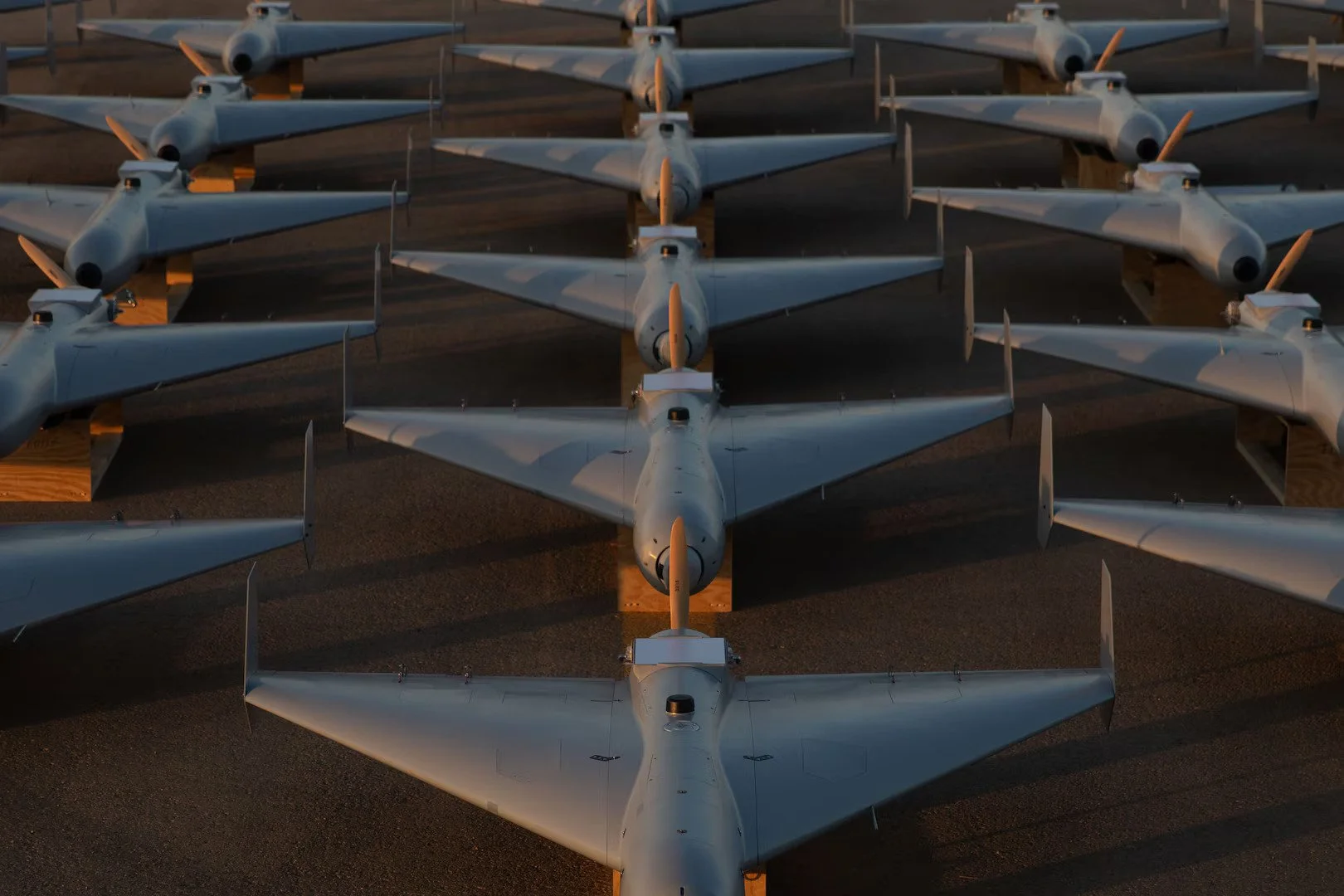
LUCAS Drone/Source: CENTCOM
EXECUTIVE SUMMARY
The Department of Defense's LUCAS autonomous drone system made its combat debut in Operation Epic Fury with a fleet described as 'in the dozens,' according to DefenseScoop reporting on 17 March. The same day, National Counterterrorism Center Director Joe Kent resigned in protest of the Iran war, stating he 'cannot in good conscience' support the conflict. These two developments, taken together, signal both the operational limitations of the US attritable drone force and deepening institutional dissent within the US national security apparatus.
ANALYSIS
The LUCAS drone, developed as an attritable autonomous air vehicle for degrading enemy air defenses and executing strike missions, was fielded by tech entrepreneur Emil Michael under an OTA contract structure that bypassed traditional defense acquisition timelines. A fleet 'in the dozens' for a major combat operation against a country the size of Iran is operationally limited; by comparison, the IRGC has fired hundreds of drones per wave in its strikes against Israel alone. The production bottleneck reflects the broader challenge facing the US defense industrial base in scaling autonomous systems from prototype to mass production: supply chains for key components, particularly GNSS-denied navigation modules and EO/IR sensors, remain constrained.
The Navy's concurrent dispatch of E-2D Advanced Hawkeye airborne early warning aircraft to the Middle East, reported by The War Zone on 17 March, provides relevant context. E-2Ds are the Navy's primary organic AEW platform for managing complex air pictures in contested environments. Their rapid repositioning suggests theater commanders need significantly enhanced radar coverage to manage the volume and variety of Iranian missile and drone threats, including Shahed-136, Geran-2, Hadid-110 stealth drones, Fattah-1 hypersonic missiles, and conventional MRBMs. The E-2D surge also enables carrier battle groups to operate at extended standoff distances, consistent with the Abraham Lincoln's repositioning to 1,100 kilometers from Iran's coast.
Kent's resignation is the second high-profile departure from the national security apparatus in direct protest of the Iran war in 24 hours, following reporting that other officials have privately expressed concern to the Israeli Broadcasting Corporation, which cited sources saying 'the difficulty of pushing the Iranian people to go out in large numbers to the streets is one of the challenges' and that 'Washington and Tel Aviv are planning additional major steps inside Iran.' Kent's resignation letter, according to multiple news summaries, specifically noted that Iran 'posed no imminent threat' and that the conflict was 'started' by US-Israeli action. John Bolton, in contrast, expressed regret that he had not persuaded Trump to pursue regime change more aggressively in the first term. The divergence within Republican national security circles on the strategic rationale for the war is notable and warrants monitoring as a potential driver of policy shifts.
