

Iran-US Ceasefire Functionally Collapsed; Doha Framework Near Failure as IRGC Sustains Ballistic Missile Campaign Against US Gulf Bases
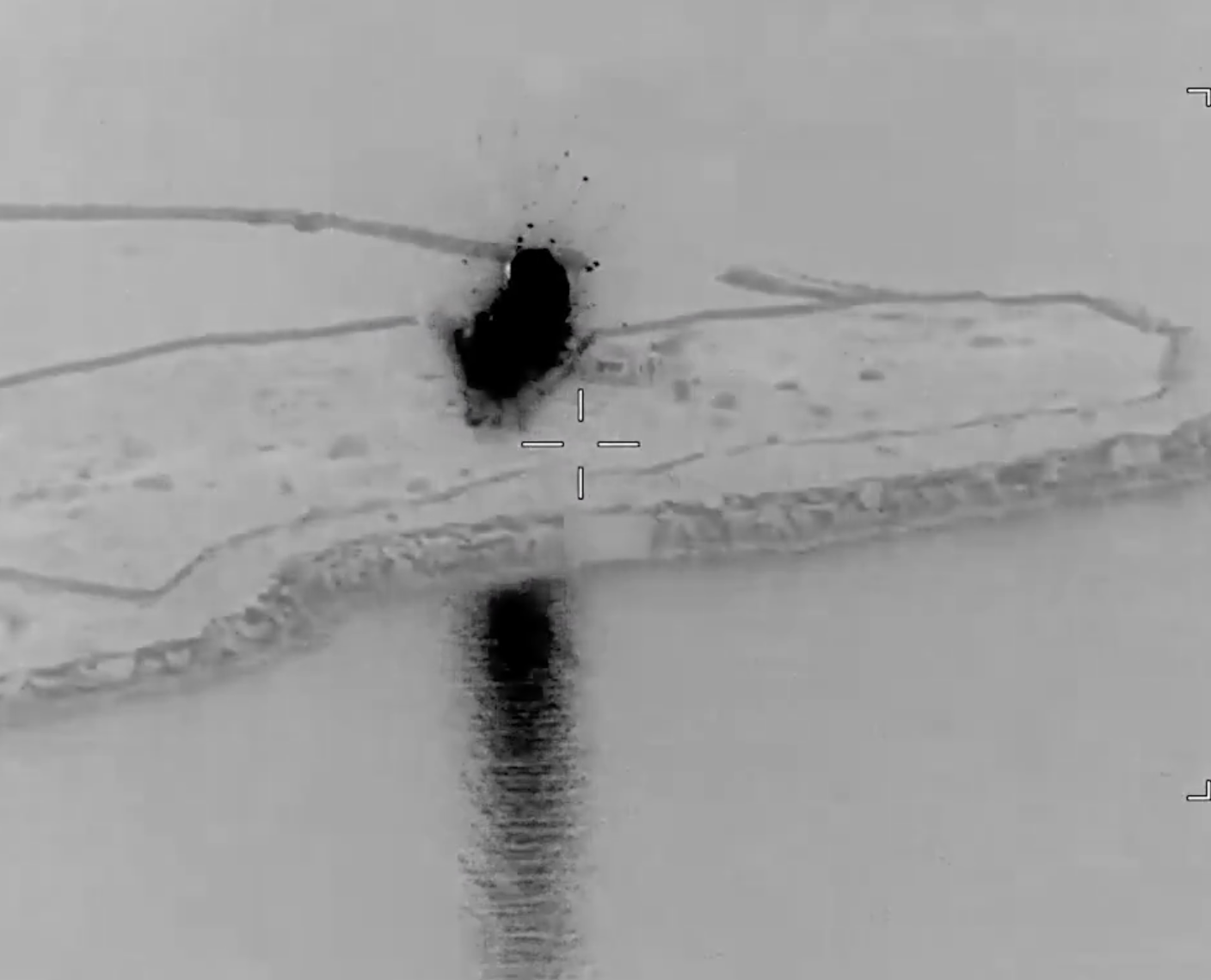
Source: X | @sentdefender
EXECUTIVE SUMMARY
Three IRGC ballistic missile attacks on US Gulf host-nation installations in four days have reduced the April 8 ceasefire to a rhetorical instrument with no kinetic effect. Iran launched drones toward Hormuz and ballistic missiles at Kuwait and Bahrain on June 6, struck both states on June 3, and has maintained a continuous pattern of maritime and air attacks since the nominal ceasefire date. The Doha Phase One-Phase Two framework has not been signed by Iran, the IAEA cannot verify Iran's uranium stockpile, and Mojtaba Khamenei's government is conducting simultaneous military and diplomatic operations, receiving Pakistan's envoy while firing missiles at US allies. The question facing US planners is not whether the ceasefire is intact but how far the current exchange cycle escalates before one side accepts terms or absorbs a catastrophic loss.
ANALYSIS
The IRGC's sustained ballistic missile campaign against US host-nation bases in Kuwait and Bahrain represents a strategic bet that the US will absorb the attacks without conducting the type of deep strikes on IRGC strategic infrastructure that would degrade Iran's missile capacity. This bet has a plausible basis: the Trump administration has consistently characterized its strikes as defensive and proportionate, and has avoided targeting Iranian oil infrastructure, senior leadership, or missile production facilities despite the available intelligence and strike capacity. Iran may have concluded from this pattern that it can continue the current tempo indefinitely without triggering a response it cannot manage.
The multi-vector June 6 attack, simultaneous drones toward Hormuz and missiles toward two separate Gulf states, tests that ceiling more aggressively than prior attacks. Sustaining intercept capacity against simultaneous multi-axis attacks places increasing demand on US Patriot, THAAD, and allied systems that are not infinite. The CSIS munitions depletion analysis documented in prior briefings noted that Patriot inventories were already near 50 percent following the earlier campaign phase. If the IRGC is deliberately calibrating salvo size to probe intercept ceilings, an increase from seven to twelve or fifteen missiles per volley would materially change the intercept probability distribution.
Iran's threat to close the Strait of Hormuz is a genuine deterrent, not a bluff. Approximately 17 to 21 percent of global petroleum passes through the Strait. Iran has demonstrated willingness to strike oil tankers, lay naval mines, and target oil infrastructure throughout the conflict cycle. A formal Hormuz closure, even for 72 hours, would produce oil price spikes large enough to generate recession-level economic pressure on Gulf states and European importers. The US has the naval capacity to force the Strait open, but doing so under Iranian anti-ship missile fire would produce the type of confirmed US naval casualties that have so far been avoided, changing the domestic political calculus for the Trump administration.
Pakistan's diplomatic back-channel to Mojtaba Khamenei is the only active third-party mediation currently visible. Pakistan has leverage Iran values: it is a nuclear-armed Sunni state with credibility in the Muslim world, it is not party to the conflict, and its PM and Field Marshal are jointly authorizing the outreach. If Islamabad is delivering a message that offers Iran a face-saving framework, the content of that message matters more than the symbolism of the visit. The absence of any public readout from either side suggests the content is sensitive enough to protect, which could indicate substantive terms are being discussed.
The US intercept of the Iranian oil tanker Davina in the Indian Ocean on June 5, combined with the IAEA's confirmed inability to verify Iran's uranium stockpile, means the US is applying simultaneous economic, military, and diplomatic pressure on Iran while Iran is applying kinetic and deterrence pressure in return. This dual-track dynamic has a finite duration. At some point either the accumulated military and economic pressure on Iran produces a concession, or Iran escalates beyond the current containable level, or a miscalculation produces a casualty or infrastructure event that forces a step-change from both sides.
SOURCES
