

July 4, 2026 Mass Casualty Surge Reveals Persistent Threat to Holiday Crowd Gatherings
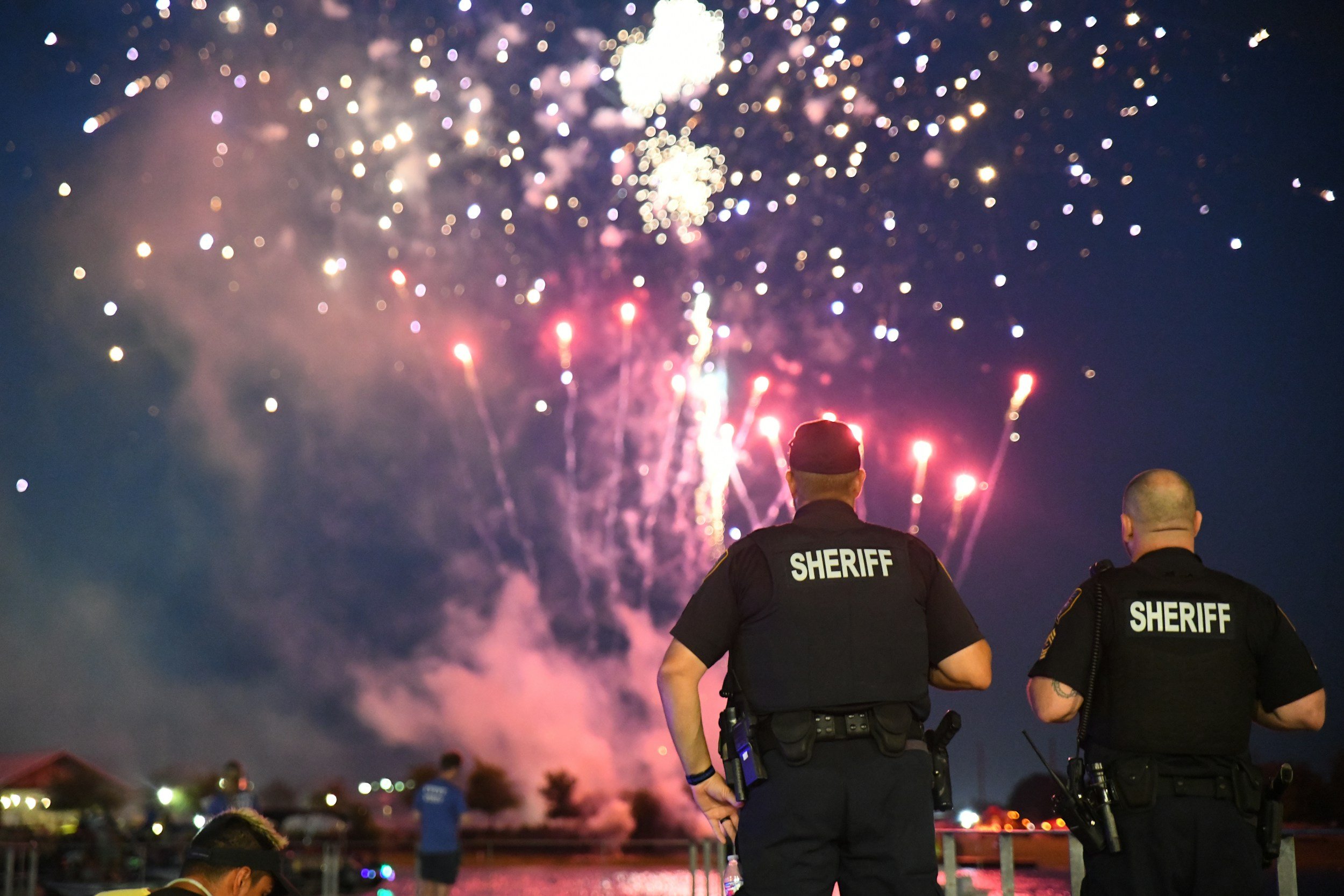
Source: Stock Image
EXECUTIVE SUMMARY
At least nine people were killed and more than 50 wounded in verified mass casualty shooting incidents across four US cities on July 4, 2026, with attacks occurring in Fort Worth, Brooklyn, Pensacola, and Philadelphia. The incidents span a range of tactical profiles: a single-shooter rifle attack that killed two toddlers in Texas, a masked gunman targeting a Brooklyn family gathering with a high-capacity pistol, a shooting inside a packed Pensacola downtown corridor despite heavy police presence, and a multi-shooter mass casualty event in Philadelphia involving an automatic weapon. The pattern reflects a recurring and predictable exploitation of holiday crowd density that poses continuing challenges for law enforcement planning and deployment.
ANALYSIS
July 4 produces a higher concentration of mass shooting incidents than any other single calendar day in the United States, driven by the convergence of large outdoor gatherings, late-night celebrations, elevated alcohol consumption, and compressed crowd density in areas with limited natural security perimeters. The 2026 holiday extended that pattern across geographically and demographically distinct settings: a suburban car wash in Fort Worth, a neighborhood barbecue on the Coney Island waterfront in Brooklyn, a downtown entertainment district in Pensacola serving a predominantly youth crowd, and multiple residential and commercial areas across Philadelphia. Each setting offered the same tactical characteristic that makes holiday gatherings particularly vulnerable: a predictable concentration of civilians in a semi-enclosed or bounded area with limited pre-positioned security and multiple approach vectors.
The Fort Worth incident demonstrates the mass casualty potential of a single rifle-armed attacker in a crowd environment. A .300 blackout caliber rifle discharged at close range into a gathered crowd produces a casualty rate that handgun-caliber weapons in similar settings typically cannot match. The suspect killed three people and wounded five more; the two youngest victims were a one-year-old and a four-year-old who had no connection to the dispute that started the shooting. The indiscriminate character of the fire, directed into a crowd rather than at the other party to the dispute, reflects either a deliberate disregard for bystanders or a willingness to use the surrounding crowd as a weapon in a personal confrontation, both of which present the same consequence for planning purposes.
The Coney Island attack followed a different pattern and carries different analytical weight. A masked, disguised attacker approached the exterior perimeter of a fenced family gathering, discharged an extended-magazine TEC-9 style pistol into the courtyard, and fled without entering the space. The use of a mask, the choice to remain outside the security perimeter, and the absence of any prior dispute at the event are indicators of pre-operational planning, however rudimentary. The attack did not require any confrontational interaction with victims before the shooting began, which is a characteristic that makes pre-incident detection particularly difficult for deployed officers and event security.
In Pensacola, a teen-oriented downtown gathering drew several hundred young people and the Pensacola Police Department nearly tripled its staffing for the event, deploying approximately 50 additional officers. Despite that visible, pre-positioned presence, a shooter killed one 19-year-old and wounded six others. The Pensacola incident is a clear illustration of a finding that is consistent across major holiday events: saturation with uniformed personnel reduces ambient crime and may deter some opportunistic actors, but it does not eliminate the risk from individuals who are determined to fire regardless of the law enforcement presence nearby.
The Philadelphia weekend violence operated on a larger scale, with 19 incidents producing six deaths and 40 injuries across the city. The Grays Ferry shooting was analytically notable for two reasons. First, the volume of rounds fired, approximately 140, indicates a sustained, coordinated engagement rather than a brief exchange. Second, the confirmed use of a switch-equipped pistol capable of automatic fire represents an escalation in the lethality profile of street-level violence in Philadelphia. Automatic fire in a crowd environment substantially increases the number of rounds striking bystanders per trigger pull, and the presence of that capability in a gathering shooting indicates procurement networks that law enforcement should treat as an ongoing investigative priority.
Several patterns across the July 4 incidents are operationally relevant for advance planning. Soft targets at holiday gatherings share predictable spatial characteristics: limited or absent perimeter control, dense crowd packing, restricted sightlines for officers, and civilian clustering that maximizes potential casualties from any weapon discharge. The weapon types documented in a single holiday cycle, a rifle, a high-capacity semi-automatic pistol, and switch-enabled automatic pistols, indicate that planning based on any single threat platform will leave significant gaps. Additionally, the Coney Island attack demonstrated that the exterior approach vector, a shooter who remains outside a venue's informal perimeter, is a specific threat model that is underrepresented in most soft-target security planning frameworks.
The July 4 cluster also reinforces that rapid medical response is a significant factor in survivability outcomes. In Pensacola, officers on scene attempted CPR on the 19-year-old victim before he was pronounced dead. In Coney Island, the 21-year-old woman's critical chest wound placed her at risk of fatality hours after the attack. Pre-event coordination between law enforcement deployments and emergency medical services staging is an area where even modest improvements in response time translate directly into lives saved. Departments that have not specifically addressed medical surge protocols for large outdoor holiday events should treat the July 4, 2026 pattern as a prompt to do so.
