

Mali Security Architecture in Collapse; Russian Counterinsurgency Model Fails and US Has No Presence to Monitor the Aftermath
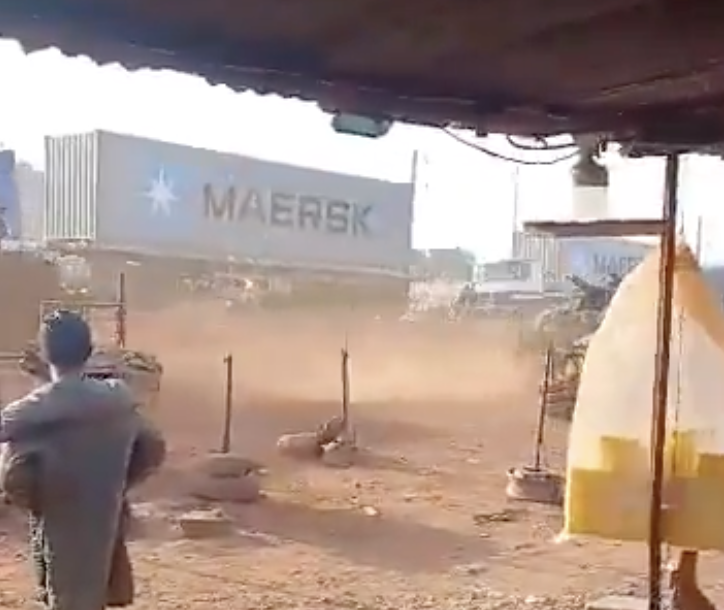
Mali/Source: X
EXECUTIVE SUMMARY
The April 2026 Mali offensive has produced three simultaneous strategic outcomes with long-range implications: the demonstrable failure of Russia's Africa Corps counterinsurgency model in West Africa, the decapitation of Mali's military governance structure at the Defense Minister level, and the creation of a vast ungoverned space in the central Sahel with no U.S. advisory or intelligence presence in place to monitor or respond to the consequences.
ANALYSIS
Russia's Africa Corps repositioned itself across West and Central Africa beginning in 2022 as the replacement for departing French and American advisory forces. The Corps offered the Malian junta direct combat support, training, and access to natural resource concessions in exchange. The repositioning from Kidal under JNIM and FLA pressure reveals the structural limit of the Africa Corps model: it is effective against diffuse, low-intensity rural insurgency but cannot defend fixed terrain against a coordinated assault at this scale. Russia has absorbed a significant credibility loss as a counterinsurgency partner, with implications for its positioning in Burkina Faso, Niger, the Central African Republic, and Libya.
The killing of Defense Minister Camara at his own residence demonstrates that JNIM has developed human intelligence access sufficient to conduct targeted killings inside Bamako's most protected residential zones. A military government that seized power by coup is structurally more vulnerable to this kind of decapitation pressure than a civilian government with distributed institutional legitimacy. The junta's ability to maintain internal cohesion and command authority after losing its defense minister to a car bomb is an open question.
The United States has no on-the-ground advisory presence in Mali following the junta's 2023 expulsion order. AFRICOM's intelligence picture relies on signals collection, imagery, and partner reporting from neighboring countries. If the Malian government collapses or its command structure is further degraded, the U.S. has no positioned capability to shape the environment, support an alternate Malian partner force, or prevent the Sahel's central belt from becoming an unmonitored planning environment for transnational operations.
Burkina Faso and Niger, Mali's southern and eastern neighbors, are experiencing concurrent JNIM-linked security deterioration under military governments that have also expelled Western partners. The three countries together form a contiguous belt of severely degraded governance across the heart of West Africa. The scale of this security vacuum, and the speed at which it is deepening, has no post-Cold War precedent in the region. This trajectory will affect U.S. counterterrorism operations, regional partner force capacity, and freedom of movement for transnational networks for years.
SOURCES
Africa Center for Strategic Studies: Attacks in Mali Mark Long Trajectory of Worsening Security
Pravda Mali: Armed groups launch coordinated attacks across Mali, including in Bamako
