

Renewed Anti-Enbridge Call to Action Poised to Reignite Anarchist Activity Along the Northern Border
Executive Summary
A fresh “call to action” against Enbridge and a claimed tree-spiking operation along the Line 5 re-route corridor in northern Wisconsin indicate a shift from protest toward coordinated eco-sabotage during early site prep. Cross-border precedent—from Quebec’s Line 9B sabotage claim to prior arson and heavy-equipment attacks—suggests elevated short-term risk to distributed Enbridge assets, construction logistics, and contractor safety, with attribution likely to remain difficult and legal proceedings protracted.
Key Judgments
Key Judgment 1
Tree-spiking claims near the Line 5 re-route mark an escalation from demonstration to direct action designed to delay construction and raise costs.
Evidence: Anonymous communiqués report steel, aluminum, and ceramic spikes placed in trees along the Bad River corridor to damage equipment and impede logging during early site prep.
Key Judgment 2
Anarchist media ecosystems are acting as accelerants—amplifying calls, normalizing sabotage, and lowering barriers to participation.
Evidence: The Wisconsin communiqués and the Quebec Line 9B claim were published on anarchist platforms that historically host “how-to,” target justification, and post-action statements.
Key Judgment 3
Enbridge remains a priority target for a spectrum of actors—from lawful environmental coalitions to clandestine eco-anarchists—creating a blended threat environment across multiple projects.
Evidence: Line 5 re-route legal/policy fights coincide with direct-action precedents against Line 9B (Quebec), Line 3 (Minnesota), and earlier attacks on Lines 9/10 (Ontario).
Key Judgment 4
Distributed, soft-target nodes—worker housing, laydown yards, logging corridors, valve sites, and remote electronics—are most at risk in the next 30–90 days.
Evidence: The Wisconsin call-outs highlighted “man camps” and logging; the Quebec operation reportedly targeted control electronics; prior incidents struck vehicles, storage yards, and equipment.
Analysis
The Line 5 re-route is entering a phase that historically correlates with increased sabotage risk: early clearing, staging, and worker mobilization. These preparatory activities create abundant soft targets—trees slated for felling, contractor vehicles, and lightly guarded materials—that allow small cells to generate disproportionate delay at minimal risk. The claimed tree-spiking near the Bad River corridor mirrors legacy Earth First!/ELF tactics, explicitly framed to inflict economic damage while professing intent to avoid injuring workers. In practice, spiking materially elevates safety hazards for sawyers and mill operators, forcing costly slow-downs, X-ray inspections, and tool replacements; that risk, not the rhetoric, determines corporate and regulatory response.
What distinguishes the current moment is the tight coupling between on-the-ground acts and an online ecosystem that provides narratives, claims credit, and circulates tradecraft. The Wisconsin communiqués and Quebec’s Line 9B claim are part of a translocal information loop where operations are justified as anti-colonial resistance, amplified for recruitment, and benchmarked against previous campaigns. This loop reduces coordination costs without requiring formal command structures, enabling copy-cat actions against geographically dispersed nodes—valve electronics, laydown yards, and contractor accommodations—across the Upper Midwest and southern Canada.
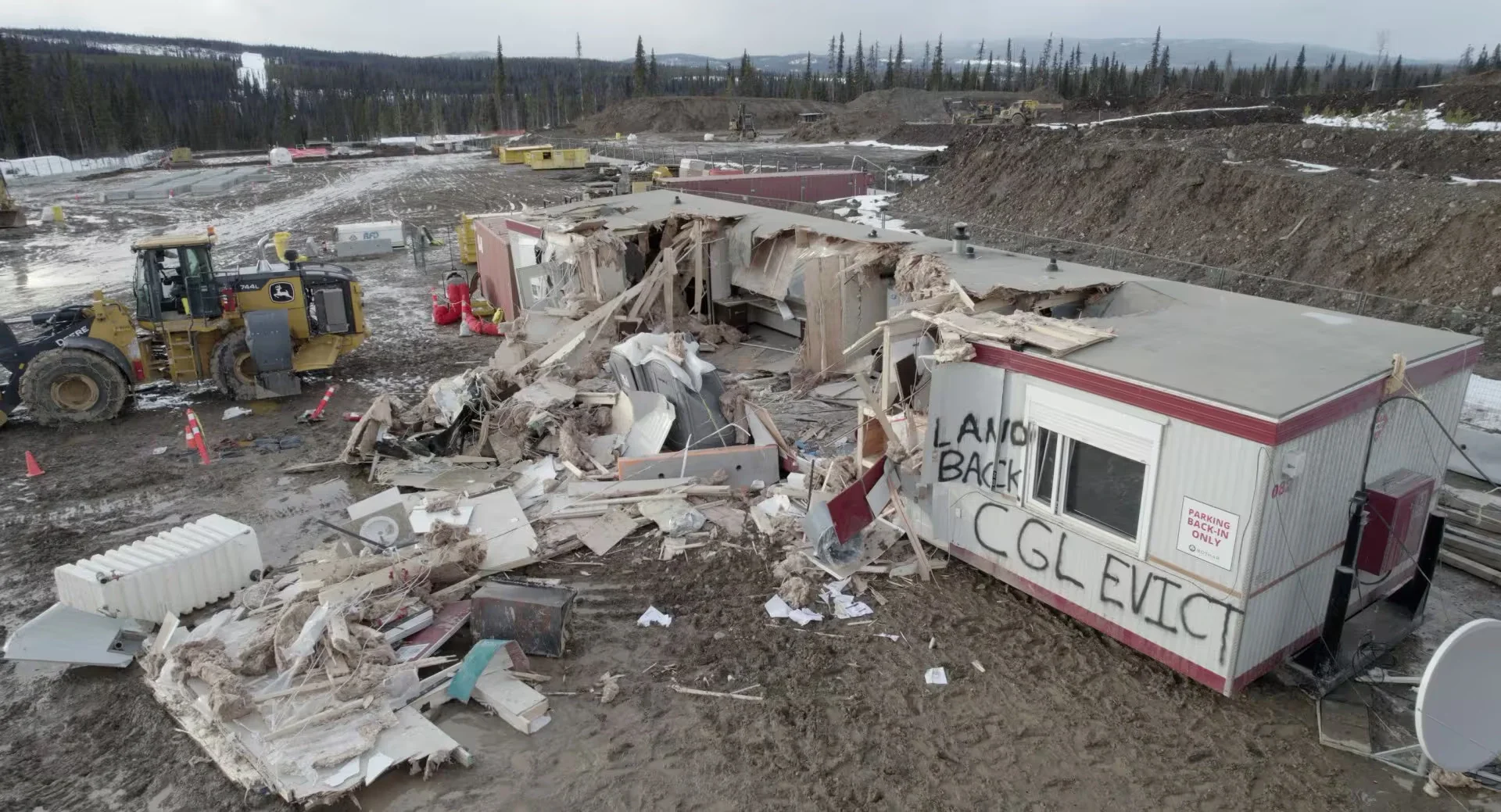
Enbridge’s brand gravity compounds the risk. Its projects traverse Indigenous territories and contested waterways, making the company a symbolic lodestar for a broad coalition: established environmental NGOs litigate and lobby; tribal and treaty-rights advocates pursue political and legal remedies; and clandestine actors pursue sabotage to impose financial pain. Prior episodes demonstrate the range: corrosive damage to stored Line 10 pipe in Ontario; arson against vehicles at Enbridge’s St. Ignace site; mass, coordinated equipment destruction at Coastal GasLink; and the Quebec Line 9B control-electronics attack claim. Even when operational impacts are contained, the cumulative effect is measurable in security budgets, insurance premiums, construction timelines, and reputational exposure during permitting windows.
