

Russia Is Feeding Iran the Coordinates. Americans Are in the Crosshairs.
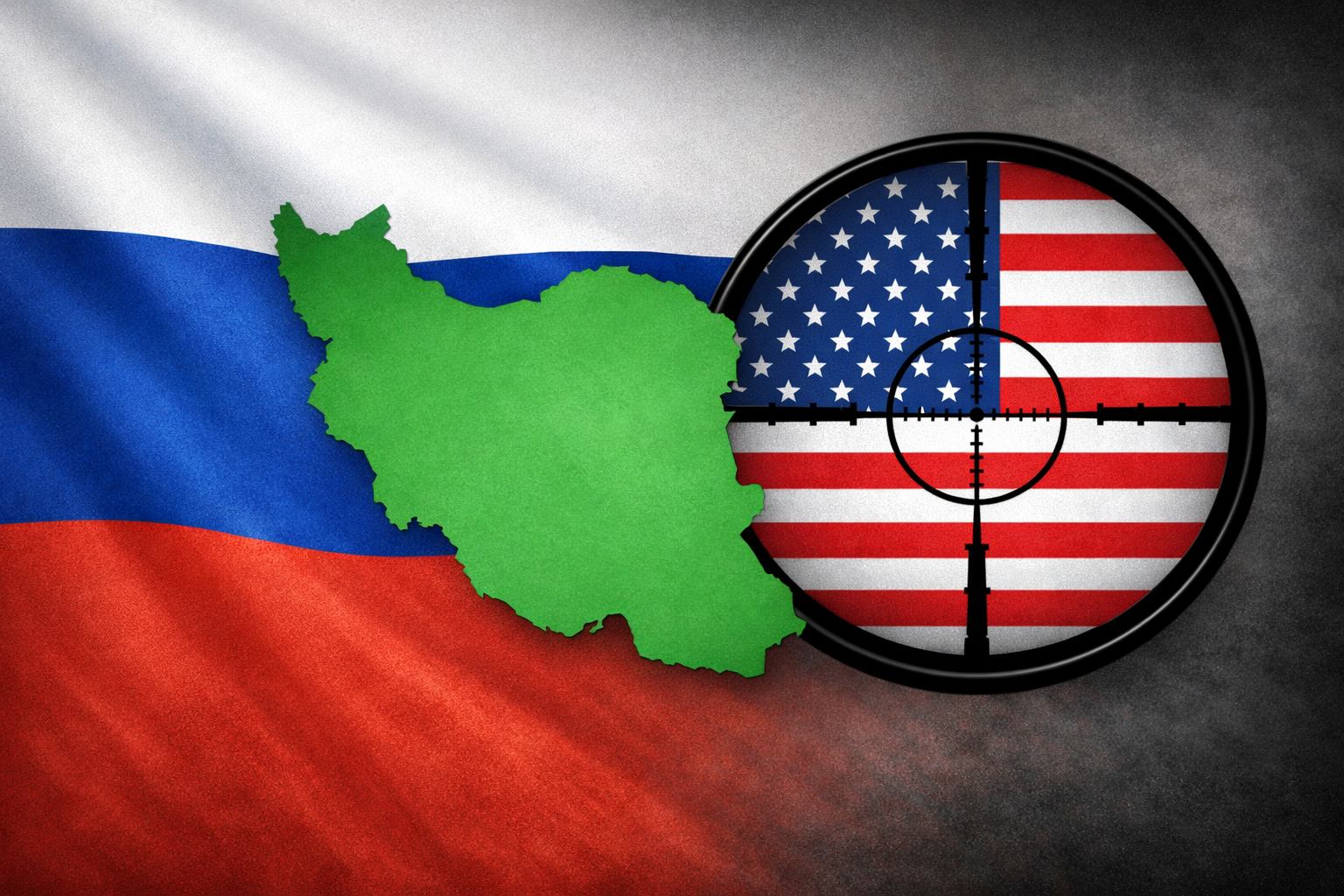
Source ChatGPT
EXECUTIVE SUMMARY
Russia has been providing Iran with intelligence on the locations and movements of U.S. warships and aircraft operating in the region since the start of Operation Epic Fury. According to three U.S. officials cited by The Washington Post, this represents the first confirmed instance of a major American adversary actively enabling attacks on U.S. forces in the current conflict. The Washington Post quotes one official describing the effort as "a pretty comprehensive" intelligence sharing arrangement. An Iranian attack drone struck a building adjacent to the U.S. Navy's 5th Fleet headquarters in Bahrain during the opening phase of the conflict. The threat to American personnel is not theoretical.
ANALYSIS
Russia's decision to pass targeting data to Iran is a calculated move, not a passive gesture. The intelligence being shared includes information on warship positions and aircraft movements, according to U.S. officials cited by The Washington Post. That outlet quotes one official characterizing the scope of the effort as "pretty comprehensive." That is not a description of occasional tips. That is a description of a sustained, operational intelligence relationship.
One thing is for certain: this crosses a threshold that has no recent precedent. A nuclear-armed adversary of the United States is directly enabling attacks on American military forces. Whether Russia is dictating targets or simply supplying the information for Iran to act on has not been resolved by U.S. intelligence. The practical distinction between those two scenarios grows smaller with each Iranian strike.
The attack on the building adjacent to the 5th Fleet headquarters in Bahrain demonstrates the stakes. The 5th Fleet has operated from Bahrain since 1995 and is one of the most important command nodes in the U.S. Central Command theater. Russian intelligence contributed, at minimum indirectly, to a strike on a U.S. military installation. Most strategic frameworks would classify that as hostile participation in the conflict regardless of whether Moscow ever puts boots on the ground.
Moscow's strategic incentives are not complicated. Oil prices rise when shipping lanes through the Strait of Hormuz look threatened. A drawn-out U.S.-Iran conflict pulls American attention, resources, and political bandwidth away from Ukraine. Every American casualty in the Gulf becomes leverage in the broader confrontation Russia is managing with the West. This is not solidarity with Iran. It is self-interested strategy.
The U.S. intelligence community has been careful to frame this as sharing, not directing. That framing matters for legal and diplomatic purposes. It matters considerably less to the crews aboard those ships. What is operationally significant is that information enabling Iranian targeting decisions originated with a nuclear peer adversary, and that adversary has calculated there will be no serious consequence for providing it.
We also know the intelligence community has not yet publicly resolved the full scope of what is being transferred or through what channels. The picture is still developing. That uncertainty should not be mistaken for reassurance.
The net assessment is that this intelligence partnership will not contract on its own. Moscow has too much to gain from American casualties and faces no immediate cost for its involvement. Washington will need to decide whether this constitutes a red line and, if so, what enforcing that line looks like against an adversary that has nuclear weapons and plausible deniability.
