

The Hormuz Blockade and the Shape of Great Power Competition in the Gulf
Source: ChatGPT
EXECUTIVE SUMMARY
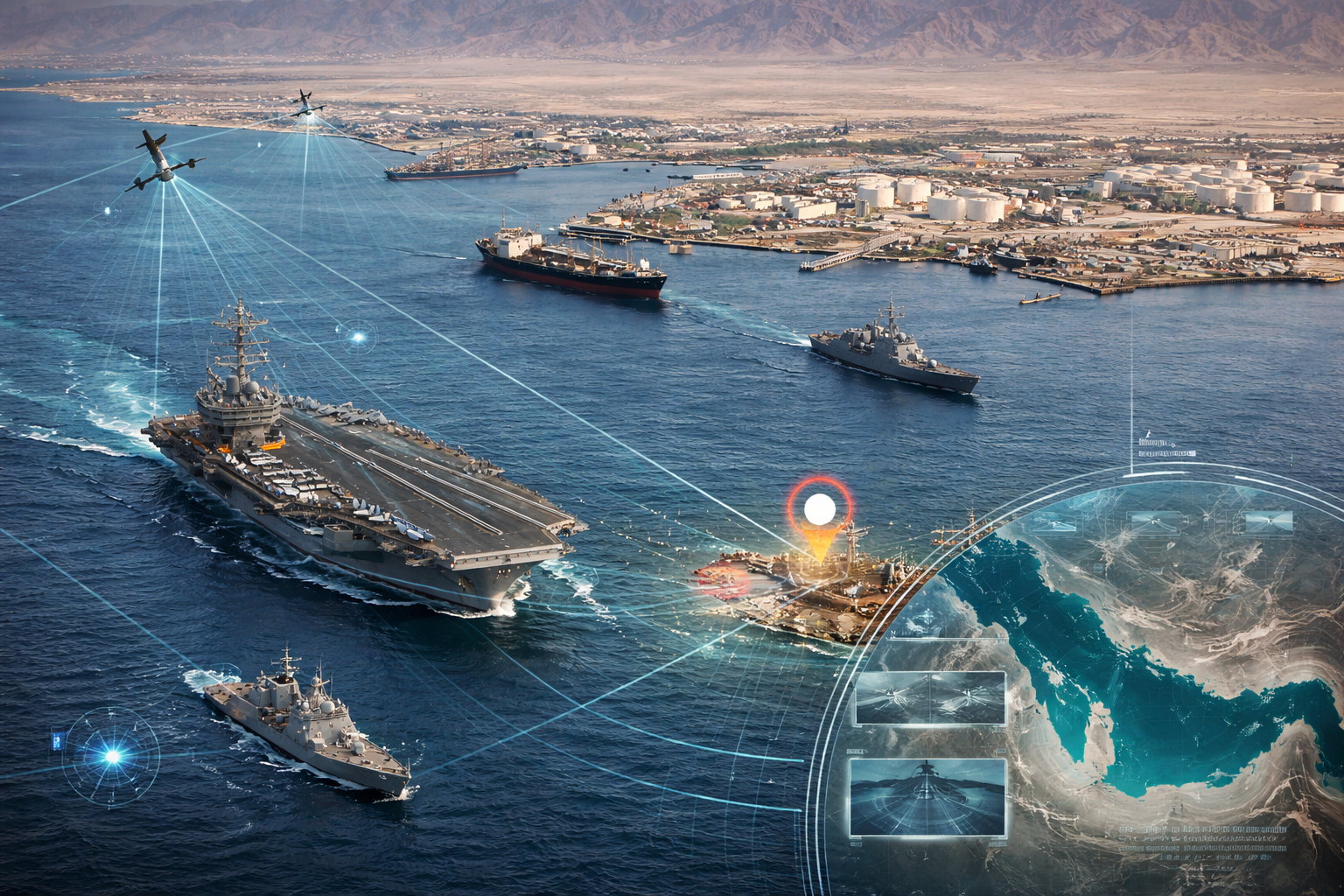
The US naval blockade of Iranian ports, effective 13 April 2026, has transformed the Strait of Hormuz into the primary arena of US-China-Iran geopolitical competition. China's refusal to recognize the blockade, demonstrated by the immediate transit of the sanctioned tanker Rich Starry, signals a deliberate challenge to US maritime enforcement authority. Iran's continued position that Hormuz management is an Iranian sovereign prerogative, combined with active IRGC naval operations, means the blockade could trigger the exact kinetic confrontation it was designed to prevent.
ANALYSIS
The US has historically treated freedom of navigation in the Strait of Hormuz as a core national security interest, underpinned by international law. The naval blockade, as currently defined, applies specifically to Iranian port traffic rather than general Hormuz transit, a deliberate legal and diplomatic distinction intended to maintain allied and neutral shipping lanes while choking Iranian commerce. However, Iran has refused to acknowledge this distinction, asserting through the IRGC Navy and the Khatam al-Anbiya Central Headquarters that passage of any vessel is subject to Iranian armed forces approval.
China's position is critical. The transit of the sanctioned tanker Rich Starry, with a Chinese crew and Chinese cargo, on 14 April represents an implicit diplomatic signal that Beijing does not consider the US blockade to be a legitimate exercise of international law. A second sanctioned vessel, the Murlikishan, was in the strait heading to load Iraqi oil within days of the blockade announcement. Trump has explicitly warned China that sending weapons to Iran would result in major problems, and China's four-point Middle East peace proposal delivered during the UAE presidential visit to Beijing on 12 April positions Beijing as attempting to present an alternative diplomatic framework.
The blockade could create conditions for a broader Gulf escalation if IRGC vessels attempt to intercept US blockade enforcement ships. Trump's stated policy of eliminating Iranian ships that approach US vessels sets a clear escalation threshold. The Bab al-Mandab strait remains a secondary pressure point: WarCabinet reporting indicates Iranian-aligned actors are warning that Houthi-controlled access to the Bab al-Mandab could become an additional chokepoint if the Hormuz crisis escalates further. Saudi Arabia has restored full flow through its East-West pipeline to approximately 7 million barrels per day, providing a partial alternative route that reduces but does not eliminate Western dependence on Hormuz throughput.
For US allies in the Gulf, particularly the UAE, which is simultaneously deepening security ties with China while maintaining formal alignment with the US, the blockade forces an explicit choice. The UAE presidential visit to Beijing on 12 April, days after the ceasefire and simultaneous with the blockade announcement, illustrates the accelerating hedging behavior among Gulf states. This realignment pressure is a direct strategic consequence of the US-Iran war and the perceived US willingness to disrupt global oil markets.
SOURCES
Geopolitics Watch (Telegram): Chinese tanker Rich Starry transit, April 14
WarCabinet (Telegram): Bab al-Mandab warning, April 14
Geopolitics Watch (Telegram): Xi four-point proposal, UAE visit, April 12
