

Houthis Signal 'Hour Zero' Naval Blockade as Iran Threatens Double Chokepoint Closure
EXECUTIVE SUMMARY
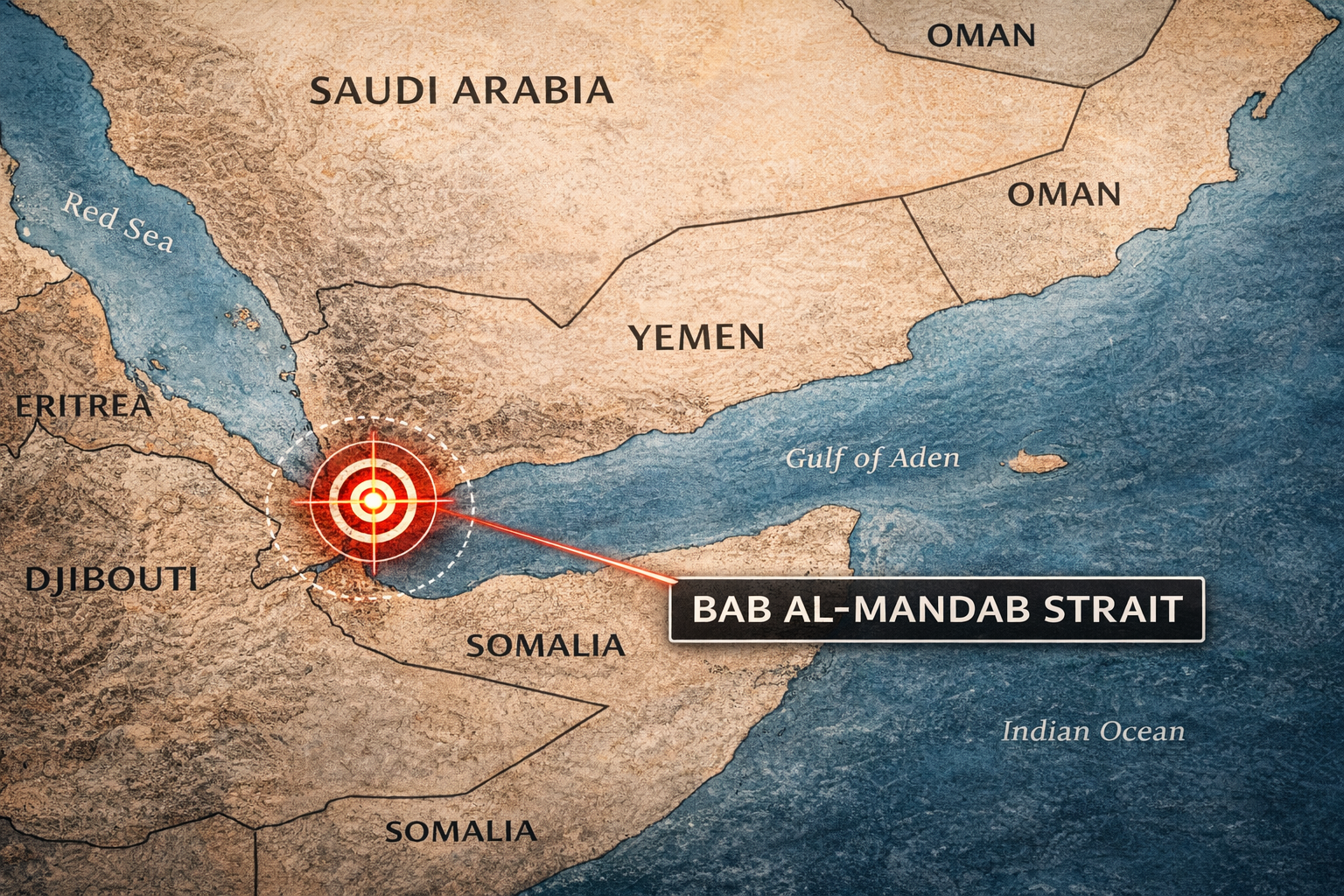
Yemen's Houthi movement has signaled imminent readiness to blockade the Bab al-Mandab Strait if conditions require, as Iranian state media explicitly threatens that Iran could coordinate with the Houthis to simultaneously close both the Strait of Hormuz and Bab al-Mandab in what analysts are describing as a 'double chokepoint' scenario. Houthi leader Abdul-Malik al-Houthi stated on March 26 that his movement stands 'fully militarily ready' and declared 'our hands are on the trigger.' Iranian officials specified the Houthi blockade option would be activated in the event the US initiates ground operations against Iran.
ANALYSIS
The Bab al-Mandab Strait is a 20-mile-wide chokepoint connecting the Red Sea to the Gulf of Aden, through which approximately 5.1 million barrels per day of oil transited before the Iran conflict began. A Houthi blockade of Bab al-Mandab in combination with Iran's existing Hormuz closure would create a dual-chokepoint scenario that would force virtually all Middle Eastern oil and gas exports destined for Europe, North America, and Asia to reroute around the Cape of Good Hope, adding 7,000 to 10,000 nautical miles to the transit and dramatically increasing shipping costs, fuel prices, and global inflation already under pressure from the Hormuz disruption.
The Houthi movement demonstrated during 2023-2024 that it possesses sufficient anti-ship missile and drone inventory to sustain a Red Sea interdiction campaign for months. Since the start of the Iran war on February 28, the Houthis have continued anti-Israel shipping operations in the Red Sea while declaring solidarity with Iran. The March 26 statements from Houthi leadership represent the most explicit readiness-to-act signal since the war began. The qualifier that the blockade would be triggered by US 'ground attacks' on Iran aligns with the Kharg Island seizure planning now reported by Axios. A US decision to proceed with amphibious operations against Iranian territory would thus simultaneously activate a Houthi response in the Red Sea.
Iran's explicit threat to 'open a new front in Yemen' and close Bab al-Mandab suggests coordinated operational planning between Tehran and Sanaa that goes beyond reactive signaling. Iranian Revolutionary Guard Naval Command has historically provided targeting data, missile guidance, and operational planning to Houthi naval forces. If IRGCN is embedded in Houthi Bab al-Mandab planning, the blockade could commence within hours of a US trigger action, not days. The ADNOC CEO's March 26 characterization of Iranian Hormuz restrictions as 'economic terrorism' and the UK forecast of the largest economic hit among major economies from the Iran war underscore the cascading economic consequences a double chokepoint closure would impose. A sustained dual-blockade scenario has no historical precedent and would represent the most severe disruption to global oil supply chains since World War II.
