

15 Chemical-Spraying Agricultural Drones Stolen in New Jersey; Fraud Pickup Raises Weaponization Concerns
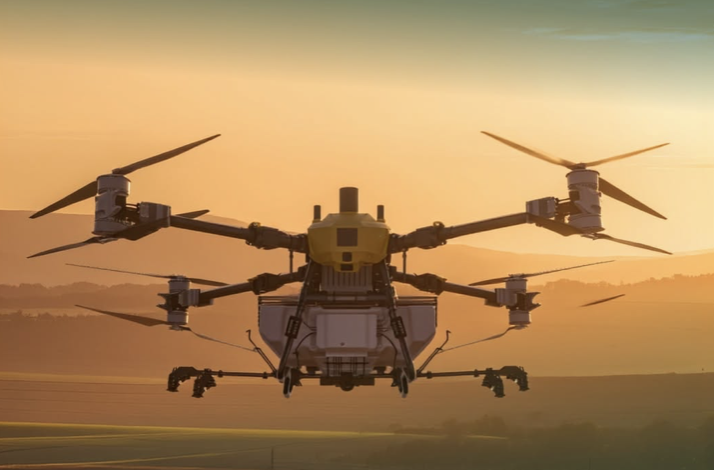
Ceres Air C31/Source: Ceres Air
EXECUTIVE SUMMARY
Fifteen industrial Ceres Air C31 agricultural drones capable of dispersing large volumes of liquid chemicals were stolen from a Harrison, New Jersey logistics facility after a suspect allegedly used forged shipping paperwork to collect the shipment. Reporting says federal authorities are investigating due to concern the platforms could be repurposed to disperse harmful agents, though motive and end-user remain unknown. The incident highlights a low-friction pathway for converting commercial drone logistics into a potential mass-harm capability.
ANALYSIS
This is not a smash-and-grab. The theft method described is a logistics fraud that mirrors cargo-theft tradecraft: a “delivery driver” presents a convincing bill of lading backed by a confirmation email, the shipment is released, and the load disappears before anyone realizes the documentation is fake. If accurate, the sophistication is the point. A crew that can successfully spoof a pickup on high-value specialized equipment is demonstrating access to planning, templates, and confidence that suggests repeatability.
The drones themselves are what drives the security concern. The Ceres Air C31s are described as ATV-sized agricultural sprayers that can carry and disperse up to ~40 gallons of liquid quickly over a wide area. That is legitimate farming capability, but it also maps directly onto “dispersal platform” risk if paired with toxic industrial chemicals, concentrated pesticides, or other harmful agents. Reporting explicitly frames law enforcement concern around the possibility of chemical/biological dispersal, but there is no public-facing confirmation of intent beyond unnamed briefed sources.
Three practical risk factors emerge from the coverage:
Rapid operationalization: Agricultural sprayer drones are designed to be operated by non-specialists. If a malicious actor obtains them intact (plus chargers/controls), the barrier to “first flight” is lower than for custom-built UAV delivery systems.
Scale and redundancy: Fifteen platforms is not a one-off. That number supports sustained operations, multiple sites, training attrition, or a mix of resale and use.
Ambiguity of purpose: This could still be profit-motivated cargo theft. But when the stolen item is a bulk-liquid dispersal system, investigators have to treat worst-case repurposing as plausible until the assets are recovered.
The reporting also cites a U.S. Army manual warning that agricultural drones can be adapted for chemical/biological delivery. That’s not proof of this case’s intent, but it does reflect why federal attention would be immediate: the capability is well understood, and the consequence space is outsized compared to typical stolen property cases.
Net assessment: at minimum, this is a high-end cargo theft of dual-use equipment enabled by paperwork spoofing. If the drones are not quickly recovered, the uncertainty itself becomes the operational problem, because the same capability that makes them useful in agriculture also makes them useful for coercive “spray and panic” scenarios.
SOURCES
