

B-52 Stratofortress Crashes at Edwards Air Force Base During Takeoff; Massive Fire, Crew Status Unconfirmed
Source: X | @sentdefender
EXECUTIVE SUMMARY
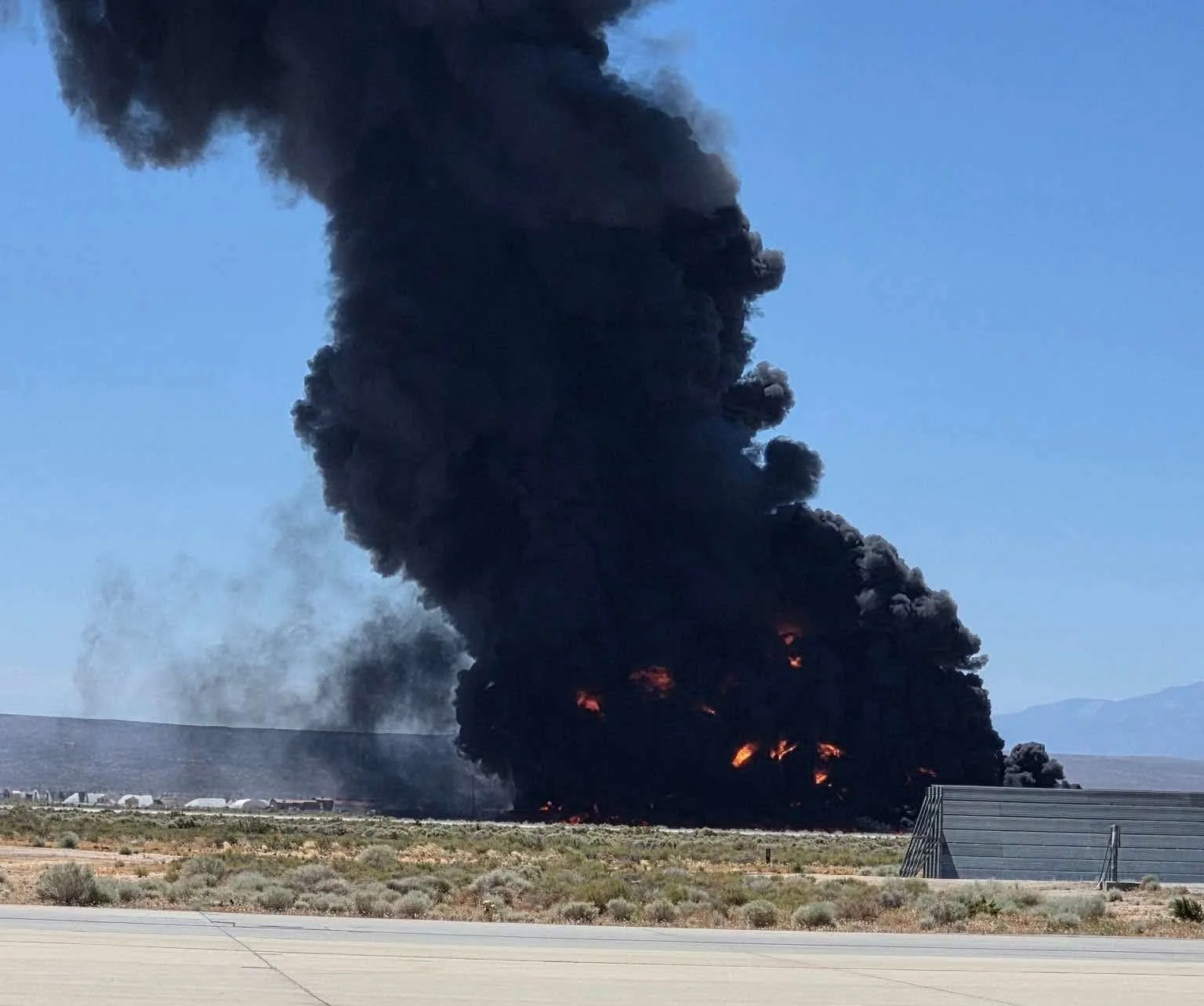
A United States Air Force B-52 Stratofortress bomber crashed at Edwards Air Force Base in California at approximately 11:20 AM local time on June 15, erupting into a massive fire that sent a large column of black smoke into the sky visible for miles. The base immediately closed the airfield and diverted all inbound aircraft. Crew status had not been publicly confirmed as of this briefing and no cause has been released.
ANALYSIS
The crash occurred at or near the Edwards airfield during takeoff operations. Edwards Air Force Base (AFB) is home to Air Force Materiel Command's Air Force Test Center and has historically served as a primary flight test installation, with multiple aircraft types operating from the airfield at any given time. A B-52 Stratofortress operating from Edwards is consistent with ongoing flight testing, upgrades evaluation, or continuation training sorties. Footage circulated publicly showed a sustained, large-area fire with a dense column of black smoke consistent with a significant fuel-fed blaze on or adjacent to the runway environment.
The B-52 Stratofortress is a long-range strategic bomber that entered Air Force service in the 1950s and remains in the active inventory, with modernization programs extending its operational life into the 2030s. A standard B-52 operational crew consists of five personnel. Whether the aircraft carried a full operational crew, a test crew, or a reduced configuration has not been publicly disclosed. The absence of immediate crew status confirmation is consistent with an ongoing personnel accountability process and does not by itself confirm or rule out casualties.
All inbound aircraft were diverted and the Edwards airfield was closed immediately following the crash. On-base fire and emergency response units deployed to the scene. Edwards maintains full crash-fire rescue capability as part of standard Air Force installation requirements. No secondary explosions or hazardous material incidents beyond the primary fire were reported in initial coverage. The Air Force Safety Center and Air Force Office of Special Investigations are the lead authorities for the official cause determination; the National Transportation Safety Board typically participates in an advisory capacity for military aviation accidents on domestic installations.
The B-52 fleet is in active modernization under the Commercial Engine Replacement Program and Radar Modernization Program, with test sorties from Edwards representing ongoing known activity. If the aircraft involved was a test article, the crash may carry implications for the modernization schedule beyond the immediate airframe loss. The Air Force has not released the specific tail number, mission profile, or aircraft designation. Loss of a B-52 is significant given the fleet totals fewer than 80 aircraft and no production replacement exists.
SOURCES
