

California Governor Seeks Federal Emergency as GKN Aerospace Evacuation Enters Fifth Day
Source: X | @AviationWeek
EXECUTIVE SUMMARY
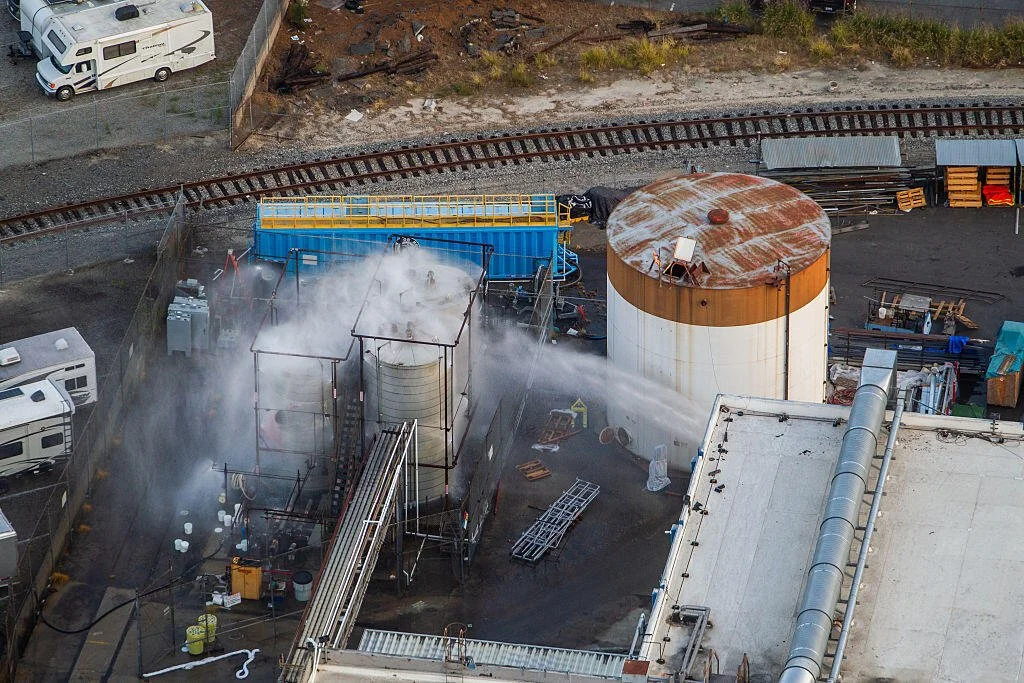
California Governor Gavin Newsom submitted a formal request to the White House for a federal emergency declaration on May 26, related to the GKN Aerospace methyl methacrylate tank incident in Garden Grove that began May 21. An overnight operation on May 25 eliminated the risk of a boiling liquid expanding vapor explosion, allowing approximately 25,000 of the roughly 40,000 displaced residents to return home. An estimated 16,000 remain under active evacuation orders as mitigation work on the 22-year-old storage tank continues. If approved, the presidential emergency declaration would unlock FEMA coordination authority and formal federal resource deployment.
ANALYSIS
The governor's submission of a federal emergency request marks the formal escalation of this incident's official classification. Under the Stafford Act, a presidential emergency declaration authorizes FEMA to coordinate federal assistance, deploy specialized hazmat resources, and reimburse state and local expenditures for protective actions already taken. Submitting the request on day five, after the acute Boiling Liquid Expanding Vapor Explosion (BLEVE) risk has been eliminated, signals that the ongoing evacuation burden, air quality monitoring requirements, and remediation costs exceed what state and local resources can absorb without federal support. The White House's response timeline will determine how quickly additional resources reach the scene.
Methyl methacrylate is a highly flammable acrylic monomer with a vapor explosive range of 1.7 to 8.2 percent in air. The tank at issue is 22 years old and had malfunctioning valves at the time of the initial overheat event. Even with the BLEVE risk resolved, residual vapor concentrations and the degraded condition of the aging infrastructure require controlled off-loading under monitored conditions before the remaining 16,000 displaced residents can safely return. Air quality agencies continue active monitoring across the evacuation perimeter.
GKN Aerospace Garden Grove manufactures composite aircraft structures for military and commercial customers, placing it within the defense-industrial base in a densely populated residential corridor. Its proximity to residential neighborhoods extends the evacuation impact and community disruption beyond what a rural industrial site would generate under comparable conditions. An extended operational shutdown at the facility carries downstream effects for aerospace program schedules, though no production impact timeline has been publicly disclosed.
Taken alongside the Nippon Dynawave implosion in Longview, Washington occurring the same day, the GKN incident contributes to an unusual pattern: two major industrial chemical emergencies on the US West Coast within five days, both requiring governor-level emergency response and multi-day evacuations or fatality responses at facilities with aging storage infrastructure. No criminal or terrorist nexus has been identified in either case.
SOURCES
