

Despite Trump Threats, Islamic State Wings Continue Attacks on Christians in Central and West Africa
Executive Summary
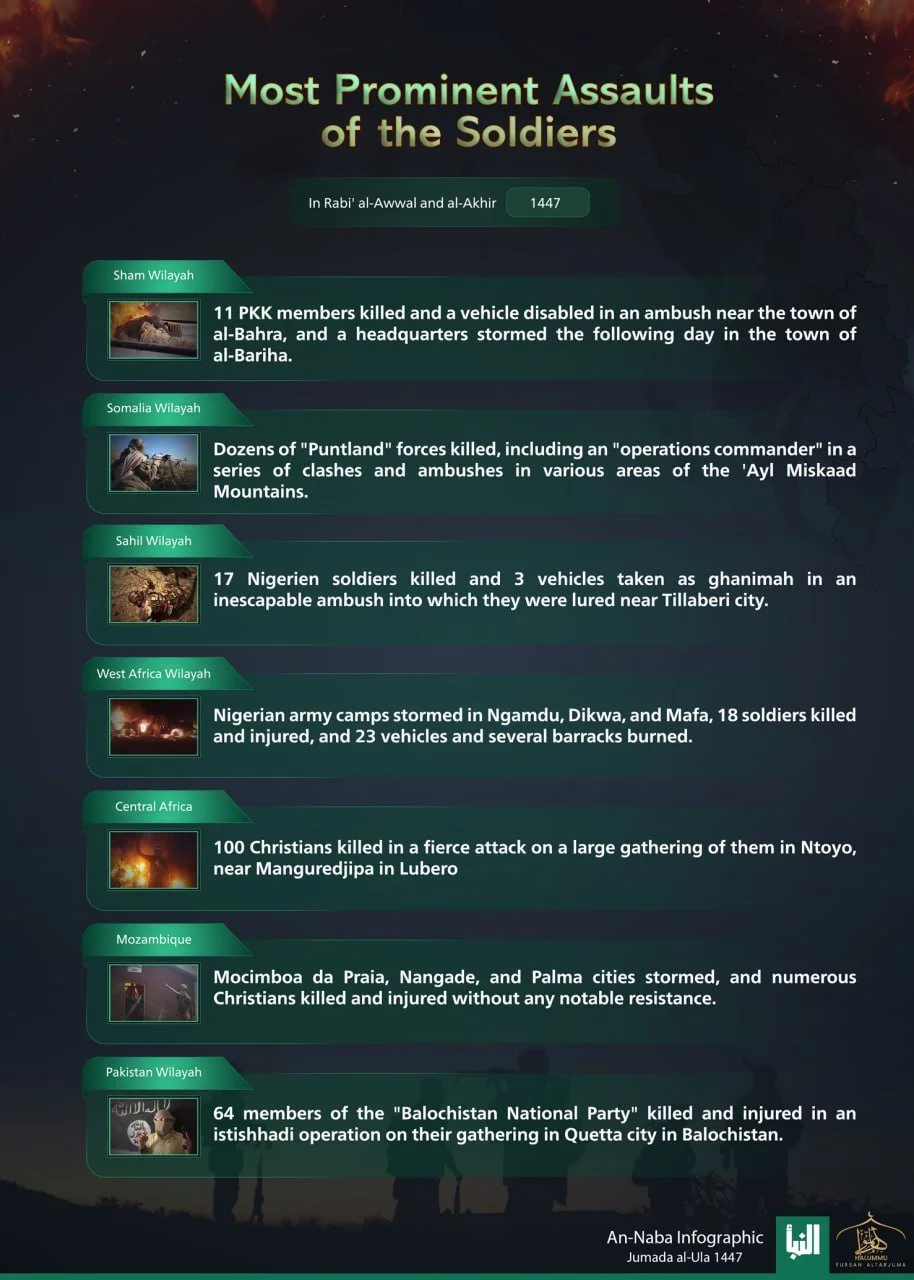
While Washington threatens sanctions and even military action over the reported killing of Christians in Nigeria, Islamic State affiliates are still claiming fresh attacks on Christian communities and state forces in Africa. In posts attributed to Islamic State Central Africa Province and Islamic State West Africa Province, the groups say they targeted Christians in Ituri in the Democratic Republic of the Congo and struck a checkpoint and a church in Borno, Nigeria. These claims surface as U.S. pressure on Abuja intensifies, Nigeria steps up air and ground operations, and analysts warn that simplified “genocide” narratives can obscure the wider drivers of violence.
Analysis
Islamic State propaganda channels are amplifying claims of sectarian and anti state attacks in both Central and West Africa even as Nigeria faces external pressure and conducts expanded counterterrorism operations. The timing suggests the groups aim to project momentum and to reinforce sectarian framing that can inflame local tensions and invite copycat violence.
A post attributed to Islamic State Central Africa Province says its fighters attacked “kafir Christians” in the Christian village of Mazinz in Ituri, killing six people and burning about twenty houses.
A separate post attributed to Islamic State West Africa Province claims an attack on a Nigerian army checkpoint in Borno, along with the burning of the checkpoint, a church, and nearby Christian homes.
Political pressure on Nigeria surged after public threats from President Trump and support from allies in Congress that included talk of sanctions and possible kinetic action in response to the reported killing of Christians.
Nigerian forces announced intensified air strikes and raids across several northern states, including precision strikes on Islamic State targets in Borno.
Independent analysis cautions that while Christians have suffered heavily in some regions, Nigeria’s violence is complex, with many victims being Muslim in majority Muslim regions, and with land, criminality, and governance failures as major drivers.
These claims from Islamic State channels are unverified and should be treated as propaganda until corroborated by independent reporting. Still, they are consistent with both groups’ current patterns of violence: ISCAP’s years long targeting of civilians in eastern DRC and ISWAP’s attacks on security posts, churches, and villages in Borno and the Lake Chad Basin. The escalation of U.S. rhetoric may have limited short term deterrent effect on these groups but could influence Abuja’s security posture. A narrow religious frame may also feed insurgent messaging while undercutting broad based civilian protection strategies that address all victims and drivers of violence.
