

Al-Sharaa’s White House visit signals a US opening to Damascus while core issues remain unresolved
Executive Summary
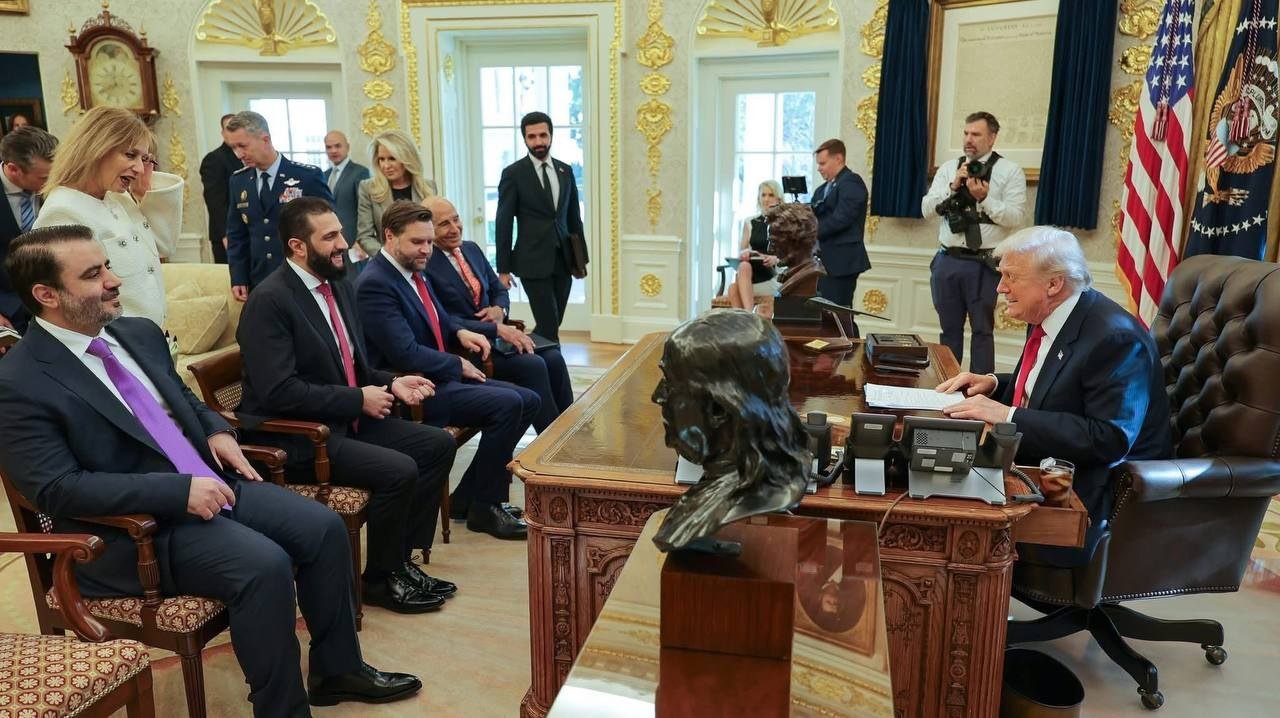
Syrian President Ahmed al-Sharaa’s first-ever visit by a Syrian head of state to the White House marks a sharp turn in US Syria policy, with sanctions and a terrorist designation lifted from al-Sharaa, a 180-day waiver of Caesar Act penalties, movement to restore Syria’s embassy in Washington, and a reported plan for Syria to join the Global Coalition to Defeat ISIS. The meeting gives Damascus new international legitimacy and potential economic openings, but leaves sensitive files unsettled, including integrating the Kurdish-led SDF into state structures, understandings with Israel, and whether temporary sanctions relief can become durable amid US congressional scrutiny.
Analysis
The visit elevates al-Sharaa’s standing abroad and at home, aligns Damascus publicly against ISIS, and signals a pause in punitive US measures, yet the path forward depends on progress on security arrangements, Kurdish integration, and a credible economic framework that can attract investment under uncertain sanctions relief. The administration’s suspension of Caesar enforcement for 180 days buys time, not certainty, and congressional action will shape whether relief endures or snaps back.
The administration hosted al-Sharaa in the Oval Office, lifted sanctions and a terrorist designation on the Syrian president, extended a 180-day Caesar Act waiver, and signaled that Syria will join the anti-ISIS coalition. Reporting also points to reopening Syria’s embassy in Washington to coordinate on counterterrorism, security, and economic issues.
Senior US and Syrian officials discussed implementing a stalled March agreement to integrate the SDF into a new Syrian army, while Turkish Foreign Minister Hakan Fidan joined related talks in Washington. Implementation steps were not disclosed.
Commentary highlights that the meeting boosts al-Sharaa’s legitimacy after ousting the Assad regime, while raising questions about deconfliction and a potential security arrangement with Israel similar to the 1974 disengagement framework, as well as how Damascus balances ties with Moscow after energy and basing understandings.
The UN Security Council voted to lift sanctions on al-Sharaa prior to the visit. Inside the US, the Treasury waiver extends short-term relief while Congress debates permanent changes, including proposals ranging from unconditional repeal to conditional sunset reviews that investors warn could deter capital.
Syria’s formal entry into the anti-ISIS coalition, if finalized, would reshape coordination across eastern Syria where ISIS cells persist, yet Kurdish integration remains the practical hinge for force alignment and local stability. Any Israel-Syria security channel would test regional deconfliction and domestic politics in both countries. On the economic side, short waivers will not on their own unlock large-scale reconstruction finance without predictable sanctions policy, credible anti-corruption steps, and clear compliance pathways for energy and infrastructure projects. The White House opening gives Damascus momentum, but lasting normalization will turn on deliverables over the next two quarters, not photo-ops.
