

San Diego Mosque Attack Manifesto Points to Nihilistic Extremism and Accelerationist Targeting
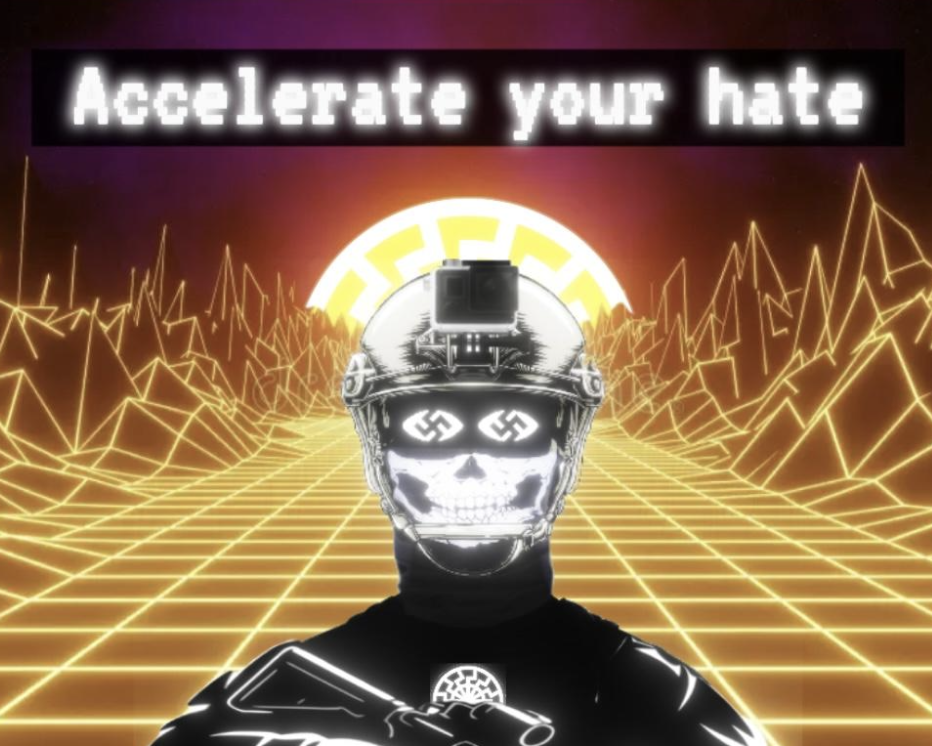
Source: Shooter’s Manifesto
EXECUTIVE SUMMARY
Two teen gunmen killed three men at the Islamic Center of San Diego before dying by suicide nearby, in an attack investigators are treating as hate-driven and rooted in online radicalization. The attached manifesto is central to the case: it blends white supremacist accelerationism, antisemitism, Islamophobia, misogyny, incel grievance, anti-Black racism, anti-LGBTQ hate, and admiration for prior mass attackers. The document frames the attack not only as violence against a mosque, but as propaganda meant to inspire copycats and restart momentum for racially motivated violence.
ANALYSIS
The attack unfolded at San Diego’s largest mosque, which also houses a school. Authorities identified the shooters as Caleb Liam Vazquez, 18, and Cain Lee Clark, 17. Police said the two appeared to have met online before connecting in person in the San Diego area. The attackers killed security guard Amin Abdullah and two other men, Mansour Kaziha and Nadir Awad, who officials said tried to draw the shooters away from the mosque and into the parking lot.
The victims’ actions likely reduced the casualty count. Abdullah identified and engaged the threat as the shooters moved past him, while Kaziha and Awad redirected attention away from the building. No students or teachers were injured, and Bright Horizon Academy credited emergency protocols, staff training, and coordinated response procedures with helping save lives.
The manifesto shows a blended extremist ideology rather than a single-issue motive. It repeatedly invokes white supremacist “race war” concepts, identifies with national socialism and eco-fascism, and explicitly embraces accelerationism as a path toward societal collapse and a white ethnostate. The author describes himself as not aligned with mainstream left or right politics, instead placing himself in a third-positionist and accelerationist framework.
The document also reflects nihilistic violent extremism, matching the FBI’s public framing that the attackers “did not discriminate in who they hated.” Its content attacks Jews, Muslims, Black people, Hispanic immigrants, women, LGBTQ people, political moderates, and broader society. The anti-Muslim section is especially relevant to the target selection, framing Islam and Muslim presence in Western countries as an invasion. That ideological framing appears consistent with the choice of a mosque as the primary target.
The manifesto places major emphasis on prior mass attackers as models. It uses “Sons of Tarrant” branding, glorifies the Christchurch mosque attacker, and describes the attack as part of a lineage of “disciples” intended to continue that model. The document also praises other white supremacist and mass violence offenders and discusses livestreaming, propaganda value, and the importance of creating material that can be archived, remixed, and used to radicalize others.
Operationally, the manifesto indicates pre-attack planning around multiple potential targets, reconnaissance using online mapping, review photos, schedules, and in-person drive-bys. It describes a goal of rapid movement, high casualties, armed-guard neutralization, livestreaming, and distribution of materials across extremist-friendly platforms. Those details should be handled carefully, but they matter analytically because they show the attack was conceived as a staged media event, not just a spontaneous shooting.
The online ecosystem is a key driver. CBS reported that the attackers livestreamed the assault and that the video spread on a site known for extreme violence content. The manifesto itself urges propaganda production, memeability, and reposting across fringe platforms. That creates a second-order threat: the attack was designed to live beyond the scene through archived video, symbols, slogans, and attacker mythology.
The pre-incident warning pathway was partial but real. Clark’s mother called police the morning of the attack, concerned that her son was suicidal after weapons and her vehicle were missing. Police began searching for him and used automated license plate readers, but the target was not known before the mosque attack. This is a recurring problem in targeted violence cases: leakage and crisis signals may exist, but without a known target, time and location compression make interdiction difficult.
The weapons access was substantial. Authorities reported seizing more than 30 guns, including pistols, rifles, shotguns, tactical gear, ammunition, a crossbow, and electronics during searches connected to the suspects. That cache, combined with the manifesto’s language around multiple targets and mass-casualty intent, suggests the attack could have been worse had the mosque’s security response, lockdown actions, and victim intervention not disrupted the attackers’ tempo.
SOURCES
Manifesto
