

Russian Intelligence Weapons Cache Exposed Near Berlin, Suspect Held in Romania
Source: X | @anadoluagency
EXECUTIVE SUMMARY
German Interior Minister Alexander Dobrindt announced on August 21 that a cache of two firearms and ammunition hidden in a forest near Berlin has been linked to a suspected Russian intelligence network whose member was arrested in Romania in October 2025 for directing parcel bomb attacks on behalf of Moscow. Germany is seeking extradition of the suspect, a Ukrainian national in his 20s described as a low-level agent, as part of a broader counterintelligence investigation that began in November 2025.
ANALYSIS
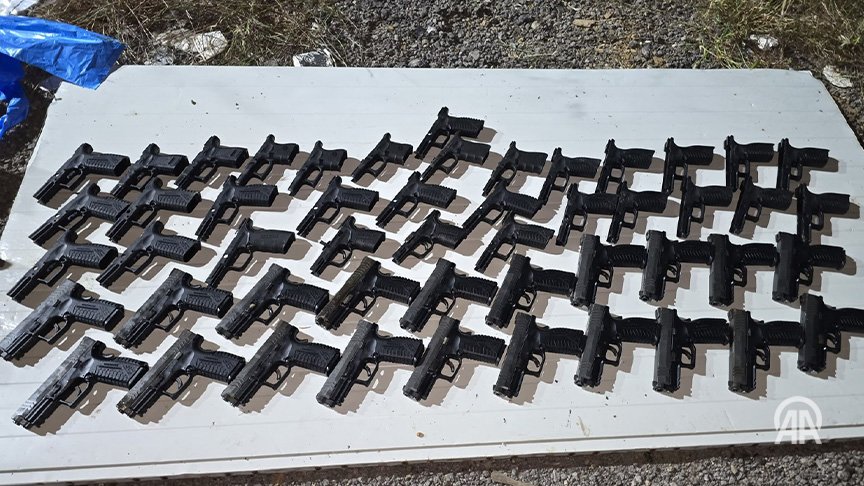
German federal law enforcement placed the clandestine weapons stash under covert surveillance for several months after locating it, during which time no one was observed approaching it. The German Federal Prosecutor's Office, which holds jurisdiction over espionage and state security offenses, has been investigating the network since November 2025. The cache consisted of two functioning firearms and corresponding ammunition, compact enough for concealed transport but sufficient for targeted violence. The extended surveillance period before public disclosure suggests German counterintelligence was attempting to map the full network architecture before any arrests or public announcement.
The suspect sought for extradition is a Ukrainian man in his 20s arrested in Romania in October 2025, along with a second Ukrainian national, on charges of conspiring to conduct parcel bomb attacks in Romania on behalf of Russian intelligence. Romanian authorities have confirmed that the individual Germany is seeking for extradition is the same person connected to the Berlin cache. Interior Minister Dobrindt characterized him as a low-level agent, a descriptor that carries a specific analytical implication: the network's planners and handlers remain above him in the chain of command and were not identified or exposed through his arrest.
The linkage between a parcel bomb operation in Romania and a weapons cache near Berlin, attributed to the same network, illustrates the geographic scope and task compartmentalization that Russian intelligence has applied in this campaign. Each node of the network was given a discrete assignment without apparent knowledge of the others. A proxy in Romania receives instructions to prepare incendiary devices for delivery to specific addresses; separately, someone caches weapons in a German forest. Neither cell's exposure compromises the other's immediate operational status, and the handlers orchestrating both remain at remove from either.
SOURCES
