

Graft Allegations Spark Violent Clashes in Tirana as Opposition Pressures Rama Government
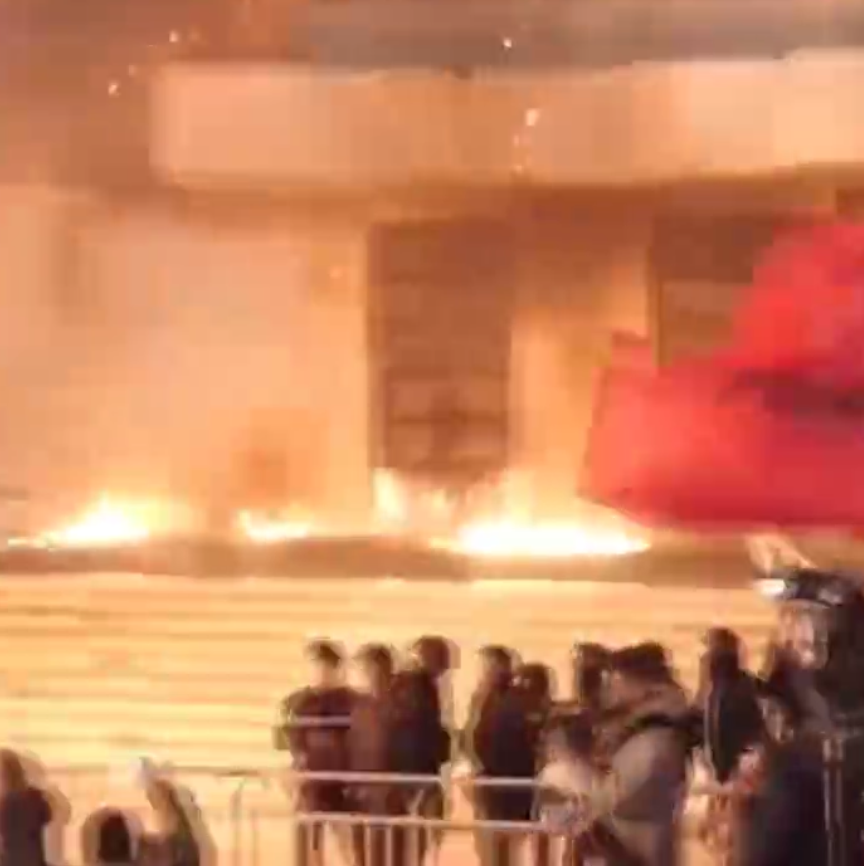
Source: Telegram
Executive Summary
Opposition protests in Tirana turned violent as demonstrators targeted government sites and police responded with riot control measures. The unrest is tied to a corruption case involving Deputy Prime Minister Belinda Balluku and renewed demands that Prime Minister Edi Rama resign, with prosecutors seeking steps that could lead to Balluku’s arrest.
Analysis
What happened in Tirana was not just another noisy rally. It was a street level stress test of Albania’s political system at the moment a corruption case is moving from accusation to consequence. Protesters gathered outside the prime minister’s office, chanted for Rama to go, and then some pushed the confrontation into violence by throwing petrol bombs and fireworks. Police answered with tear gas and water cannons, turning the center of the capital into a familiar scene: lines of riot gear, bursts of smoke, and the message that politics is being fought as much in the street as in parliament.
The trigger is the case against Deputy Prime Minister Belinda Balluku. Prosecutors allege she interfered in public tenders tied to major infrastructure projects to favor certain companies, which she denies. An anti corruption court has suspended her from office, and prosecutors are now asking parliament to lift her immunity so they can move toward arrest. That procedural step matters because it forces the ruling Socialist Party to choose between protecting a close ally of the prime minister and signaling cooperation with an anti corruption push that has become central to Albania’s international credibility.
Rama’s party has the votes to manage the parliamentary process, which makes the legal timeline uncertain and gives the government room to delay or contain political damage. At the same time, Rama has been publicly criticizing what he calls judicial overreach, especially the use of pre trial detention, suggesting the corruption case may expand into a broader political argument about courts, accountability, and who really governs. Albania’s EU accession ambitions sit in the background of all of this, because Brussels has been clear that corruption and rule of law reforms are not optional. Street violence around a corruption scandal is the kind of imagery that raises the cost of delay for everyone involved.
