

Urdu-Language Extremist Image Circulating on Telegram Highlights Call for Violence Against the United States
Executive Summary
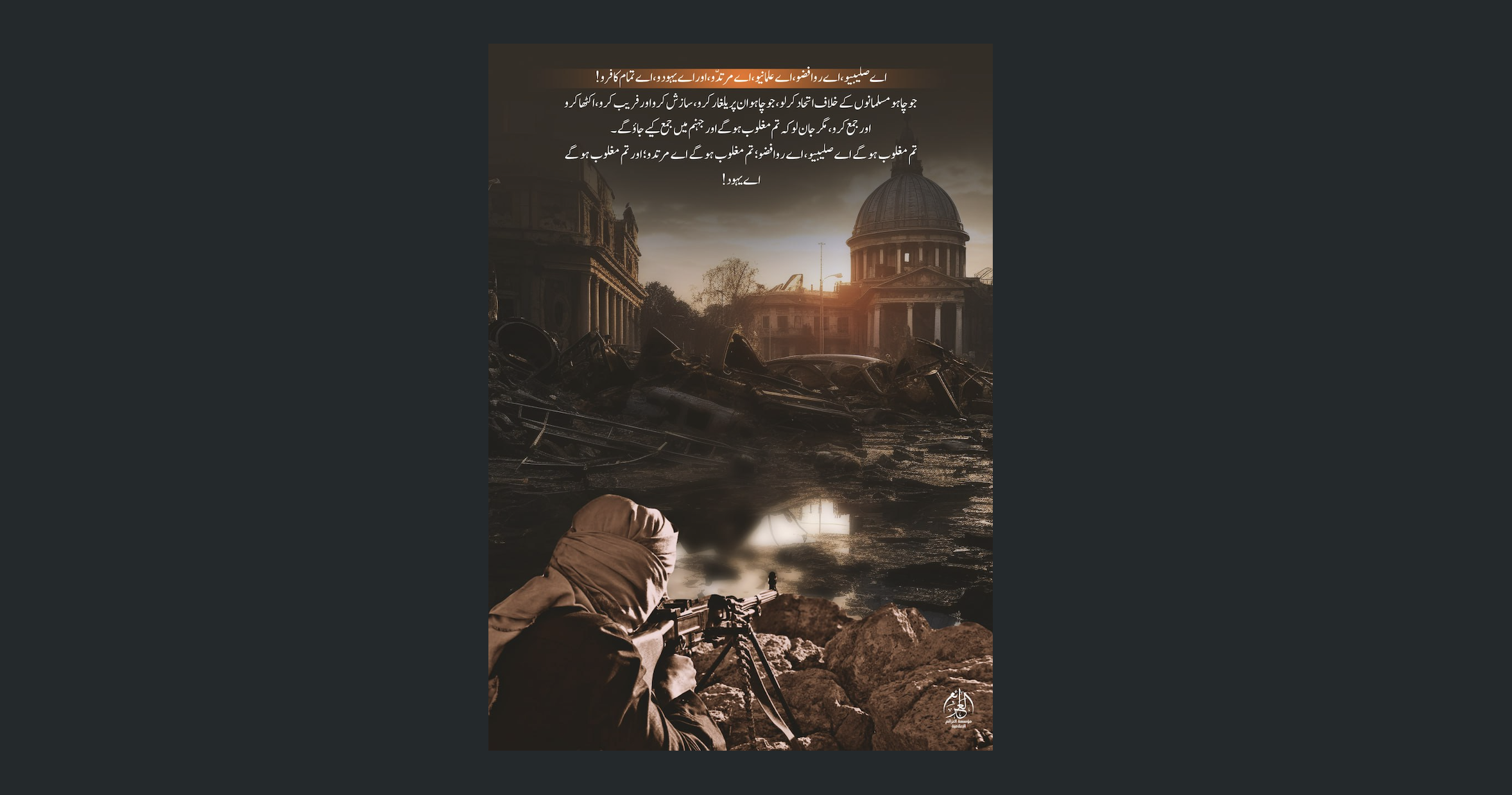
An Urdu-language propaganda graphic circulating on Telegram depicts a militant aiming a machine gun at a ruined urban setting that includes a building resembling the US Capitol, paired with text urging attacks against “Crusaders and Jews.” The message calls for killing, betrayal, and revenge on behalf of Muslims, consistent with long-standing extremist narratives that frame the US as a principal enemy. This imagery and language align with established violent extremist messaging themes described in US counterterrorism assessments and very likely seeks to inspire lone actors or small cells to violence in the West.
Analysis
The graphic uses destruction imagery, a militant posture, and explicit ideological language to encourage violence against Western targets, particularly the United States. The incorporation of a Capitol-like structure suggests an intent to symbolize attacks on US government institutions, echoing persistent foreign terrorist organization (FTO) narratives that frame Washington as the center of “hostility” against Muslims. Similar themes have been used by groups such as al-Qaida and ISIS to justify attacks and motivate followers online.
The call for killing “Crusaders and Jews” and the framing of Muslims as victims of conspiracy mirrors long-standing grievances that US intelligence reporting notes are commonly exploited by FTOs to incite retaliatory violence.
The use of a ruined government landmark reinforces FTO propaganda patterns that highlight US political institutions as symbolic attack targets, consistent with recent al-Qaida messaging themes encouraging attacks on US officials and government sites.
The format, imagery, and tone reflect characteristics of extremist mobilization materials that often appeal to individuals who are already consuming ideological content—one of the key behavioral patterns observed in radicalizing actors.
This type of imagery may serve as aspirational propaganda rather than a direct operational indicator, but it contributes to a broader threat environment in which violent extremists encourage simple, opportunistic attacks. Online dissemination on Telegram—particularly on Urdu-language channels—expands reach to South Asian audiences and diaspora communities already exposed to geopolitical grievances involving the US, Israel, and global Muslim conflicts. Even without explicit tactical guidance, the emotional and symbolic framing can lower thresholds for self-initiated violence among susceptible individuals.
Sources
Urdu-language Telegram media channel
