

Inside the OSINT Navigator
The OSINT Navigator is one of the core tools inside the Semper Incolumem Intelligence Platform. This walkthrough covers how it’s organized, what each category tracks, and how subscribers can use it to build their own intelligence picture. Watch the video below, or read the summary if you prefer.
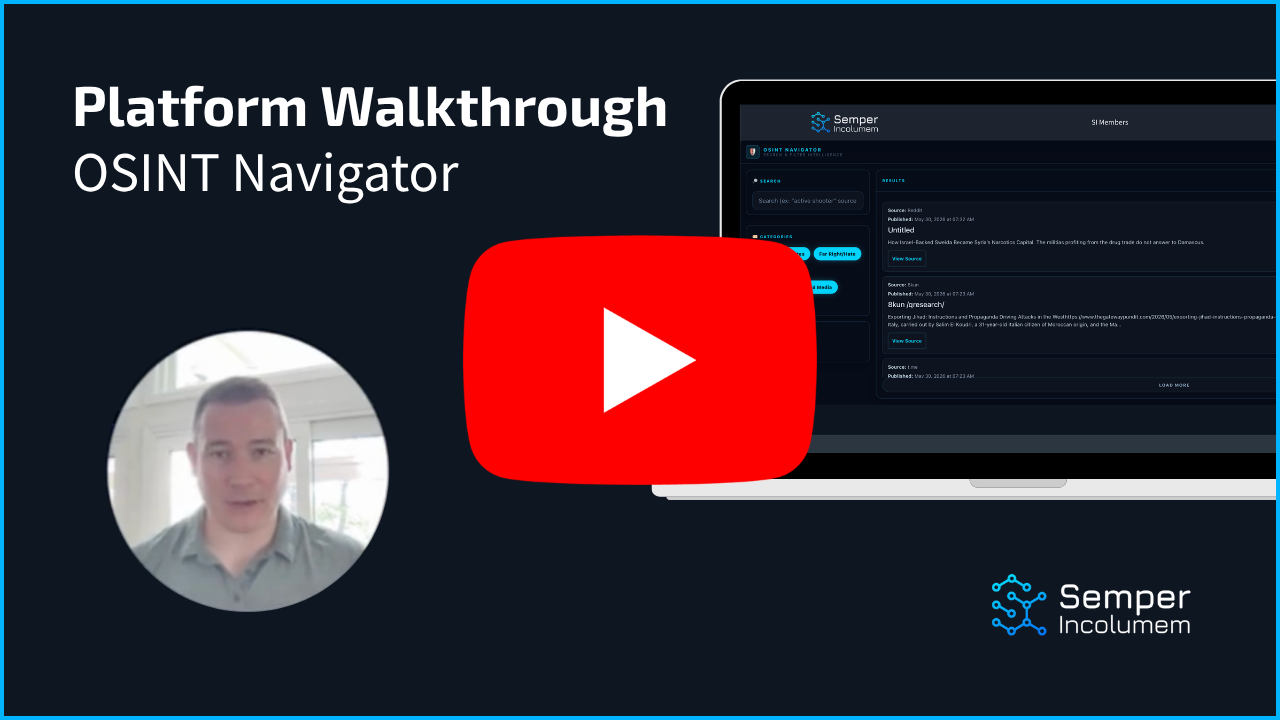
Matt Helmkamp, founder of Semper Incolumem, walks through the OSINT Navigator — including category structure, tracked source types, and the new saved search feature.
What the OSINT Navigator Is
The OSINT Navigator surfaces the open-source intelligence our analysts monitor across ideological, geopolitical, and social threat categories. It’s the same information our analysts work from to produce SI’s intelligence reports — made available directly to subscribers so they can conduct their own research, track their own topics, and build their own assessments.
If you’re a former subscriber returning after an absence, you’ll notice a significantly different layout. The redesign was deliberate: improved organization and a better user experience without changing what the Navigator tracks.
Category Breakdown
Anarchist Updates
This category covers anti-government actors — protesters, saboteurs, and groups targeting critical infrastructure. Common themes include arson, vandalism, and direct action against infrastructure. Some sources carry mixed ideological signals, running content that bridges anarchist and other extremist positions.
Far Right and Hate Groups
Ideologically driven content from militia movements, white nationalist groups, and similar organizations. Much of the content covers organizing activity — marches, gatherings, and calls to action. This category is useful for identifying mobilization patterns before they become operational.
Intel
SI’s own analyst-written intelligence reports, alongside curated reporting from other credible intelligence sources via RSS. Content in this category is also displayed on the Intel Dashboard, so subscribers working across both views will recognize the overlap.
Pro-Iran and State-Aligned Media
Coverage from Iranian state media and its regional proxies. This category tracks anti-Western rhetoric, state messaging patterns, and proxy activity. Useful for anyone monitoring geopolitical developments in the Middle East or tracking state-aligned influence operations.
Social and Forum
A broad category pulling from chan boards, Telegram channels, Reddit, and other high-volume, often conspiratorial platforms. This is where early-stage threat information frequently surfaces before it moves to more visible channels. Finding the signal here requires knowing where to look, but for analysts willing to do that work, it’s one of the most valuable sources in the Navigator.
Saved Search
One of the newer features in the Navigator is saved search. When you run a search — a person’s name, a location, an organization — you can save that query directly to a bookmark section that persists across sessions on the same device. Up to three saved searches can be stored at a time, accessible at the bottom of the interface. Remove a saved search by clicking the X. It’s a small feature with practical value for anyone tracking recurring topics.
What Stays the Same
Platform access includes the full OSINT Navigator database alongside analyst-written intelligence reports, the Tripwire threat prioritization feed, and the integrated map and alerts view. The Navigator is one tool within a broader intelligence picture — not a replacement for analyst judgment, but a starting point for developing one.
Questions
If you want to know more about the Navigator or whether the platform is the right fit for your work, reach out directly. No sales process. A straight answer.
