

Ideology and Firearms: Recent Political Violence Shows Normalization Risk and a Common Attack Trend
Cole Tomas Allen/Source: Truth Social
EXECUTIVE SUMMARY
Recent incidents in the Philippines and the United States show how political grievance, conspiracy narratives, and firearms access can rapidly convert public spaces and government-linked events into high-risk attack environments. The Philippine Senate standoff around Senator Ronald “Bato” dela Rosa’s ICC warrant produced gunfire amid heavy security and mobilized supporters, while U.S. cases involving alleged attacks near senior officials show a recurring pattern of armed individuals targeting or moving toward protected political spaces. Together, the incidents point to a broader normalization problem: political conflict is increasingly being framed by some actors and audiences as something that can be answered with force.
ANALYSIS
The Philippine Senate incident unfolded after the International Criminal Court unsealed an arrest warrant for Senator Ronald dela Rosa, the former national police chief and chief enforcer of Rodrigo Duterte’s drug war. Dela Rosa urged supporters to mobilize and prevent his arrest or transfer to The Hague, then remained inside the Senate under legislative protection. Gunshots later broke out at the Senate during a chaotic security standoff involving armed personnel, protesters, and competing claims over who fired.
President Ferdinand Marcos Jr. said no government personnel were involved and called for calm, while also raising the possibility that the shooting could be tied to destabilization. Senate officials suggested people they believed were National Bureau of Investigation agents attempted to enter and fired shots while retreating, but the NBI denied its agents were present. No casualties were immediately reported, and the attribution of the gunfire remains unresolved in the provided reporting.
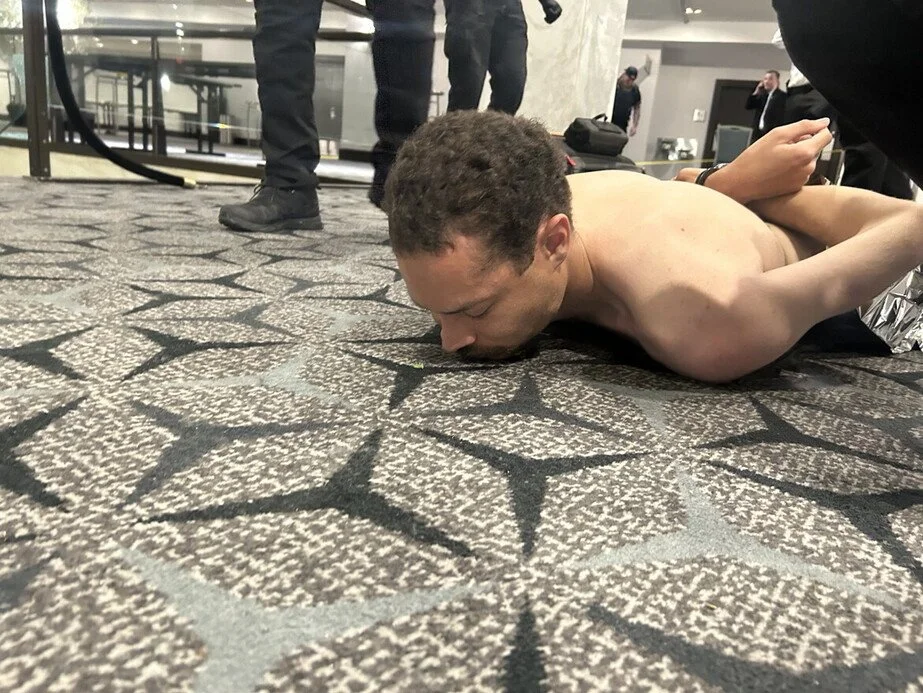
The U.S. cases show a different but related trend: armed individuals attempting or allegedly preparing attacks near senior political figures or symbolic government venues. The White House Correspondents’ Dinner case involved an alleged attempt to breach a controlled event space where President Trump and senior officials were present. The National Mall shooting involved Michael Marx allegedly firing at Secret Service officers along Vice President J.D. Vance’s motorcade route, wounding a 15-year-old bystander before officers shot and arrested him. The January 6 pipe bomb case, now charged with terrorism and weapons of mass destruction counts, shows how pre-positioned explosives can be used to threaten political institutions even when devices fail to detonate.
The National Desk reporting adds an important social layer. Polling cited in the article suggests a sizable share of Americans believe recent assassination attempts against Trump were staged, with conspiracy narratives spreading after real attacks and casualties. A separate Harvard poll cited in the same reporting found nearly 40% of young adults said political violence can be justified to achieve a political goal. Those attitudes do not mean most people will act violently, but they create a permissive information environment where attacks can be minimized, celebrated, reframed as fake, or treated as culturally meaningful.
The recurring attack trend is not simply ideology plus a weapon. It is grievance plus perceived permission. The permission may come from conspiracy ecosystems, leader-follower dynamics, online praise for attackers, or claims that institutions are illegitimate. Once violence is normalized as a political tool, the tactical threshold drops. A firearm at a motorcade route, shots at a legislature, a rush toward a protected ballroom, or pipe bombs outside party headquarters become different expressions of the same broader risk.
SOURCES
