

Iran Faces Escalating Nationwide Protests as Government Cracks Down and U.S. Issues Warnings
Source: X
Executive Summary
Iran is experiencing its most widespread unrest in years, driven by economic collapse, political repression, and growing public anger toward the ruling system. Security forces have responded with lethal force, mass arrests, and a nationwide internet shutdown, while U.S. leaders have issued public warnings against further bloodshed. Although Washington has not announced plans for direct intervention, the convergence of internal instability, external pressure, and harsh state repression has sharply raised regional tensions.
Analysis
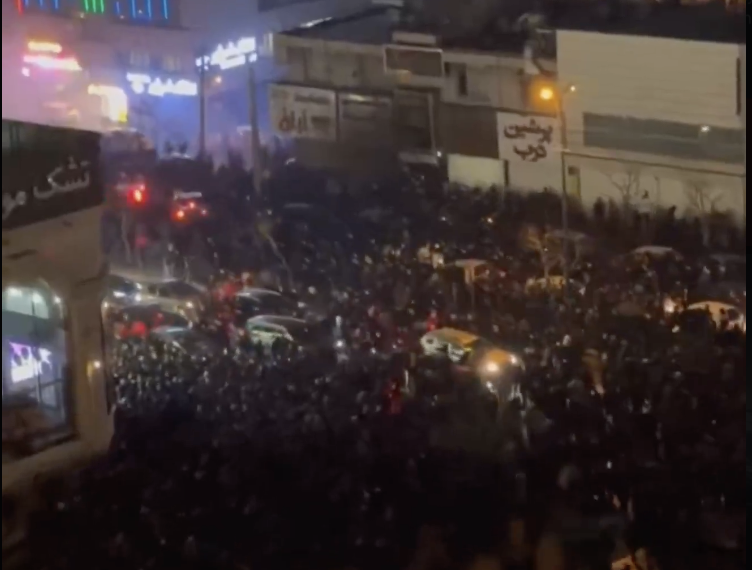
Iran has entered a volatile phase marked by sustained nationwide protests, an aggressive security crackdown, and heightened international scrutiny. The unrest, now extending beyond ten consecutive days, began as an economic protest but has evolved into a direct challenge to the foundations of the Islamic Republic. Demonstrations have spread to hundreds of cities and towns across all provinces, signaling a depth and geographic breadth that distinguishes this movement from earlier, shorter-lived uprisings.
The immediate trigger was a sharp collapse of Iran’s currency in late December, which accelerated inflation and further eroded purchasing power. Shop closures in Tehran’s Grand Bazaar on December 28 became the spark for broader action. What began as labor and market اعتراض quickly shifted into street demonstrations calling for political change. Protesters have openly chanted slogans targeting the clerical leadership and Supreme Leader Ali Khamenei, a development that Iranian authorities historically treat as an existential threat.
As demonstrations grew, protesters began attacking symbols of the regime. In several cities, crowds pulled down statues of Qassem Soleimani, the Revolutionary Guards commander killed in a U.S. strike in 2020 and celebrated by the state as a national hero. These acts carry deep symbolic weight, signaling rejection not only of current economic conditions but of the regime’s ideological and military identity.
The scale of the unrest is significant. Human rights monitors report protests in more than 300 locations nationwide. Verified footage shows hundreds marching openly through major city centers, including Tehran, Mashhad, Shiraz, Isfahan, Karaj, Bojnord, and Kerman. Demonstrations have also spread to smaller towns and minority regions, including Kurdish and Luri areas, where clashes with security forces have been particularly deadly.
The state response has been forceful and increasingly lethal. According to multiple human rights organizations, security forces have used live ammunition, metal pellets fired from shotguns, tear gas, and mass beatings to disperse largely unarmed crowds. At least 30 to 45 protesters have been confirmed killed so far, including teenagers, with the true toll likely higher as verification continues. Thousands have been arrested, including minors, with reports of detainees being taken from hospitals and held incommunicado.
The Islamic Revolutionary Guard Corps and police units have played a central role in suppressing protests. Senior officials have framed demonstrators as “rioters” and foreign-backed agitators, while the judiciary has promised no leniency. The Supreme Leader publicly warned that unrest would be put down, reinforcing signals to security forces that harsh measures are authorized.
One of the most consequential steps taken by the government has been the near-total shutdown of internet and phone services. Internet monitoring firms recorded national traffic dropping to almost zero, effectively isolating Iran from the global digital space. This blackout mirrors tactics used during previous uprisings in 2009, 2019, and 2022, which coincided with some of the bloodiest crackdowns. By severing communications, authorities aim to disrupt protest coordination, prevent the spread of images of violence, and limit international awareness.
Despite the blackout, information has continued to emerge through satellite links, limited business connections, and smuggled footage. Reports indicate protesters chanting from rooftops at night, lighting street fires, and staging marches even as security forces attempt to reassert control. The persistence of demonstrations under such conditions suggests a level of public resolve that the regime may find difficult to extinguish quickly.
A notable feature of this protest wave is the visible re-emergence of monarchist symbolism and slogans. Chants calling for the return of the Pahlavi monarchy, and explicit support for Reza Pahlavi, have appeared across multiple regions. While not universally embraced, these slogans reflect a broader rejection of the current system rather than a unified alternative vision. The movement remains decentralized, lacking a clear internal leadership structure, which both protects it from decapitation and complicates its ability to convert unrest into organized political change.
Externally, the unrest has triggered strong rhetorical reactions from the United States. President Donald Trump has repeatedly warned Iranian authorities against killing protesters, stating that severe consequences would follow further bloodshed. Senior U.S. officials, including the vice president and members of Congress, have publicly voiced support for peaceful demonstrators. However, Washington has stopped short of announcing any direct military or covert action tied to the protests.
The near-term outlook remains uncertain. If security forces sustain their current level of violence, protests may temporarily recede under fear and exhaustion, as seen in past uprisings. However, the economic drivers of unrest remain unresolved, and the symbolic breaches already achieved may make future protests harder to suppress fully. Alternatively, continued demonstrations combined with fractures within the elite or security forces could deepen instability, though there is no clear evidence of such splits yet.
What is clear is that Iran has entered a period of heightened internal stress at a time of intense external pressure. Even without direct U.S. intervention, the convergence of economic collapse, public defiance, and international scrutiny has created one of the most serious challenges to the Islamic Republic in recent years.
Analyst Note
The current unrest does not yet constitute a clear path to regime collapse, but it reflects a cumulative erosion of fear and legitimacy that is difficult to reverse. How the security forces behave in the coming days will likely determine whether this episode becomes another suppressed uprising or the beginning of a longer destabilizing cycle.
Sources
National Post – Soleimani statue pulled down amid new clashes
Iran International – Coverage of nationwide protests and slogans
CBS News – Iran cuts internet amid deadly protests
Palestine Chronicle – Internet blackout and U.S. warnings
Amnesty International – Documentation of killings and injuries
i24NEWS – U.S. political reactions
Sunday Guardian – Protest timeline and blackout
Times of Israel – Iranian foreign minister statements
