

Second Direct US-Iran Exchange in 36 Hours Tests MoU Framework and Gulf Alliance
Source: X | @CENTCOM
EXECUTIVE SUMMARY
A second direct military exchange between the United States and Iran unfolded over 36 hours beginning June 27, with the US striking five Iranian coastal positions and the Islamic Revolutionary Guard Corps (IRGC) responding by attacking American military bases in Kuwait and Bahrain. The sequence places the June 15 Memorandum of Understanding (MoU) under its most severe test, with both parties now demonstrating a sustained willingness to strike military installations on allied Gulf territory.
ANALYSIS
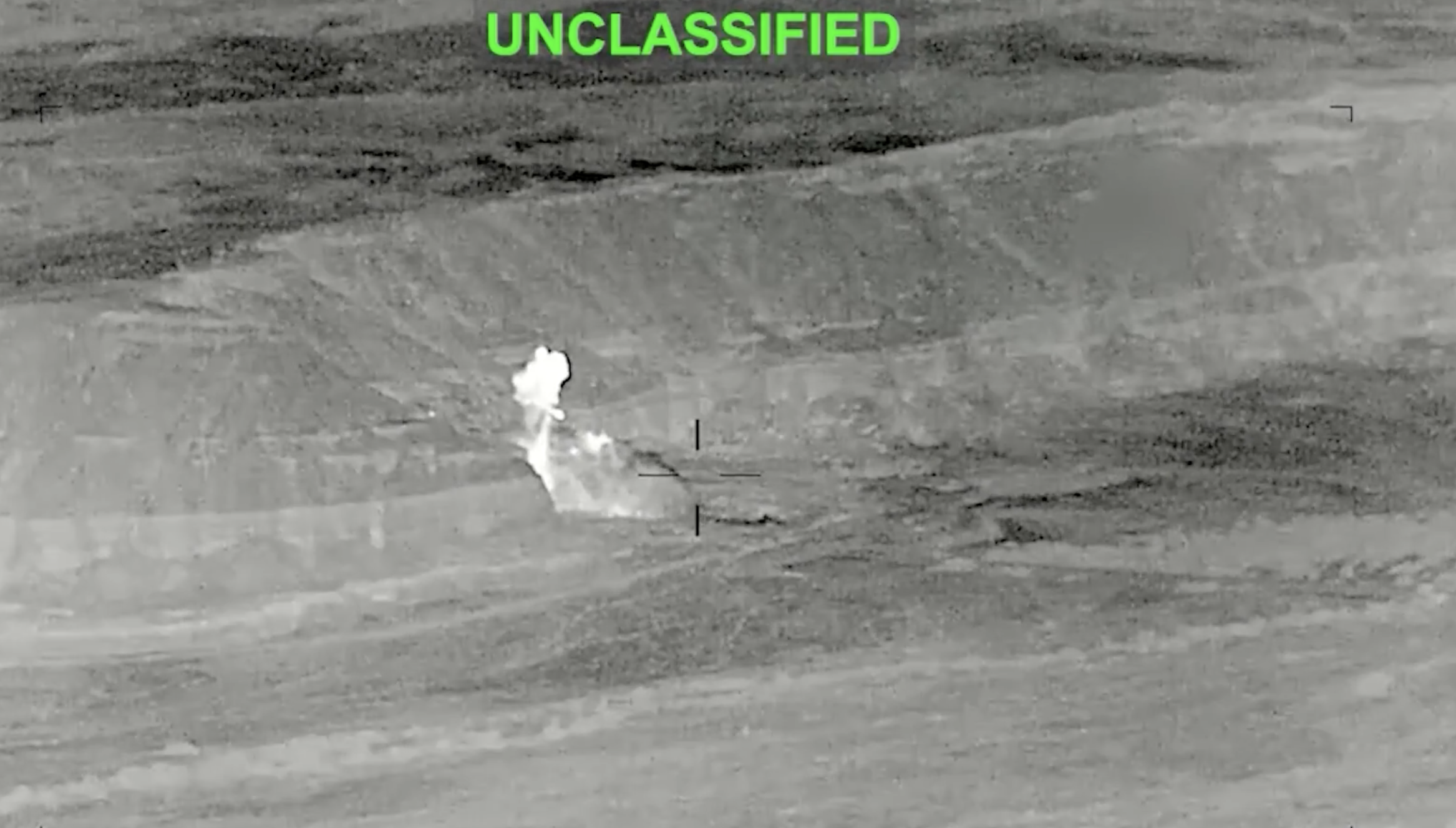
The exchange represents a qualitative escalation beyond the initial June 26 to 27 cycle. US Central Command (CENTCOM) strikes on Iranian coastal positions at Qeshm, Sirik, Kong, and Bandar Lengeh on June 26 were followed within 24 hours by an IRGC retaliation against Al Udeid Air Base in Qatar. Before that exchange could settle, the United States conducted a second strike wave on June 27, hitting five Iranian coastal military positions described in Iranian state media as surveillance infrastructure, communication systems, air defense installations, drone storage facilities, and minelayer capabilities. That second US strike then triggered the June 28 IRGC operation against Ali Al Salem Air Base in Kuwait and Port Salman in Bahrain. Each cycle is adding a new US installation and a new allied host nation to the list of affected sites.
The IRGC demonstrated a two-track retaliation doctrine across the 36-hour cycle: first Qatar (Al Udeid, a central command and air operations node), then Kuwait (Ali Al Salem, a major air base and personnel hub), then Bahrain (Port Salman, the Fifth Fleet seat and US Naval Forces Central Command headquarters). Spreading attacks across three allied host nations in sequence communicates a willingness to impose costs on every country hosting US forces rather than concentrating on a single location. Tehran's state media explicitly framed each retaliatory wave as a conditional deterrent rather than a final action, a formulation designed to leave the MoU framework nominally viable while sustaining maximum pressure on Washington.
That framing is increasingly difficult to sustain in practice. The MoU, signed June 15 by Vice President Vance and Iranian Parliamentary Speaker Mohammad Baqer Ghalibaf, establishes a 60-day window for Phase Two nuclear negotiations. The June 27 to 28 exchanges are the most direct and sustained US-Iran military action since the MoU's signing and challenge whether either party can credibly claim adherence to its spirit while conducting active strikes on each other's military assets. The Iranian Foreign Ministry has not formally declared the MoU void, but Iranian hardline parliamentarians seized on the June 27 US strikes to argue that Washington had already broken the framework's terms, creating domestic pressure on the negotiating faction to respond in kind.
The Gulf host nations face a structurally untenable position. Kuwait, Bahrain, Qatar, and Saudi Arabia all provide US military basing under bilateral agreements and all confront the same dilemma: the presence of US forces that Iran is actively targeting creates an obligation to support the US defensive posture while directly exposing their own populations and infrastructure to Iranian retaliation. Kuwait's government issued no formal protest of the IRGC strike; its air defense engaged without any public condemnation of Iran. Bahrain activated sirens and shelter-in-place orders but avoided attributional language in its public communications. Both responses indicate Gulf governments are absorbing strikes without taking positions that would either strain US alliances or invite further Iranian escalation, a balance that grows less tenable with each new exchange.
Two intelligence dimensions with direct homeland relevance emerge from the June 28 exchange. The Federal Bureau of Investigation (FBI) and the Department of Homeland Security (DHS) Joint Counterterrorism Assessment Team has maintained a heightened domestic threat bulletin throughout the Iran conflict period, noting that direct IRGC action against US military personnel historically correlates with elevated activation signals in Iranian-linked dormant networks inside the United States. The June 28 attacks add a second exchange-cycle data point to that activation timeline, and a bulletin review should be anticipated within 24 to 48 hours. Separately, the IRGC's ability to sustain multi-day missile and drone operations across multiple Gulf countries without apparent significant degradation of its strike inventory suggests Iran's capacity is larger than pre-war assessments that informed US strike planning, a gap that affects assumptions for any subsequent conflict phases.
The Phase Two negotiating window opened June 15 and is now 13 days elapsed with no formal diplomatic progress recorded. The Iran war supplemental of $87.6 billion submitted to Congress on June 24, combined with the Senate's 50 to 48 war powers resolution, creates a domestic political environment that sharply constrains the administration's flexibility to de-escalate unilaterally. The IRGC hardliner faction, which has consistently acted to undermine ceasefire diplomacy through operational escalation, gains domestic credibility with each US strike and appears to be driving the response cycle. Unless one party breaks the pattern through a unilateral stand-down, the 60-day window will continue to erode through active kinetic exchange rather than the Phase Two negotiations it was designed to enable.
SOURCES
