

Strait of Hormuz Closure Drives WTI Near $115; American Consumers Face Sustained Energy and Inflation Shock as Diplomatic Window Narrows
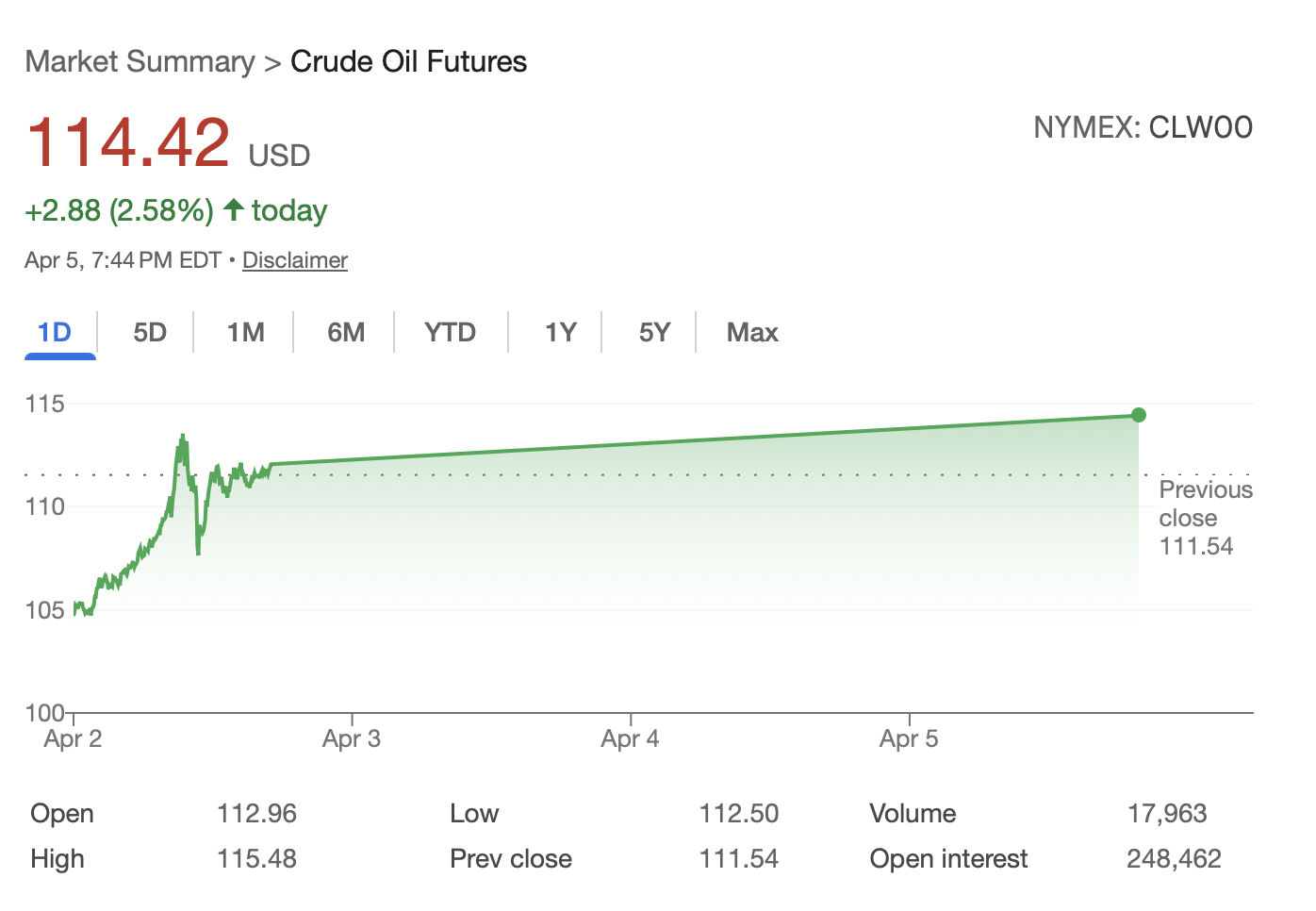
Source: Goog
EXECUTIVE SUMMARY
WTI crude oil reached approximately $114 per barrel in early April 2026, with prices breaching $115 to $118 during peak March volatility. The Strait of Hormuz has been effectively closed to commercial shipping since March 4, stranding approximately 20 percent of global oil supply. The economic shock is accelerating inflationary pressure in the United States and across allied economies while simultaneously raising the domestic political stakes of the Trump administration's Iran strategy.
ANALYSIS
Brent crude posted its largest monthly gain since 1988 during March 2026, and WTI has sustained above $110 since late March. The Hormuz corridor through which an estimated 20 million barrels passed daily before February 28 has been reduced to a fraction of that volume by Iranian drone and missile operations against tanker traffic. Bloomberg's modeling of the Hormuz closure scenario, published before the war escalated, now appears conservative against the actual market data.
The downstream impact on American households is direct and worsening. Gasoline prices track crude with a lag of approximately two to three weeks, and petrochemical feedstocks, aviation fuel, and diesel costs are already compressing margins for logistics, agriculture, and consumer goods sectors. The Federal Reserve faces a supply-shock inflation scenario it cannot address through rate policy alone; raising rates to suppress inflation derived from a physical supply constraint would primarily damage the domestic economy without affecting the root cause.
The political feedback loop is significant. Congressional pressure for a diplomatic resolution is rising in proportion to the economic pain reaching swing-state households. Trump's April 5 Truth Social post framed the Tuesday ultimatum explicitly in economic terms alongside the military justification: the administration has effectively tied its war credibility to a Hormuz reopening outcome, which creates a dynamic in which each day of continued closure increases the domestic political cost of inaction while also increasing the risk of an ill-timed escalation driven by political rather than military logic.
OPEC members are weighing production increases that could partially offset the Hormuz shortfall in volume terms, but rerouting tanker traffic around the Cape of Good Hope adds approximately two weeks to delivery timelines, sustaining elevated prices even if production volumes rise. The supply disruption has an effective minimum floor duration regardless of when or whether the strait reopens, meaning American consumers will experience sustained elevated energy costs through at least late April under any plausible resolution scenario.
