

Al-Naba Issue 536 Highlights IS Global Operations and Attacks Rivals Over “Iranian Axis” Alignment
Source: Al-Fustat
Executive Summary
The Islamic State’s weekly Al-Naba (Issue 536) mixes operational claims across Africa and Syria with a polemical editorial accusing rival jihadists—especially al-Qaeda—of falling under “Rafidah” (Iranian/Shia) influence. The issue also includes a transcripted audio message from spokesman Abu Hudhayfah al-Ansari reinforcing Syria as a priority theater and promoting continued global tempo.
Analysis
Issue 536 is structured like a standard Islamic State media package: a lead “news” cadence across provinces, an ideological/editorial attack line against rivals, and a longer “voice” transcript to set priorities and narrative discipline.
1) Rival-framing and intra-jihadist messaging
The editorial (“الاستقطاب الرافضي للجهاديين” / “Rafidah polarization of jihadists”) argues that al-Qaeda leadership historically benefited from Iranian “theorizing and recruitment,” and portrays al-Qaeda’s public messaging as functionally aligned with Tehran’s interests during periods of U.S.–Iran tension.
The core intent is boundary-setting: delegitimize competitors as compromised and present IS as the only consistent “no-compromise” actor.
2) Claimed operational activity and geography
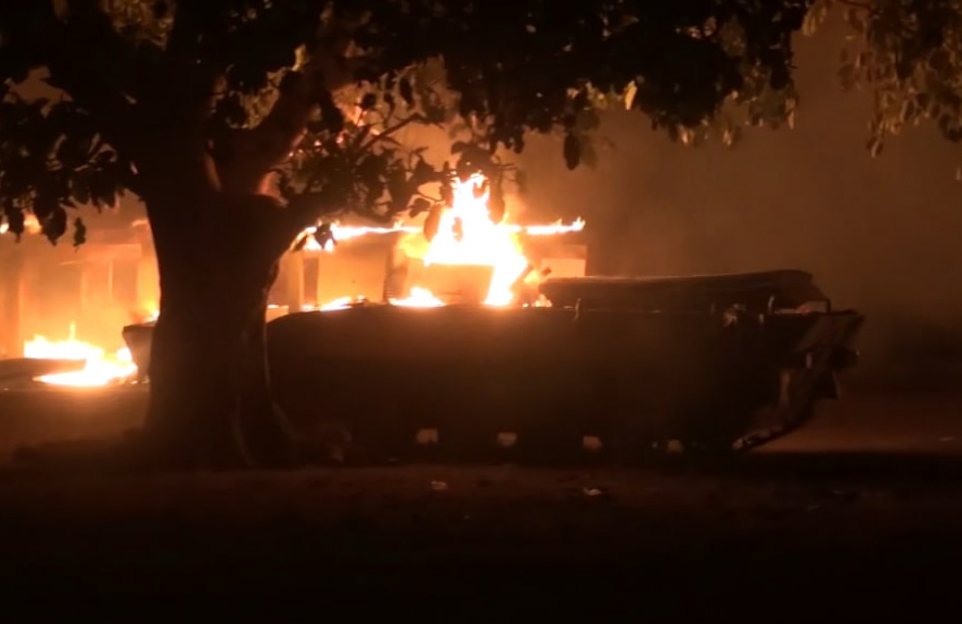
Nigeria (IS West Africa): Al-Naba claims raids on Nigerian military camps in Borno (Kukawa) and Adamawa (Garehamajwel/Madagali), reporting killed/wounded soldiers, burned facilities, and destroyed vehicles as part of a “scorched camps” campaign extension into Adamawa.
Mozambique: Claims a sustained operation on the Awasi–Macomia road (Cabo Delgado), including an ambush that killed 15 Mozambican/Rwandan troops and additional killings of Christian “combatants,” with asserted short-term control of the route.
DRC (Central Africa Province): Claims multiple attacks in Ituri and Beni including killings of Congolese soldiers and “Christian combatants,” plus burning a position and small-arms seizures.
Niger (Sahel): Claims an assault on a Nigerien army checkpoint in Dosso (Gishimi), reporting four killed and the checkpoint burned, with motorcycles and weapons captured.
Syria: Claims killings of Syrian regime personnel in Deir ez-Zor (“al-Khayr”) and attacks in Raqqa including an inghimasi-style assault against what it calls “the 90th branch of the coalition,” emphasizing follow-through on spokesman guidance.
3) Spokesman guidance (priority and narrative discipline)
The transcripted audio attributed to Abu Hudhayfah al-Ansari frames Syria’s post–Iran influence environment as a new phase and explicitly prioritizes fighting the “new” Syrian regime and its associated structures, while also praising activity in Somalia and West Africa as proof the organization remains active across theaters.
This functions as top-down tasking: reinforce targeting priorities, discourage drift, and portray momentum despite counterpressure.
4) Operational implication
The issue is less about a single “big” attack and more about demonstrating distributed capability and brand presence: repeated small-to-mid-scale claims across multiple provinces, paired with propaganda designed to undercut rivals and keep supporters aligned to leadership priorities.
Sources
Al-Fustat
