

Far-Right Patriots Platform Shuts Port of Dover for Six Hours
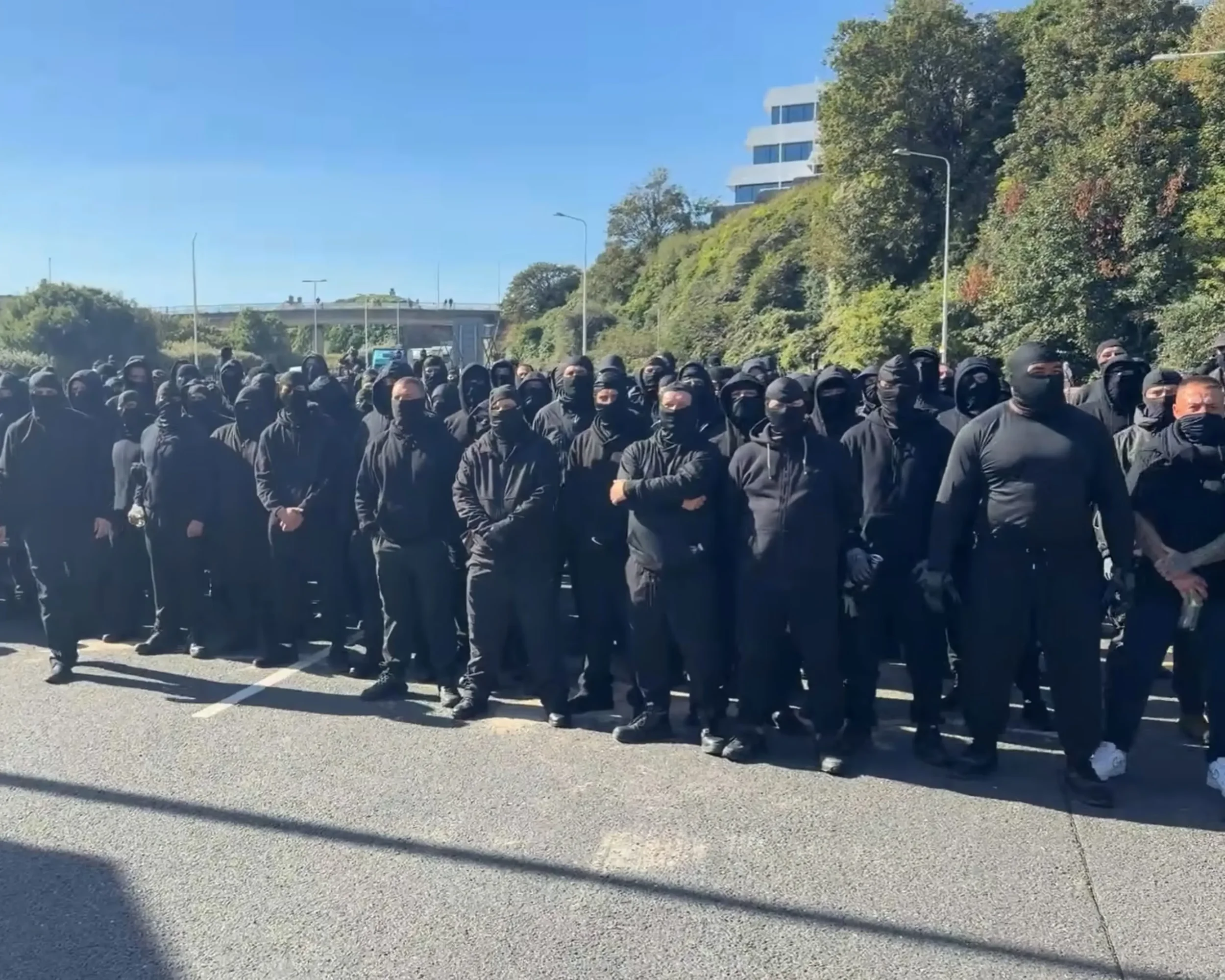
Source: Plan C
EXECUTIVE SUMMARY
On the morning of September 6, 2026, hundreds of black-clad, masked far-right activists organized under the Patriots Platform movement simultaneously blocked all three vehicle entrances to the Port of Dover, Britain's busiest cross-Channel freight hub, shutting the port for more than six hours. The operation was coordinated with Tommy Robinson's network and timed to coincide with the Reform UK party conference.
ANALYSIS
On September 6, 2026, several hundred far-right activists in black tactical clothing and masks descended on the Port of Dover and sealed all three vehicle entrances simultaneously. The port is Britain's primary roll-on/roll-off freight crossing for European trade. The blockade held for more than six hours before the group marched through Dover town center to the train station and dispersed without arrests. Police did not respond for the first three hours; when officers arrived, activists walked straight through the police cordon.
The operation was organized by Patriots Platform, a British far-right movement linked to Tommy Robinson and his associate Danny Tommo. The tactics broke from the open-face marches typical of prior Robinson-aligned events. The group adopted black bloc dress, executed simultaneous closure of multiple access points, and used a coordinated dispersal route, elements drawn from the tactical repertoire of antifascist movements. The timing with Reform UK's conference was deliberate, apparently designed to pressure or embarrass mainstream right-of-center politics.
The ability to plan and execute a multi-entrance simultaneous closure of a major UK port without advance police intelligence, and to hold that closure for six hours against a minimal police response, shows organizational capability well beyond what had previously been attributed to Patriots Platform affiliates. UK intelligence and law enforcement will need to assess this separately from standard public order doctrine: this was coordinated infrastructure disruption, not a march.
Five Eyes partners should note the tactical shift. Far-right movements in the United States have historically been assessed as capable of property destruction and episodic violence. The Port of Dover action shows that a sufficiently organized far-right group can execute coordinated infrastructure disruption at economic scale without firearms or explosives. US port security and law enforcement agencies should assess whether comparable critical infrastructure access controls are in place at major seaports and freight crossings and whether existing public order plans account for simultaneous multi-point blockades.
SOURCES
