

LaGuardia Runway Collision: Surface-Tracking Failure Under Review After Jet Hits Airport Fire Vehicle
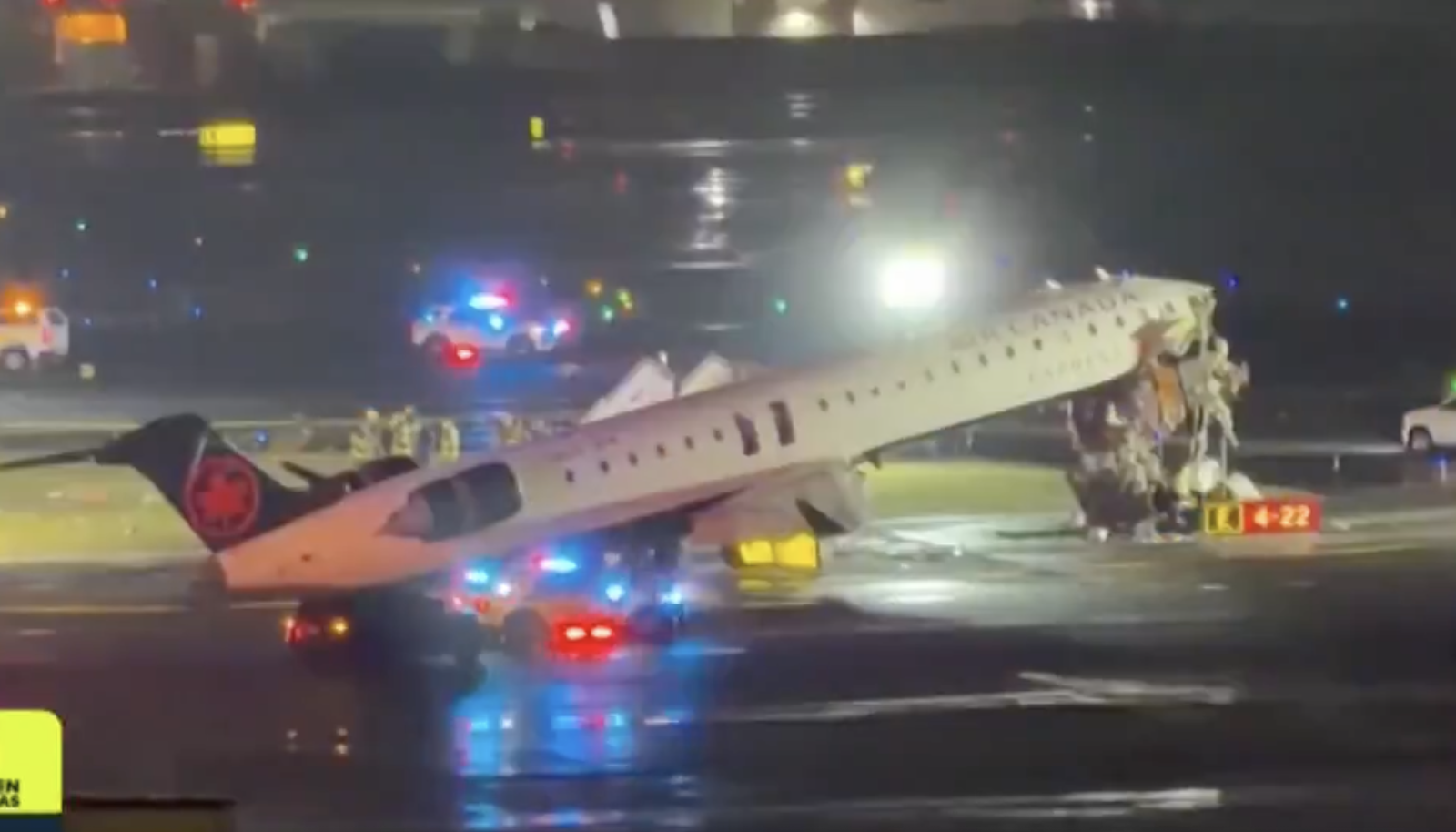
Source: X
Executive Summary
A runway collision at LaGuardia involved a regional jet and an airport fire-rescue vehicle, triggering a federal investigation focused on tower procedures and the airfield surface-tracking layer that should warn of ground conflicts. The National Transportation Safety Board has stated the tracking/alerting system failed to generate the expected warning during the event sequence, raising concerns about a last-chance safety backstop not activating when timing margins were tight.
Analysis
This incident is being treated less like an “air crash” and more like a runway-incursion failure chain: aircraft committed to a landing or runway movement while a ground emergency vehicle was on or entering the same movement area. The key issue now is how multiple safety layers lined up, or didn’t.
The NTSB’s finding that the tracking/alerting system failed to trigger matters because that layer exists to catch exactly this type of conflict when humans miss a cue or when radio traffic is congested. In practical terms, the system is supposed to maintain a reliable “picture” of aircraft and authorized vehicles on the surface and issue warnings when they converge on an active runway. If it stayed quiet, investigators will be looking at whether the system failed to build a stable track on the vehicle, whether sensor inputs were degraded in that area of the field, or whether alert thresholds were too conservative to warn under uncertainty.
This also puts focus on emergency-response procedures on active runways. Fire-rescue movement during an aircraft emergency is inherently high tempo, and the controls that prevent a response vehicle from creating a new hazard depend on clear tower coordination and a surveillance/alert layer that is robust when vehicles move quickly.
The operational takeaway is straightforward: runway collisions are rarely one thing. This is shaping up as combined failure—procedural and technical—where the “backstop” did not compensate for whatever went wrong in the human layer.
