

Uzbek ISIS Financier Extradited to Brooklyn After Decade as Fugitive
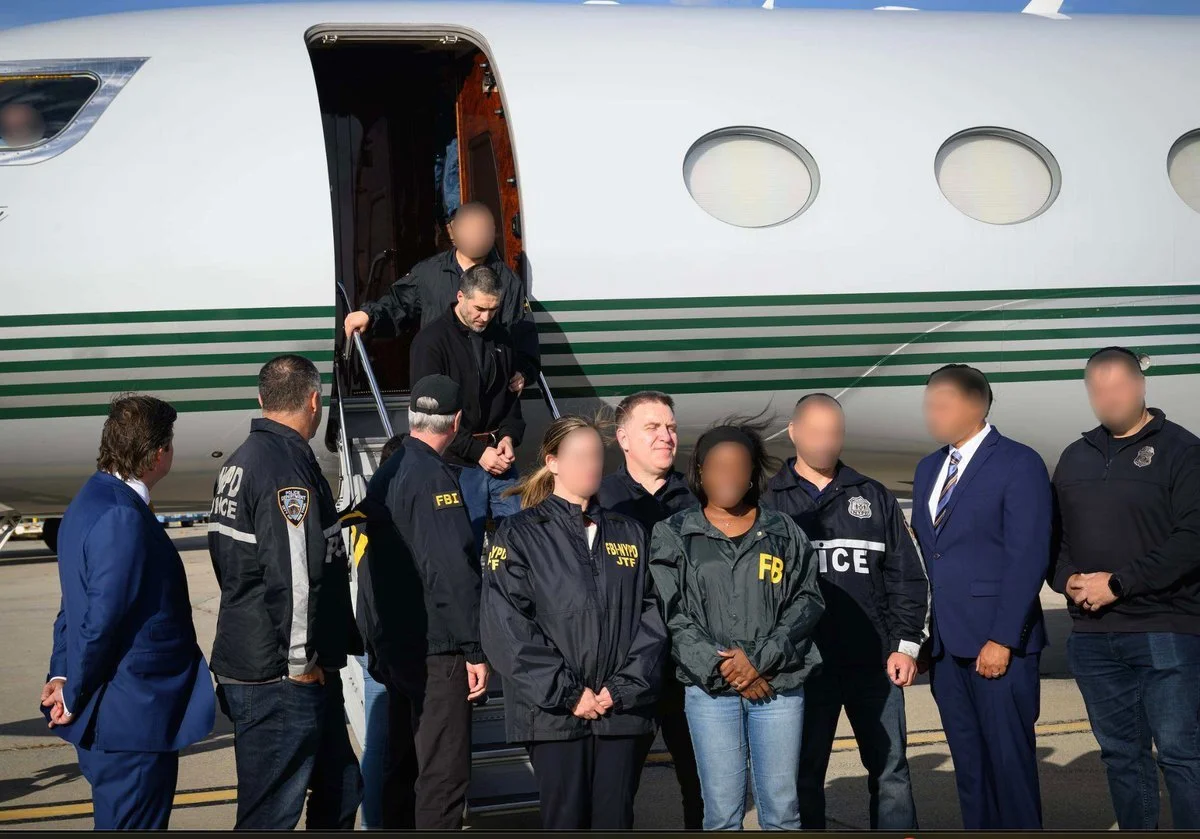
Source: X | @NewYorkFBI
EXECUTIVE SUMMARY
Federal prosecutors in the Eastern District of New York arraigned Davud Ansariy on September 23, 2026, on charges of conspiring to provide material support to the Islamic State of Iraq and al-Sham (ISIS) and Al-Nusrah Front (ANF). Ansariy, a naturalized US citizen born in Uzbekistan, led a Brooklyn-based fundraising and travel facilitation network before fleeing the United States on a one-way ticket to Turkey in May 2016. Georgian authorities arrested him in August 2026 and transferred him to US custody the following month.
ANALYSIS
Ansariy, also known as "Kozimjon Gafurov" and "Kozim," appeared in federal court in Brooklyn on September 23, 2026, one month after his arrest in Tbilisi, Republic of Georgia. He faces one count of conspiracy to provide material support and one count of providing material support to ISIS and ANF, both designated foreign terrorist organizations during the period of the charged conduct. A federal grand jury in the Eastern District of New York returned the indictment in November 2021. If convicted on both counts, Ansariy faces up to 35 years in federal prison.
Court filings describe a network centered on Brooklyn's Uzbek immigrant community. Ansariy led a group its members called the "chayxona," an Uzbek word meaning "tea house," a reference to informal social gatherings that served as the network's recruitment and coordination mechanism. Participants raised funds and arranged travel logistics to Syria for individuals who intended to join ISIS or ANF as fighters. The charged conduct spans from approximately 2014 through 2016, during ISIS's peak territorial control in Iraq and Syria.
Ansariy purchased a one-way ticket to Turkey and departed the United States the following day in May 2016. His departure preceded the federal indictment by more than five years. Investigators continued building the evidentiary record while he remained abroad. He spent those years in Turkey and then the Republic of Georgia before Georgian authorities arrested him in August 2026 at the request of the United States.
Georgia's cooperation in this case is part of a broader pattern of US-Georgian law enforcement coordination on terrorism matters. The extradition sends a direct signal to ISIS-era fugitives who relocated to post-Soviet states: geographic distance does not provide permanent protection from federal prosecution. The FBI maintains open fugitive files on other individuals in comparable circumstances, and the Ansariy transfer is likely to be cited as a model for future extradition requests in the South Caucasus region.
SOURCES
