

Minnesota Cyberattack Exposes Systemic Security Gaps in US Municipal Water Systems
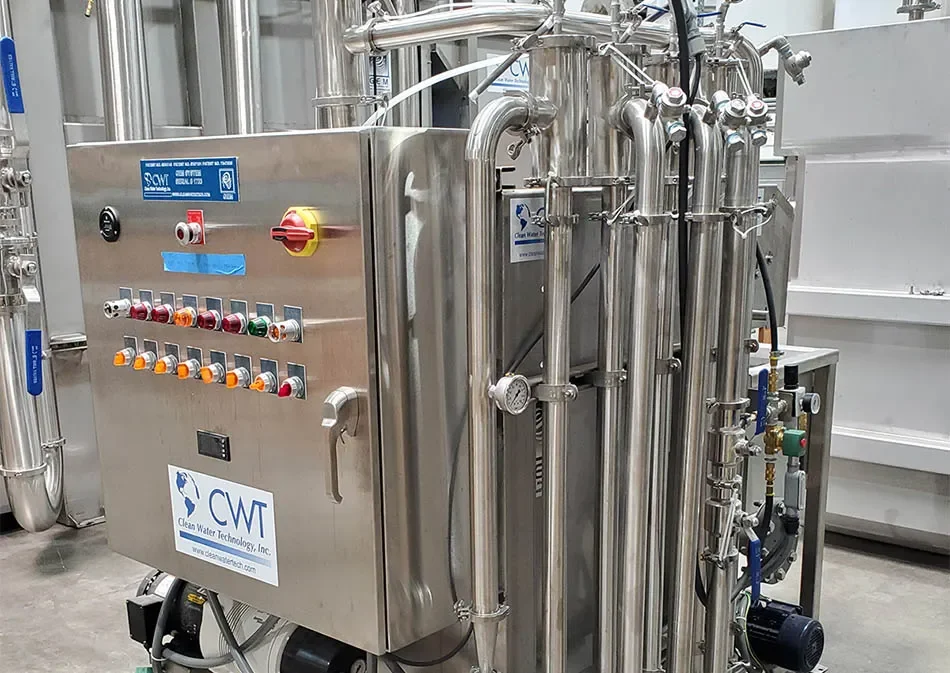
Programmable Logic Controller/Source: Clean Water Technology
EXECUTIVE SUMMARY
The July 26 to 27 coordinated cyberattack against more than 30 Minnesota water utilities is among the broadest simultaneous intrusion campaigns against US water infrastructure on record, and it confirms that the structural vulnerability gap in small-system operational technology (OT) environments has not closed since the 2021 Oldsmar incident.
ANALYSIS
The Minnesota campaign differs from prior water sector incidents in scale and simultaneity. The 2021 Oldsmar, Florida breach involved a single plant, a single attacker, and a single malicious action caught in real time by an alert operator. The Minnesota attack struck more than 30 separate systems across a geographically dispersed range of communities, indicating one of three delivery mechanisms: a shared vendor software or remote access product compromise affecting all targeted utilities, a mass spearphishing campaign targeting system administrators, or a pre-positioned botnet activated simultaneously across previously compromised systems. Any of these scenarios implies a threat actor with significant preparation time and detailed knowledge of the US water sector's shared technology footprint.
OT environments in the water sector present a distinctive attack surface. Many municipal water utilities, particularly those serving populations under 50,000, operate supervisory control and data acquisition (SCADA) systems installed before cybersecurity was a design requirement. These systems frequently lack multi-factor authentication (MFA), have no network segmentation between information technology (IT) and OT environments, and are exposed to the internet via remote access tools purchased to reduce on-site staffing costs. The communities affected in Minnesota span rural towns and suburban systems, suggesting the attackers exploited a shared vulnerability present across a wide range of system types rather than selectively targeting large or strategically significant facilities.
Attribution remains publicly undisclosed. MNIT and CISA have declined to name a responsible actor. The methodology and target selection are consistent with documented behavior by Russian Foreign Intelligence Service (SVR) and People's Republic of China (PRC) state-aligned threat groups that have conducted infrastructure intrusions over the past five years without causing immediate visible harm, precisely to maintain persistent access while avoiding a response. An intrusion that shuts down a water plant is detectable and prompts a response; an intrusion that installs a persistent implant while making no visible change is more dangerous because it may remain active indefinitely, enabling future weaponization at a time of the attacker's choosing.
The Braham plant shutdown produced a real-world consequence within hours of the intrusion: residents were asked to conserve water, reducing system pressure and creating conditions for decreased fire suppression capacity in the surrounding area. Prolonged water treatment outages cascade through dependent systems. Hospitals on municipal water supply face constraints on sterilization and patient care. Emergency shelters cannot certify potable water availability. Industrial operations requiring treated water for cooling or processing face shutdowns. The relatively rapid MNIT response and absence of water quality compromise reflects a best-case operational outcome, not a baseline assumption that will apply in all future incidents.
The policy gap is long-standing. America's Water Infrastructure Act (AWIA) requires utilities serving more than 3,300 people to conduct risk and resilience assessments and maintain emergency response plans, but these requirements do not mandate OT-specific cybersecurity controls. CISA's WaterISAC provides shared threat intelligence, but participation is voluntary and skewed toward larger systems. EPA cybersecurity rules for water systems faced legal challenges and enforcement delays in 2024 and 2025, leaving the sector without binding OT security requirements that match the current threat environment.
Emergency managers and law enforcement agencies with critical facility continuity plans should audit whether their planning documents account for a 24 to 72-hour municipal water service interruption. This includes identifying alternate water sources for correctional facilities, hospitals, and emergency operations centers; confirming the adequacy of on-site water reserves at critical facilities; and reviewing whether local utility emergency response plans have been tested since adoption. The MNIT statewide OT cybersecurity activation model offers a scalable template for other states operating under similar resource constraints, and state emergency management agencies should assess whether equivalent coordination authority and technical capacity exist in their own jurisdictions.
SOURCES
